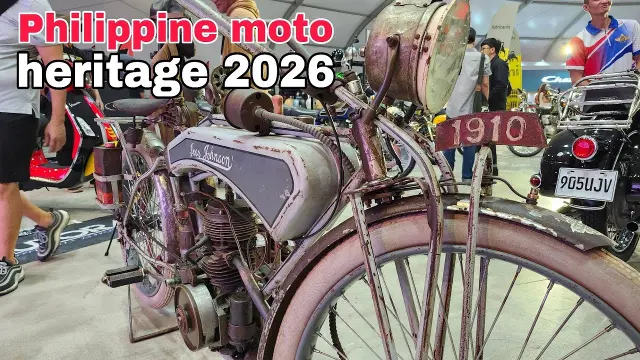
 Classic and Custom Motorcycles at Philippine Moto Heritage
#Filipino Craftsmanship
1 ideas
Classic and Custom Motorcycles at Philippine Moto Heritage
Get new #Filipino Craftsmanship ideas by email
Every Thursday: the week's best ideas, with the newest from #Filipino Craftsmanship.
Related tags
Filipino Craftsmanship: Handmade Traditions and Techniques
Filipino craftsmanship is the work of hands passed down through families and communities across an archipelago of more than seven thousand islands. Because the country has so many regions and languages, there is no single national craft: there are dozens of local traditions, each shaped by the materials that grow nearby — abaca, rattan, bamboo, pineapple leaf, cotton, hardwood, clay, brass, shell and capiz.
What ties them together is a way of working. Much of it is small-scale and household-based, learned by watching an older relative rather than in a classroom. Pieces are made slowly, often in batches tied to the seasons or the harvest, and slight variation from one item to the next is normal rather than a defect. When you look at a handwoven mat or a carved figure, you are usually looking at a specific place and the plants or minerals that place provides.
Weaving and textiles
Textiles are the most visible side of Filipino craft. In the Ilocos region, weavers work on wooden looms to make inabel, a cotton cloth recognised by geometric patterns and by stripes and checks in strong colours. Piña cloth is woven from fibres taken from pineapple leaves, which are scraped, dried and knotted end to end before weaving; it is stiff, translucent and traditionally blended with silk to make jusi. In the south, T'boli weavers make t'nalak from abaca, and Yakan and Tausug weavers produce cloth with dense, repeating motifs.
Read more
The barong Tagalog, the sheer embroidered formal shirt, shows the same skills in another form: fine hand embroidery on a light, translucent ground.
Carving, basketry and pottery
Wood carving ranges from the small rice-granary figures of the Cordillera to the religious sculpture and furniture of Laguna, where carving has been a trade for generations. Basketry uses whatever the landscape offers — bamboo, rattan, palm, pandan, buri — and the resulting forms are practical: rice baskets, fish traps, drying trays, market bags, sleeping mats.
Pottery is slower to find. In Vigan, potters still shape clay on a heavy, hand-turned wheel to make burnay, the dark, thick-walled jars used for fermenting vinegar and storing food.
What to look for
- Ask what the piece is made from and how it was made. Sellers in craft markets are usually glad to explain.
- Look for handwork in the small things: an uneven selvedge, a slightly differing motif, a tool mark.
- Check that the material suits the use. Natural fibres soften with washing; unsealed wood dislikes standing water.
- Care for handmade pieces gently — shade rather than direct sun for dyed textiles, dry air rather than damp for wood and bamboo, and a soft brush rather than soaking for woven mats.
- Pay for the time involved. The gap between a machine-made copy and a woven original is mostly hours.
Starting out
If you want to learn, begin with a single technique rather than a whole tradition. Learn one weave structure, one basket base, one clay form, and repeat it until your hands remember it. Local museums, cultural centres and craft fairs are where you will see how a finished piece should feel, and a weaver or potter near you will usually answer questions more honestly than any guide.
#Filipino Craftsmanship: frequently asked questions
What exactly is Filipino craftsmanship, and why does it look so different from one region to another?
It is the small-scale, often household-based work of making things by hand — weaving, carving, basketry, pottery — learned by watching relatives rather than in a classroom. Because the archipelago has many regions and languages, there is no single national style: each tradition grew around whatever materials the local landscape provides, such as abaca, rattan, bamboo, pineapple leaf, cotton, hardwood, clay or shell. That is why a woven mat from one province and a jar from another can feel like they come from entirely separate worlds.
How do I choose a Filipino craft piece that I will actually use and keep?
Start with the material and how it suits your intended use — natural fibres soften with washing, and unsealed wood suffers around standing water. Look closely for signs of handwork, like a slightly uneven edge, a motif that varies a little from its neighbour, or a tool mark, since these are normal in handmade work rather than flaws. Ask the seller what the piece is made from and how it was made; craft market vendors are usually happy to explain.
How should I care for handwoven textiles, wood and bamboo, and woven mats?
Keep dyed textiles out of direct sun, since strong light fades natural colour, and let them hang or fold in shade instead. Wood and bamboo prefer dry air to damp, so avoid storing them in humid corners where they can swell or grow mould. Woven mats and baskets respond best to a soft brush rather than soaking in water.
What is the best way to start learning a Filipino craft myself?
Pick one technique rather than a whole tradition — a single weave structure, one basket base, or one clay form — and repeat it until your hands remember the motion. Local museums, cultural centres and craft fairs are the best places to see and touch finished work, so you learn how a good piece should feel. A weaver or potter working near you will usually answer questions more honestly than any guide.
What mistakes do first-time buyers of Filipino crafts commonly make?
Two of the most common are treating small irregularities as defects and judging handmade work against the uniformity of machine-made copies. Another is picking a piece for its looks alone without checking whether the material can survive how you plan to use it. Above all, remember that the space between a copy and a woven original is mostly hours of human labour, so haggling hard undervalues the time involved.
Which Filipino craft traditions are worth seeking out first?
Textiles are the most visible entry point: Ilocos weavers make inabel on wooden looms, piña cloth comes from pineapple leaf fibre and is often blended with silk, and southern weavers produce t'nalak from abaca as well as cloth with dense repeating motifs. The barong Tagalog shows the same embroidery skills on a sheer formal shirt. Beyond cloth, look for Cordillera carving, basketry made from bamboo, rattan, pandan or buri, and the dark clay jars still shaped on heavy wheels in Vigan.
Videos come from YouTube and posts from Instagram; titles and summaries are our own. All rights belong to their creators.