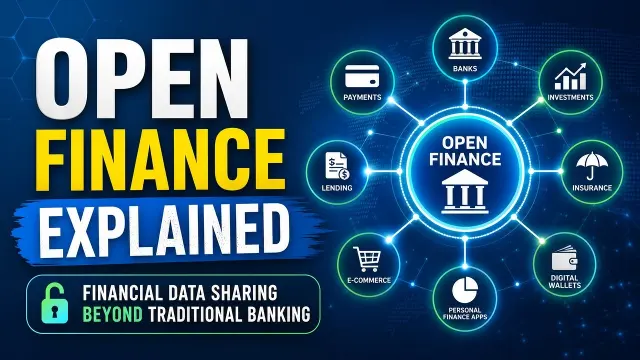
 Exploring Open Finance and Advanced Financial Data Sharing
#Financial Services
1 ideas
Exploring Open Finance and Advanced Financial Data Sharing
Get new #Financial Services ideas by email
Every Thursday: the week's best ideas, with the newest from #Financial Services.
Related tags
Financial Services: A Plain Guide to the Industry
Financial services is the broad name for everything connected to managing money: holding it, moving it, borrowing it, protecting it, investing it and planning for it. Almost everyone meets the sector several times in an ordinary week, often without noticing — through a bank card, a pension contribution, an insurance policy or a payment app.
Where the idea comes from
Money lending and money changing are as old as trade itself. Merchants needed somewhere safe to keep coins and a way to pay people in distant places, and specialist intermediaries grew up around those needs. Over time, banking, insurance and investing developed into separate trades with their own customs and their own rules, and in most countries the state eventually took an interest in supervising them, because the collapse of a single institution can affect far more people than its own customers.
The main kinds of provider
Read more
- Retail banks take deposits, lend to households and businesses, and run payment systems.
- Insurance companies pool risk, so that the cost of an unlikely but expensive event is shared across many people.
- Investment firms and asset managers look after money on behalf of savers and institutions.
- Pension providers hold money set aside for retirement.
- Payment and remittance companies move funds between people and across borders.
- Advisers and brokers give guidance or arrange products on someone else's behalf.
- Regulators and supervisors oversee the rest, setting rules and checking that they are followed.
What beginners should know
Learn the difference between a product and the firm selling it. A savings account, a loan, a fund and an insurance policy each behave differently, and each carries its own costs; understanding the product matters more than recognising the logo. Read the fee schedule, since charges are often expressed in several different ways and small percentages compound over long periods.
Know what is protected and what is not. Many countries insure deposits up to a limit, and investments usually are not covered in the same way, because their value can fall. Ask which regime applies before you commit.
Borrowing deserves particular care. Compare the total cost of credit rather than the monthly instalment, and be wary of any offer that seems to depend on urgency.
Practical habits
Keep the paperwork, and keep a record of what you were told when a product was sold to you. Check statements rather than assuming. Use official channels to verify that a firm is authorised to offer what it is offering. If something goes wrong, most markets have an independent complaints or ombudsman route.
Trust is the underlying business
Financial services runs on confidence: people leave money with institutions precisely because they expect to get it back. That is why the sector is rule-bound, document-heavy and cautious by nature, and why patience with its formalities is usually worth it. Understanding the structure — who does what, who carries the risk, and who supervises it — turns a confusing landscape into something you can navigate on your own terms.
#Financial Services: frequently asked questions
How do I get started with financial services?
Start by sorting out what you actually need the money to do — hold it safely, move it somewhere, borrow it, cover a risk, or set it aside for later — because each of those needs is served by a different kind of firm. Once you know the job, compare products rather than brands, and read the fee schedule before you commit to anything.
What should I check before choosing a provider?
Confirm that the firm is authorised to offer the specific product you are being sold, using the official register or supervisor in your country rather than the firm's own marketing. Then ask which protection regime applies, since deposits and investments are treated very differently and only some products are covered if the provider fails.
How do I choose between a bank, an insurer, an investment firm and a pension provider?
They do different jobs: banks take deposits and lend, insurers pool the cost of unlikely events, investment firms look after money on a saver's behalf, and pension providers hold funds earmarked for later life. Match the provider to the task instead of assuming one institution should handle everything, and be aware that a single group may sell several of these under one name.
What are the most common mistakes beginners make?
The usual ones are choosing by logo instead of understanding the product, and looking only at the monthly instalment on a loan rather than the total cost of the credit. Another frequent slip is treating an investment as though it carried the same protection as a deposit, when its value can fall.
What should I keep and record as I go along?
Keep the paperwork for every product and note what you were told when it was sold to you, since that record matters if a dispute arises later. Check your statements periodically instead of assuming they are right, and if something goes wrong, look for the independent complaints or ombudsman route in your market.
Why is the sector so formal and document-heavy?
Financial services runs on confidence: people hand over money because they expect to get it back, so the whole system depends on rules, records and supervision. The formality feels slow, but it is what allows a failure at one institution to be contained rather than spread to everyone connected to it.
Videos come from YouTube and posts from Instagram; titles and summaries are our own. All rights belong to their creators.