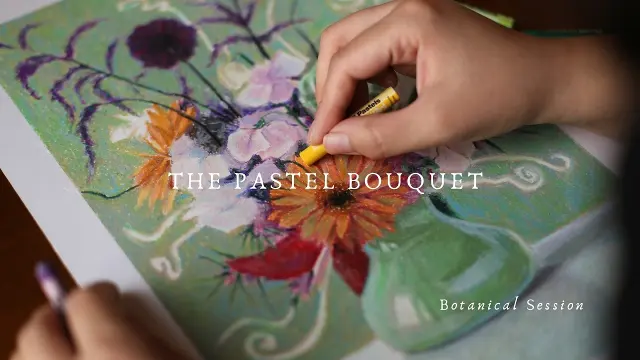
 Relaxing Botanical Oil Pastel Painting of a Flower Bouquet
#Floral Art
1 ideas
Relaxing Botanical Oil Pastel Painting of a Flower Bouquet
Get new #Floral Art ideas by email
Every Thursday: the week's best ideas, with the newest from #Floral Art.
Related tags
Floral Art: A Beginner's Guide to Working with Flowers
Floral art is the practice of arranging flowers and plant material into compositions made to be looked at, not just enjoyed in a garden. It sits somewhere between craft and design: part botanical knowledge, part colour and shape, part patience. You will find it in bridal bouquets and church arrangements, in pressed flower frames and botanical drawings, in flower crowns and table centrepieces. What all of these share is the same basic act — choosing plant material and placing it deliberately.
Where it comes from
People have arranged flowers for ceremony and decoration across many cultures and centuries. Formal styles developed in different parts of the world with their own rules and moods: the restrained, line-led arrangements of Japanese ikebana, which often emphasise space and a few carefully chosen stems; the dense, symmetrical European traditions associated with grand interiors; and the looser, garden-gathered look that has long been popular in homes. None of these is more correct than another. They simply ask different things of you — discipline, abundance, or ease.
The main ways of working
Read more
Fresh arrangements are the most familiar: flowers placed in water, in a vase, a bowl or soaked floral foam. Hand-tied bouquets are built in the hand and bound at the stems, which makes them easy to give away. Pressed flowers flatten between sheets of paper and are used in frames, cards and journals. Dried arrangements use material that has been hung or stood to dry, and last far longer than fresh. Beyond arranging, floral art also includes painting, drawing and printmaking inspired by flowers — the same observation of petal shape, colour and structure, just worked in pigment rather than stems.
What beginners should know
Start with fewer flowers than you think you need. A simple arrangement of one type of flower plus a little foliage usually reads better than a crowded mix, and it teaches you how stems behave before you complicate things.
Condition your material first. Trim stems at an angle with a sharp tool, remove leaves that would sit under the water, and give everything a long drink before you begin. Clean containers matter more than expensive ones.
Think in shapes rather than individual blooms. Decide where the tallest point goes, how wide the arrangement spreads, and where the eye should rest. Turn the piece as you work so it looks good from every side, not just the one facing you.
Choose flowers that suit the room and the season you are in, and accept that fresh work is temporary — that impermanence is part of its charm.
Practical habits
Keep your tools clean and sharp; a blunt cut damages stems and shortens how long a flower lasts. Change the water regularly. For pressed work, pick flowers on a dry day and press them straight away, before they wilt. For dried work, hang bunches upside down somewhere dark and airy so they keep their shape and colour.
Above all, look closely at what you are working with. Floral art rewards attention more than equipment, and the more you notice how a stem bends and a petal opens, the more naturally your hands will follow.
#Floral Art: frequently asked questions
How do I start learning floral art if I have never arranged flowers before?
Begin with a small amount of material rather than a full mixed bouquet — a single kind of bloom with a little foliage lets you watch how stems bend and sit in a container. Condition everything first: trim the stems at an angle with a sharp tool, strip any leaves that would end up underwater, and let the flowers drink before you place them. From there, work on shape, deciding where the tallest point and the widest spread belong.
What do I actually need to buy to begin?
Very little beyond a sharp cutting tool, a clean vessel and something to hold water is essential. Cleanliness and a keen edge matter far more than costly equipment, since a blunt cut damages stems and dulls how long the material lasts. You can add a few simple mechanics later, once you know which style of working you enjoy.
Which style of floral art should I choose?
It depends on what you want the work to ask of you, because the different traditions are not ranked — they are simply different temperaments. Line-led styles such as ikebana reward restraint and the use of empty space, denser symmetrical traditions suit formal, abundant settings, and loose garden-gathered looks feel relaxed and at home in everyday rooms. Try a couple of approaches and notice which one holds your attention.
How do I keep a fresh arrangement looking good for longer?
Start well: cut stems at an angle, keep foliage out of the water, and give the flowers a long drink before arranging them. Afterwards, change the water regularly and keep the container clean, and re-trim stems occasionally. Accepting that fresh work is temporary is part of the pleasure of it rather than a failure.
What kinds of floral art suit a wedding or a gift?
Hand-tied bouquets, which are built in the hand and bound at the stems, are the natural choice for giving away, and they work well for bridal and ceremonial occasions. Flower crowns, table centrepieces and pressed flowers framed or set into cards are also common for celebrations. Choose material that matches the season and the setting rather than trying to force something out of step with either.
What mistakes do beginners make most often?
Crowding the arrangement is the usual one — too many kinds of flower in one vessel tends to read as muddle, while restraint reads as intention. Another is working from a single viewpoint, so turn the piece as you build it and check how it looks from every side. Finally, poor preparation shows: blunt tools, dirty water and unprepared stems undo good design work.
Videos come from YouTube and posts from Instagram; titles and summaries are our own. All rights belong to their creators.