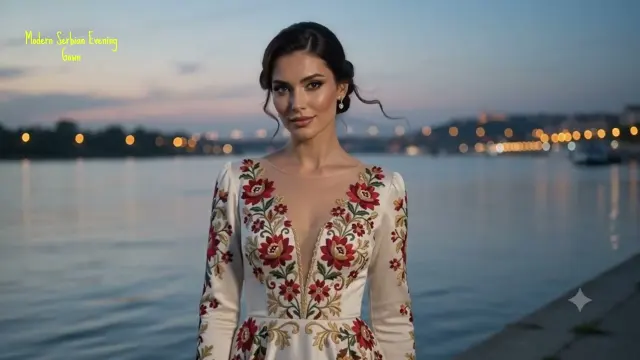
 Top Serbian Women Traditional and Modern Dresses
#Folk Costume
1 ideas
Top Serbian Women Traditional and Modern Dresses
Get new #Folk Costume ideas by email
Every Thursday: the week's best ideas, with the newest from #Folk Costume.
Related tags
Folk Costume: Tradition, Meaning, and Style
Folk costume is traditional clothing that grew out of everyday dress in a particular place and culture. It reflects local climate, work, materials, beliefs, and social customs. In many communities, it was worn for daily life in the past and later became especially important for festivals, ceremonies, dances, weddings, and other cultural events. Because of that, folk costume is both practical clothing and a visible sign of identity.
What folk costume includes
A folk costume is usually made up of several garments and accessories worn together. The exact pieces vary widely from region to region, but common elements may include shirts, skirts, trousers, aprons, vests, jackets, sashes, head coverings, belts, jewelry, and shoes. Many costumes are layered, which adds shape, warmth, and visual richness.
Patterns, embroidery, weaving, lace, and trims often carry special meaning. Colors may indicate age, marital status, occasion, or local tradition, although these meanings are not the same everywhere. Some costumes are simple and practical, while others are highly decorated for celebration.
Read more
Where it comes from
Folk costume develops slowly over time within a community. It is shaped by available fibers, dyes, and handcraft methods, as well as by trade, religion, and local customs. Because communities were often separated by geography, neighboring villages or regions could have noticeably different costumes.
Over time, many traditional outfits changed as everyday clothing became more modern and standardized. In some places, folk costume survived mainly in ceremonies and performances; in others, it remains part of living tradition and is worn with pride for important occasions.
Main types and uses
There is no single folk costume. Instead, there are many regional and national traditions. You may see costumes used for:
- festivals and folk celebrations
- weddings and family ceremonies
- religious holidays
- dance and music performances
- cultural parades and heritage events
Some costumes are worn by women, some by men, and some include different versions for children. Formal versions often use finer fabrics and more decoration, while everyday historical versions were usually simpler and more durable.
Techniques and details to notice
Folk costume is often admired for handcraft. You may see:
- embroidery with repeating floral, geometric, or symbolic motifs
- weaving with stripes, checks, or textured bands
- hand-sewn construction and careful finishing
- decorative buttons, braids, ribbons, and beads
- regional headwear, which is often especially distinctive
If you are new to folk costume, look first at silhouette, fabric, and ornament. Those three things often tell you a lot about where a costume comes from and when it is worn.
How to appreciate it well
When you wear or collect folk costume, treat it as cultural heritage, not just decoration. Try to learn the names of the garments, the region they belong to, and the occasion for which they are intended. If you are choosing a costume for an event, aim for respectful accuracy rather than mixing unrelated pieces from different traditions.
If you are caring for an old costume, handle it gently. Many traditional textiles are delicate, so store them clean, dry, and away from direct sunlight. If something is historic or handmade, simple preservation is often better than heavy cleaning or alteration.
Folk costume remains meaningful because it connects clothing with memory, place, and community. Even when it is no longer everyday dress, it still tells a story about the people who made it, wore it, and passed it on.
Videos come from YouTube and posts from Instagram; titles and summaries are our own. All rights belong to their creators.