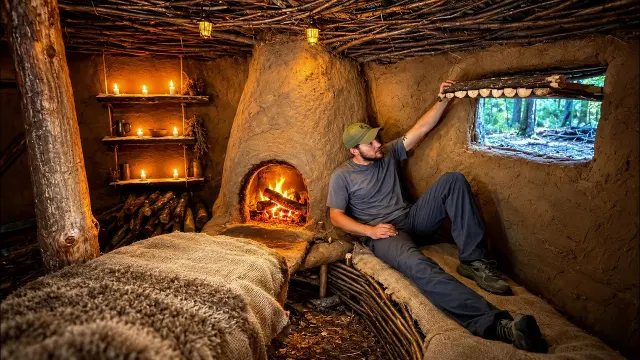
 Building a Cozy Forest House with a Clay Stove
#Forest House
1 ideas
Building a Cozy Forest House with a Clay Stove
Get new #Forest House ideas by email
Every Thursday: the week's best ideas, with the newest from #Forest House.
Related tags
Forest House: A Home Among the Trees
A forest house is a home built within or at the edge of woodland, designed around trees rather than in place of them. It answers an old wish: to live closer to quiet, to weather, to the slow rhythm of daylight coming through leaves. You will find these houses on forest clearings and slopes, on small rural plots, and wherever someone has chosen a stand of trees over a view of a street.
Where the idea comes from
Building in the woods is not one tradition but many. In northern Europe and North America, timber log construction grew out of what the land provided, and the log cabin became the classic forest dwelling. In Japan and parts of the Alpine region, woodland houses were framed in heavier timber with deep eaves and raised floors to shed snow and rain. Alongside these rural traditions sits the hunting lodge and the summer cottage, small buildings that shaped how we imagine a forest house today: modest, generous with windows, centered on warmth.
Main styles
Read more
Wood is the obvious material, but the styles differ widely. Log and timber-frame houses show their structure and age honestly, greying outside and deepening inside. Modern woodland homes often borrow the same palette in clean lines: large glazed walls facing the trees, a dark or natural cladding that lets the building recede into shade. Compact cabins and tiny woodland houses trade floor area for a bigger porch and a closer relationship with the garden of trees around them.
What these styles share is a concern for orientation. Where the sun enters, where the wind hits, and where a tree will fall all matter more than the size of a room.
Heating and the heart of the house
A wood stove, a clay stove, or a masonry heater often sits at the center of a forest home, both for warmth and because it makes the building feel inhabited. If you go this route, plan for the flue, the clearance from combustible materials, and a dry, sheltered place to store fuel. Good insulation and airtight construction matter just as much as the heater itself, and a backup heat source is wise in places where winter roads are difficult.
What beginners should know
Before you commit, spend time on the land in different seasons and at different hours. Look at soil and drainage, at how water moves downhill, at access for a vehicle in bad weather, and at the practical distance to supplies. Trees close to the house need attention: roots, shade, and the risk of falling branches. Be honest about moisture, insects, and maintenance, which is a constant companion of wood.
Then there is the quieter part. A forest house asks you to accept shade, longer shadows, wildlife at the edges of the garden, and nights that are truly dark. If that sounds like rest rather than inconvenience, you are already thinking like a forest dweller.
#Forest House: frequently asked questions
How should I begin planning a forest house?
Start by spending real time on the land itself, in different seasons and at different hours, rather than starting with the design. Watch where water moves downhill, how the soil drains, how a vehicle would reach the site in bad weather, and how far you are from supplies. What you notice there will shape the house far more than any floor plan.
Which style of forest house is right for me?
It depends on whether you want the structure to show or to recede. Log and timber-frame homes display their bones, grey honestly outside and deepen inside, while modern woodland houses keep a similar palette in clean lines with large glazed walls facing the trees. Compact cabins trade floor area for a generous porch, which suits anyone who would rather live mostly outdoors.
What matters most when building among trees?
Orientation comes first: where the sun enters, where wind hits, and where a tree might fall all matter more than the size of a room. Trees close to the house need attention for their roots, the shade they cast, and the risk of falling branches. Being honest about moisture, insects, and constant maintenance is part of the same conversation.
How do I heat a home in the woods?
A wood stove, clay stove, or masonry heater often sits at the heart of a forest house, giving both warmth and a sense of being inhabited. Plan the flue, the clearance from combustible materials, and a dry sheltered place to store fuel. Insulation and airtight construction do as much work as the heater, and a backup heat source is sensible where winter roads are difficult.
How do I care for a forest house over time?
Upkeep is a constant companion of wood, so expect to stay ahead of moisture and insects rather than react to them. Keep gutters, roof edges, and cladding checked, let timber weather as it will, and keep branches clear of the building. Visiting in every season is the simplest way to catch small problems while they are still small.
What mistakes do first-time forest dwellers make?
The most common is choosing a plot for its view and ignoring shade, drainage, and winter access until later. Another is assuming a heater alone keeps a house warm, when insulation and airtightness matter just as much. It also helps to decide honestly whether long shadows, wildlife at the garden's edge, and truly dark nights sound like rest or like inconvenience.
Videos come from YouTube and posts from Instagram; titles and summaries are our own. All rights belong to their creators.