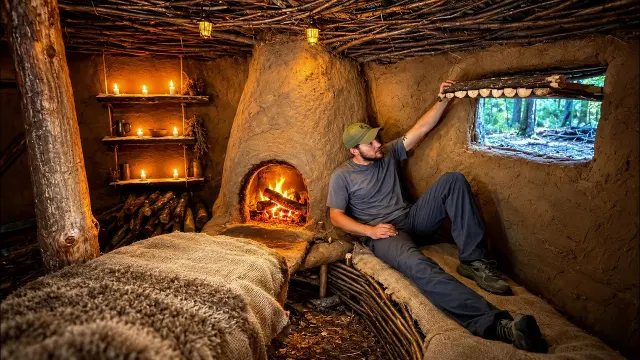
 Building a Cozy Forest House with a Clay Stove
#Woodland Living
1 ideas
Building a Cozy Forest House with a Clay Stove
Get new #Woodland Living ideas by email
Every Thursday: the week's best ideas, with the newest from #Woodland Living.
Related tags
Woodland Living: A Quiet Guide to Life Among Trees
Woodland living is less a single style than a direction of travel: a way of arranging ordinary life around trees, weather and the practicalities that come with being a little further from a main road. It can mean a cabin at the edge of a forest, a cottage with a woodpile stacked against the wall, or simply a household that treats warmth, water and food as things worth understanding rather than things that arrive by themselves. What joins these versions together is attention — to the seasons, to materials, and to the modest skills that keep a home dry and a table full.
Where the idea comes from
People have built with timber, stone and clay, heated with coppiced wood and gathered from hedgerows for a very long time; the knowledge is old and largely unbroken. The romantic picture of the lone hut in a clearing came later, layered on top of that practical base. Many woodland crafts — green woodworking, hurdle making, hedge laying, charcoal burning — grew out of daily need and survive now as crafts taught for their own pleasure. Winter, in these landscapes, is the season that shapes everything else: wood is cut and dried well ahead, food is preserved, and the house is prepared rather than merely heated.
Kinds of woodland living
Read more
- Full-time rural life, where the wood is the main source of heat and the garden a real part of the food.
- A seasonal retreat used in summer or around holidays, often simpler and less insulated.
- Weekend and hobby versions: a small plot, a shed, a stove, and a few projects on the go.
- Craft-led living, where the land is mostly a workshop and a source of materials.
Techniques worth learning
Fire matters most. Learning to split, stack and dry wood properly, to season it and to run a stove or a clay oven without waste, is the skill everything else rests on. Building comes next: timber frames, clay and stone walls, and the small repairs that keep a structure sound through wind and rain. Water needs its own patience — knowing where it comes from, storing it cleanly, and protecting it from frost. Food closes the circle: a small kitchen garden, storing and preserving what you grow, and foraging only for what you can identify with complete certainty, ideally alongside someone experienced.
Advice for beginners
Start smaller than you want to. Rent or borrow before you buy, and spend time on the site in bad weather rather than in photographs. Learn the safety basics of saws, axes and stoves before you need them, and ask about local rules on building, cutting wood and gathering plants — permission is part of good practice. Keep a notebook of what worked; woodland knowledge is mostly accumulated observation, not theory. Above all, resist the urge to romanticise: the pleasure comes from competence, and competence takes seasons, not weekends.
#Woodland Living: frequently asked questions
How do I get started with woodland living without overcommitting?
Begin smaller than feels satisfying: rent or borrow a place before buying anything, and spend time there in bad weather rather than judging by photographs. Test the parts of the life that actually appeal to you — splitting wood, keeping a stove going, growing a little food — and see how they fit into an ordinary week. Woodland knowledge builds through seasons of observation rather than through theory, so treat the first stretch as practice.
What do I actually need before setting up a woodland home?
The essentials are dependable heat, a clean and protected water supply, and a dry place to store and season wood. You also need a working grasp of saws, axes and stoves before you depend on them, plus a clear idea of local rules on building, cutting wood and gathering plants. Permission and preparation matter as much as equipment.
Which kind of woodland living should I choose?
It helps to decide whether you want full-time rural life, a seasonal retreat, a weekend hobby plot, or a craft-led setup where the land is mostly a workshop. Full-time living demands the most from insulation, water and wood supply, while seasonal and hobby versions can stay simpler and more forgiving. Choose the shape that matches the time and energy you can genuinely give it.
How do I look after a woodland home through the year?
Wood is cut and dried well ahead of the season it's needed, so the work of winter is mostly finished before winter arrives. Water needs attention of its own — knowing where it comes from, storing it cleanly and keeping it from freezing. The rest is steady maintenance: small repairs to walls, roofs and frames before weather turns them into large ones.
Can I explore woodland living without owning land?
Yes — a small plot, a shed, a stove and a few ongoing projects cover the weekend and hobby version very well. Much of the appeal sits in the skills rather than the acreage: seasoning wood properly, cooking outdoors, growing and preserving a modest amount of food. Craft-led interests such as green woodworking also need little more than material and time.
What mistakes do beginners most often make?
The common one is romanticising: buying too much land or too ambitious a structure before the skills exist to look after it. Others include foraging for plants without complete certainty, and skipping the safety basics of tools and stoves until an accident forces the lesson. Slow down, ask about permissions, and keep a notebook of what worked.
Videos come from YouTube and posts from Instagram; titles and summaries are our own. All rights belong to their creators.