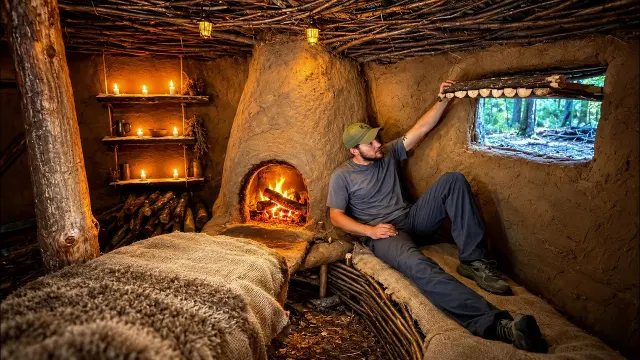
 Building a Cozy Forest House with a Clay Stove
#Traditional Building
1 ideas
Building a Cozy Forest House with a Clay Stove
Get new #Traditional Building ideas by email
Every Thursday: the week's best ideas, with the newest from #Traditional Building.
Related tags
Traditional Building: Materials, Methods and Craft
Traditional building is the practice of making and repairing structures with methods passed down within a region, using materials close at hand. It grew from necessity and local knowledge: what the ground provided, what the climate demanded, and what builders could shape with simple tools. You will find it in houses, barns, walls, workshops and places of worship, and in the everyday details that make a street or village feel like itself.
What gives it character
Traditional buildings tend to be designed around their setting. Thick walls may hold warmth or shade, deep eaves may throw off rain, and small openings may balance light with protection from wind. The result is not a single style but a family of local answers. A timber-framed house, a stone cottage, an earth-walled home and a thatched roof each solve different problems with the materials around them.
Materials and methods
The main materials are stone, timber, clay, lime, brick and plant fibres such as straw or reed. Common methods include load-bearing masonry, where walls carry the structure; timber framing, where a skeleton of wood supports the building; earth construction such as cob or rammed earth; dry stone walling, where stones are fitted without mortar; and wattle and daub, a woven panel coated with clay or lime. Many traditional buildings combine several of these.
What these methods share is a close relationship with moisture. Traditional walls are often designed to absorb and release water rather than seal it out completely. That is why repairs need to respect how the building breathes. Cement-heavy renders and sealants can trap damp in walls that were built to dry naturally.
Read more
Starting to learn
Begin with the buildings around you. Look at how walls meet roofs, how openings are framed, how materials weather, and where repairs have failed. Read about local techniques and talk to craftspeople who work with stone, timber, lime or earth. Learn the basics of structural behaviour and moisture before you attempt work. Traditional building rewards patience: a small test panel or a practice wall teaches more than a heap of theory.
Practical care
Keep gutters and drainage clear, because water is the most common enemy of old fabric. Repair rather than replace where you can, and match new materials to old ones. Use lime mortars and renders where they suit the wall, and avoid trapping moisture. Respect the structure: do not cut away beams or load-bearing walls without specialist advice. If a building is historic, check local planning rules before changing it. Work with experienced craftspeople when a job is beyond your skill, and keep notes and photographs of what you do so future caretakers understand the building.
Videos come from YouTube and posts from Instagram; titles and summaries are our own. All rights belong to their creators.