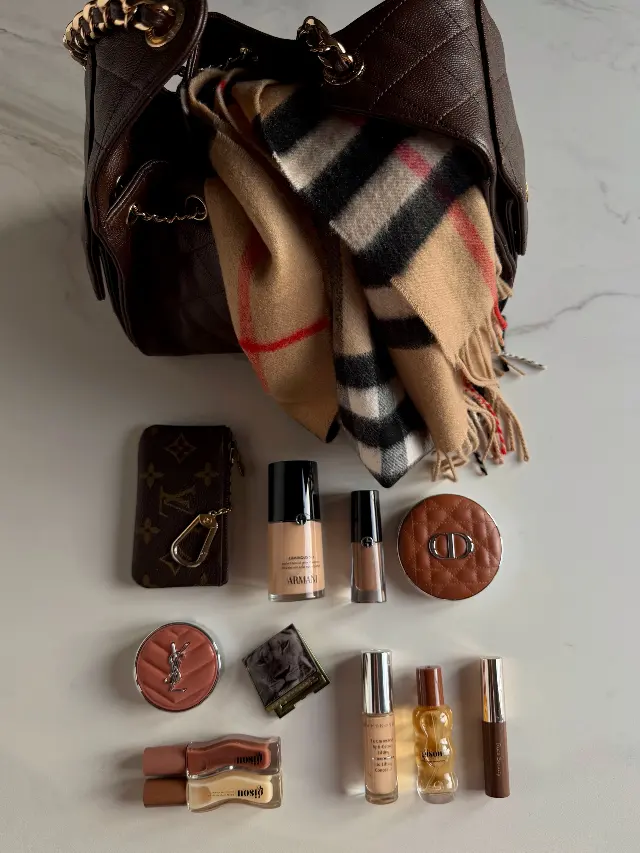
 Weekend beauty edit: makeup favourites and London Christmas windows
#Fragrance
9 ideas
Weekend beauty edit: makeup favourites and London Christmas windows
Get new #Fragrance ideas by email
Every Thursday: the week's best ideas, with the newest from #Fragrance.
Related tags
Fragrance: A Beginner's Guide to Perfume and Scent
Fragrance is the art of composing aromatic materials so that they smell pleasant on skin, in the air, or in a room. It is one of the oldest forms of personal adornment: people have burned resins, pressed flowers and steeped herbs in oils for thousands of years, long before perfume became something you could buy in a bottle. What has changed over the centuries is the craft, not the impulse. We still wear scent to feel finished, to mark an occasion, or simply because a particular smell makes us feel like ourselves.
How a Fragrance Is Built
Most perfumes are arranged in three layers, usually called notes. Top notes are what you notice in the first few minutes: citrus, light herbs, crisp green or aquatic accords. They fade quickly by design, opening the door to the heart, or middle notes, which carry the character of the composition and last for hours. At the base sit the heavier materials, woods, resins, musk and vanilla-like accords, which linger longest and hold the whole structure together. A fragrance is not a fixed smell; it is a story that unfolds over the hours you wear it, which is why judging a scent from the first spray is rarely fair.
The Families of Scent
Read more
Perfumers group compositions into broad families, a useful map when you are learning what you like.
- Floral: built around rose, jasmine, orange blossom or abstract flower accords, from a single bloom to a full bouquet.
- Citrus and aromatic: bright and clean, drawing on bergamot, lemon, lavender and herbs.
- Woody: cedar, sandalwood, vetiver and patchouli, warm and dry, often used as a base.
- Oriental or amber: resinous, spicy and sweet, with materials like benzoin, incense and vanilla.
- Chypre and fougère: classic structures pairing citrus and moss, or lavender and hay-like tonka, that underpin many familiar perfumes.
- Gourmand: edible-smelling accords such as caramel, cocoa and vanilla.
Concentrations
The same composition can appear at different strengths. Eau de cologne is the lightest and most fleeting, eau de toilette sits in the middle, eau de parfum is richer and longer-lasting, and parfum is the most concentrated of all. Strength is not the same as quality; a well-made light scent can be more satisfying than a heavy one.
Wearing Fragrance Well
Apply to clean, lightly moisturised skin, since dry skin releases scent faster. Warm pulse points, the wrists, base of the throat and behind the ears, help a fragrance bloom, and spraying from a short distance gives better coverage than rubbing. Do not rub your wrists together; friction muddles the opening notes. Two or three sprays are usually plenty, and it is kinder to those around you to apply less than you think you need.
Store bottles away from sunlight and heat, keep them capped, and test on skin rather than paper before committing.
#Fragrance: frequently asked questions
How do I choose a fragrance that suits me if I am a beginner?
Start by thinking about the scent families you already enjoy in everyday life, like fresh citrus, soft florals, warm woods, or sweeter gourmand notes. Test on skin and wear it for a while, because a fragrance changes as it moves from the first impression to the deeper dry-down.
What should I look for when buying a perfume for the first time?
Pay attention to the concentration, since lighter styles feel more airy and fleeting while richer ones last longer on skin. It also helps to notice whether the scent feels clean, floral, woody, spicy, or sweet, so you can narrow down what feels most natural to wear.
How can I make fragrance last longer on my skin?
Apply it to clean, lightly moisturised skin and focus on pulse points where warmth helps the scent open up. A few sprays are usually enough, and avoiding rubbing the wrists together helps preserve the layers of the perfume.
What is the best way to wear fragrance for an event or special occasion?
Choose a scent that matches the mood of the moment: something soft and fresh for daytime, or something warmer and deeper for an evening setting. Apply a moderate amount so it feels polished without overwhelming the people around you.
What are the most common mistakes people make with perfume?
One common mistake is judging a fragrance too quickly from the first spray, before the heart and base notes have appeared. Another is overapplying or storing bottles in heat and sunlight, which can affect how the scent wears and how long it stays pleasant.
Videos come from YouTube and posts from Instagram; titles and summaries are our own. All rights belong to their creators.