 Four Free Courses for Learning Claude AI from the Basics
#Free Online Courses
10 ideas
Four Free Courses for Learning Claude AI from the Basics
 Free English Speaking Course, Class One: Self Introduction
 Three Free Websites for University Courses and Classic Books
 Nine Free Learning Sites That Rival Paid College Courses
 Seven Free Cybersecurity Courses and Practice Platforms
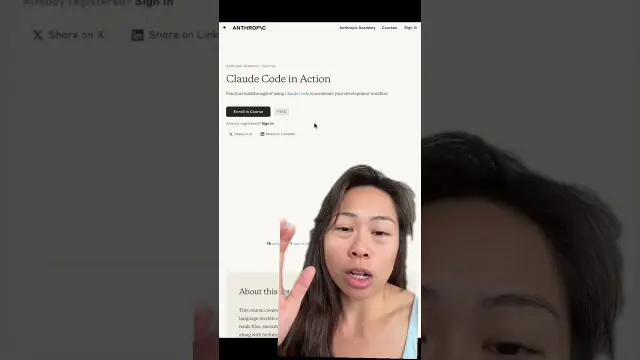 Anthropic's Free Claude Code Course Explained
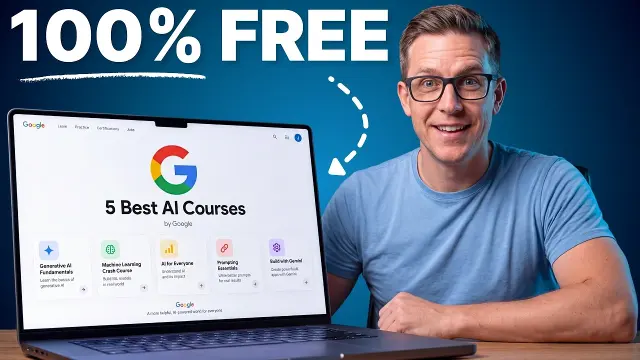 Five Free Google AI Courses Worth Taking This Year
 Seven Free Websites for Courses, Books and Textbooks
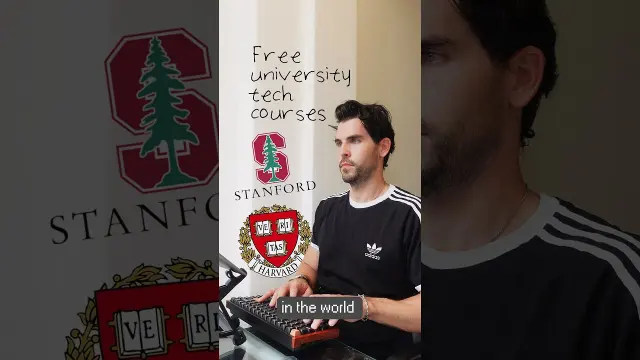 Free University Tech Courses from Harvard, Stanford and MIT
 Seven Free Courses from Harvard, Yale and MIT
Get new #Free Online Courses ideas by email
Every Thursday: the week's best ideas, with the newest from #Free Online Courses.
Related tags
Free Online Courses: How to Learn Without Paying
A free online course is any structured programme of study you can follow over the internet without paying for access. The subject matter ranges from programming, mathematics and languages to photography, accounting, cooking and creative writing. What makes something a course rather than a collection of videos is sequence: lessons build on each other, there are usually exercises or quizzes to check yourself, and there is an expected amount of time to spend.
Where the idea comes from
Free online learning grew out of two older traditions. The first is open courseware: universities publishing the materials of their own lectures, reading lists and assignments for anyone to read. The second is the distance-learning habit of broadcasting lessons to people who could not attend in person. When video became cheap to distribute, those two threads met, and organisations appeared that package material into weeks, modules and deadlines. Alongside them sit independent teachers who publish tutorials on their own, often with no institution behind them at all.
The main kinds
Read more
- Open courseware and lecture archives: raw material from real classes, with no structure imposed and no assessment.
- Scheduled courses: weekly content, discussion forums and deadlines, which create a sense of a class moving together.
- Self-paced courses: the same material with no timetable, so progress depends entirely on you.
- Interactive environments: you write code or solve problems directly in the browser and get immediate feedback.
- Short skill series: a handful of lessons on one narrow task, useful when you need something specific quickly.
- Free tiers of paid programmes: the teaching is open, but grading, certificates or mentoring may not be.
What free usually means
Access is free; proof is often not. Certificates, examinations and tutor support frequently sit behind a payment, and some platforms keep material available only for a limited period. Read the conditions before you invest weeks in something, since discovering the terms halfway through is discouraging.
Choosing well
Begin with a goal rather than a catalogue. "Be able to read a balance sheet" or "hold a conversation in Spanish" narrows the field far faster than browsing categories. Then check the workload honestly — many courses state expected hours per week — and read the syllabus to see whether the level matches yours. Watch one lesson before committing; you will learn more about the teaching style in ten minutes than from any description.
Habits that help
Take one course at a time. A long list of started courses feels like progress but rarely is. Put the sessions in your calendar as you would a class you had paid for. Write notes by hand or in a document, and do the exercises even when they are optional, because recall beats re-watching. Choose a short course first and finish it, so you know what completion feels like. Finally, use the discussion forums: asking a question in public is often the fastest way to find out what you misunderstood.
None of this requires a qualification to begin. It requires a subject you actually care about and a modest, repeated slot of time.
#Free Online Courses: frequently asked questions
How do I get started with a free online course if I’ve never taken one before?
Start with a clear goal, such as learning a language, improving a tech skill, or understanding a school subject. Then choose one course that matches your level, watch a lesson to see if the teaching style suits you, and set aside regular time to keep up with it.
What should I check before joining a free online course?
Look at the syllabus, the expected workload, and whether the course is self-paced or follows a schedule. Also check what is actually free, because some platforms charge for certificates, grading, or extra support even when the lessons themselves are open.
Which type of free course is best for me: self-paced, scheduled, or interactive?
Choose self-paced courses if you want flexibility and like learning on your own timetable. Pick scheduled courses if you do better with deadlines and a sense of class rhythm, and choose interactive courses if you learn best by doing exercises directly and getting immediate feedback.
Are free online courses good for practical subjects like coding, writing, or speaking skills?
Yes, especially when the course includes exercises, quizzes, or hands-on practice instead of just videos. Many free courses focus on specific skills, so they can be a good fit for topics like coding, cybersecurity, speaking practice, or creative writing.
What are the most common mistakes people make with free online courses?
A common mistake is signing up for too many courses at once and finishing none of them. Another is ignoring the course conditions, such as limited access or paid extras, and skipping exercises that help the material stick.
Videos come from YouTube and posts from Instagram; titles and summaries are our own. All rights belong to their creators.