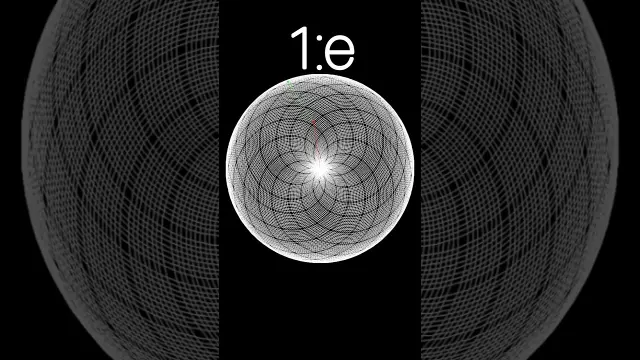
 Generative Math Art Exploration
#Generative Art
1 ideas
Generative Math Art Exploration
Get new #Generative Art ideas by email
Every Thursday: the week's best ideas, with the newest from #Generative Art.
Related tags
Generative Art: Creative Systems and Code
Generative art is art made with the help of a system. Instead of drawing every detail by hand, you set rules, choose tools, and let those rules produce the final image, pattern, or animation. The system can be as simple as a repeated hand-drawn rule or as complex as a computer program that creates endless variations. What matters is that the artist designs the process as much as the outcome.
Generative art has roots in many fields: drawing, mathematics, design, music, and computer science. Long before digital tools, artists used repetition, geometry, grids, chance, and patterns to create work that felt structured yet alive. With computers, these ideas became easier to explore at scale. Today, generative art can be made by coding, plotting, printing, drawing with algorithms, or combining digital and handmade methods.
There are many kinds of generative art. Some works are highly geometric, built from lines, circles, and repeated shapes. Others use randomness to introduce variation, so no two outputs are exactly alike. Some artists use noise, simulation, or recursive rules to create organic forms that resemble growth, weather, waves, or cellular structures. Others focus on visual systems such as grids, typography, collage, or color fields. The style can be minimal and precise, or loose and expressive.
If you are new to generative art, start with simple rules. Pick one or two elements only, such as shape, line direction, or color. Decide how those elements should change: rotate, repeat, scale, shift, overlap, or scatter. Small changes in rules often create surprising results. It helps to think like a designer and a scientist at the same time: you make choices, then observe what the system does.
Read more
A few practical tips can make the process easier:
- Begin with a clear idea of the visual result you want, then reduce it to simple rules.
- Limit your palette at first so the structure is easier to see.
- Use repetition to build rhythm, then add variation to avoid stiffness.
- Keep notes on your rules so you can refine them later.
- Embrace accidents; in generative work, unexpected results often lead to the strongest images.
Generative art is useful because it lets you explore many possibilities from one set of ideas. It can create variation, consistency, and complexity without requiring every detail to be manually controlled. For that reason, it is often used in illustration, surface pattern design, motion graphics, and experimental fine art.
If you want to understand generative art more deeply, focus on the relationship between order and chance. The most engaging work usually comes from a balance between both. You create the system, but you also allow it to surprise you.
Videos come from YouTube and posts from Instagram; titles and summaries are our own. All rights belong to their creators.