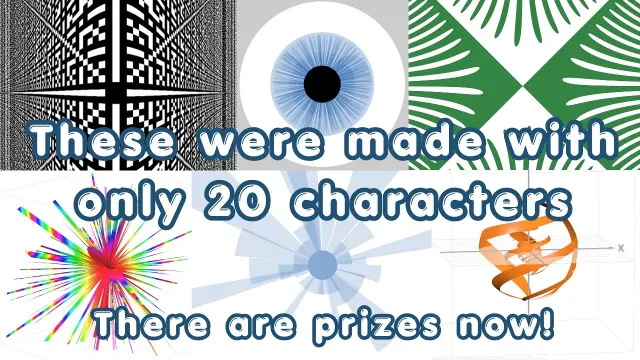
 Creating Impressive Mathematical Art with Desmos Graphing
#Math Art
11 ideas
Creating Impressive Mathematical Art with Desmos Graphing
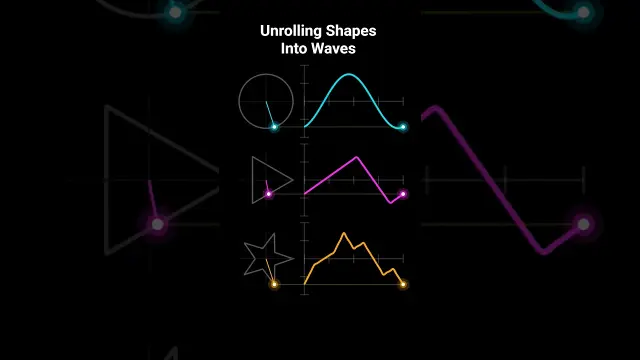 Transforming Geometric Shapes into Satisfying Wave Functions
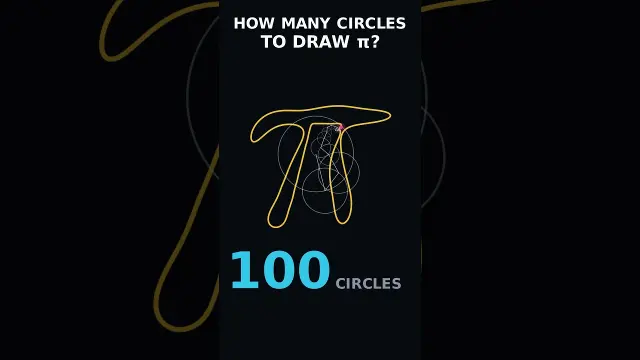 Drawing the Pi Symbol Using Rotating Fourier Series Circles
 The Art of Mathematics Exhibition with Eddie Woo
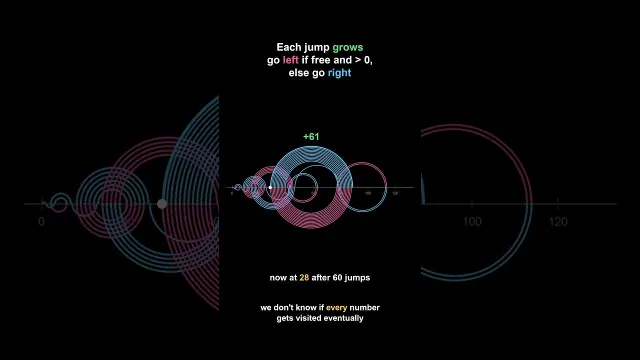 Recamán's Sequence Visualized Through Mathematical Rules
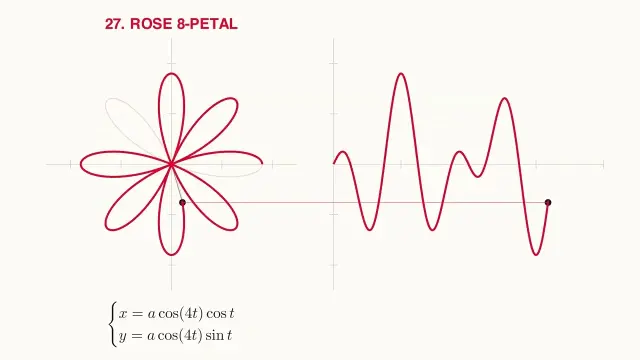 Transforming Mathematical Curves and Shapes into Sound and Art
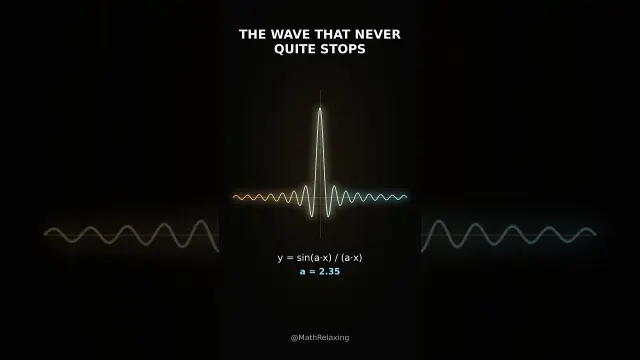 The Sinc Function Squeezed with Procedural Music
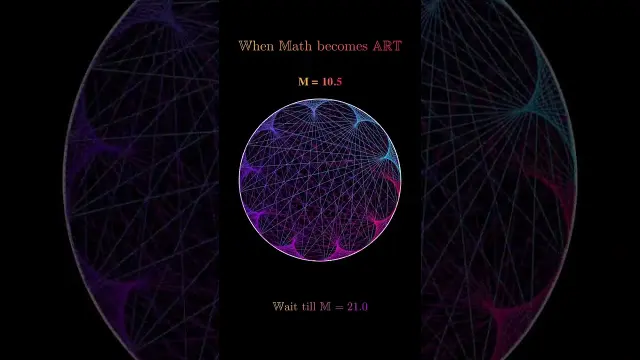 Exploring Multiplication Circle Patterns and Infinite Geometry
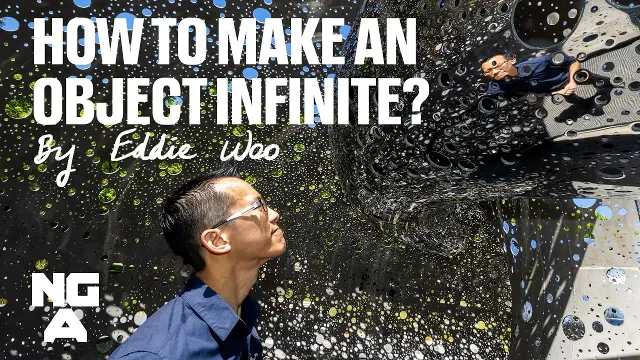 The Mathematical Principles Behind Lindy Lee's Ouroboros
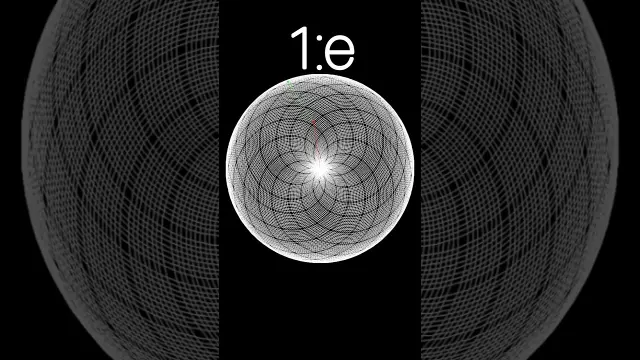 Generative Math Art Exploration
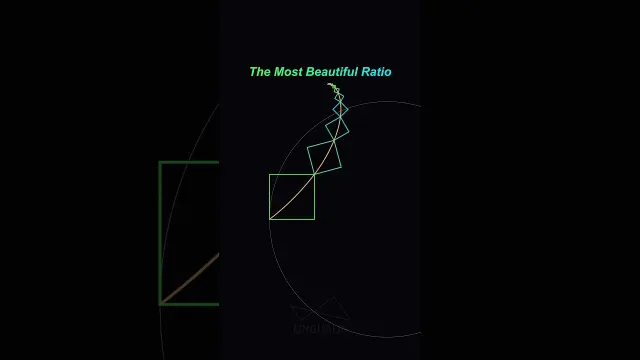 Visualizing the Golden Ratio in Geometry and Art
Get new #Math Art ideas by email
Every Thursday: the week's best ideas, with the newest from #Math Art.
Related tags
Math Art: Where Numbers Become Images
Math art is work that uses mathematical ideas to create visual form. It can be precise and geometric, or surprising and organic, but it always connects number, pattern, and image. Some math art begins with simple shapes such as circles, grids, and polygons. Other pieces grow from formulas, sequences, symmetry, or repeated rules. The result can be a drawing, a print, a sculpture, a digital animation, or even a textile pattern.
Where math art comes from
The link between mathematics and art is ancient. People have long used proportion, symmetry, tessellation, and repetition in decoration, architecture, and design. Many traditional patterns in tiles, weaving, mosaics, and manuscript ornament depend on mathematical structure even when they are made by hand rather than by formula. In modern times, artists and designers also use computation to explore pattern, randomness, and transformation.
Math art is not one single style. It is a broad way of making images with mathematical thinking. Sometimes the math is visible in the final piece; sometimes it is only the hidden structure underneath.
Read more
Main styles and forms
Some common kinds of math art include:
- Geometric art, built from lines, circles, polygons, symmetry, and repeated shapes
- Tessellations, where shapes fit together without gaps or overlaps
- Fractal art, based on self-similar forms that repeat at different scales
- Algorithmic or generative art, made by following a set of rules
- Plotter drawings and digital line work, often created from equations or data
- Sequence-based art, where numbers or patterns determine the position of marks
Math art can be highly controlled or loosely interpreted. A single rule can create a calm pattern, while many repeated rules can produce complexity and movement.
Techniques you can try
If you are new to math art, start with simple ideas and see how far they can go. A compass, ruler, pencil, and graph paper are enough for many projects. You can also use basic drawing software or code, if you prefer.
A few approachable methods are:
- Repeating one shape in a grid
- Rotating a line or curve around a center point
- Building patterns from symmetry, such as reflection or radial balance
- Drawing by following a number sequence
- Layering simple shapes to create more complex forms
Try to notice what changes when you alter one rule. A small shift in angle, spacing, or scale can completely change the image.
What to know as a beginner
You do not need advanced mathematics to enjoy math art. Clear repetition and careful observation are often enough. Begin with one idea instead of many. Make test versions, because variation is part of the process. If you are working by hand, use light construction lines first so you can adjust the composition. If you are working digitally, save different versions as you go.
Math art rewards patience. The appeal often comes from watching order become pattern, and pattern become beauty. Even simple rules can lead to elegant results when you let them repeat, overlap, and transform over time.
Practical tips
- Start with symmetry or repetition before trying complex formulas
- Keep the first draft simple and focus on structure
- Use graph paper for alignment and proportion
- Compare versions to see how small changes affect the result
- Leave some space; empty areas can make patterns clearer
Whether you prefer hand-drawn geometry or computer-made forms, math art is a way to explore how rules can create visual delight.
Videos come from YouTube and posts from Instagram; titles and summaries are our own. All rights belong to their creators.