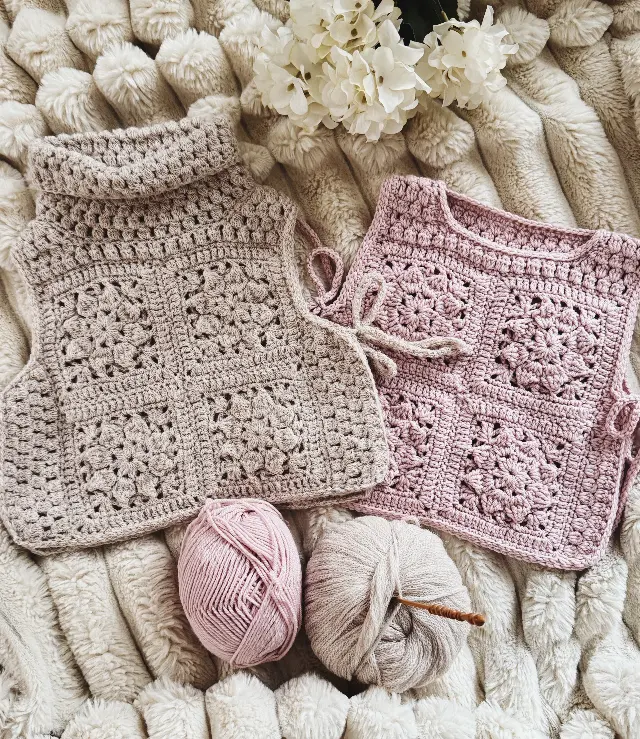
 Granny Slipover Crochet Pattern in Child Sizes for Colder Weather
#Granny Crochet
1 ideas
Granny Slipover Crochet Pattern in Child Sizes for Colder Weather
Get new #Granny Crochet ideas by email
Every Thursday: the week's best ideas, with the newest from #Granny Crochet.
Related tags
Granny Crochet: A Beginner's Guide to Squares and Stripes
Granny crochet is the name given to a family of crochet techniques built on one simple idea: small groups of stitches worked into the same space, leaving a gap, then another group worked into that gap. The most familiar version is the granny square, a flat motif that grows outward in rounds from a small centre. Worked side by side, the same principle becomes a stripe, a hexagon, a triangle, a star or an entire blanket made in one piece.
The stitch itself is usually a cluster of three double crochet stitches (treble, in UK terms) separated by a short chain. Because each cluster sits in the space left by the round or row before, the fabric builds quickly and forgives small mistakes. There is no strict stitch count to lose track of, which is exactly why the technique has been passed down to beginners for generations.
Where it comes from
Working small motifs and joining them into larger textiles is an old idea found in many needlework traditions, and crocheted squares became widespread through the middle decades of the twentieth century, when they suited the colourful yarns available and the practical wish to use up odds and ends. The technique has never really gone out of fashion: it is thrifty, portable and endlessly variable, and the finished patchwork look is part of its charm.
Read more
The main forms
- The classic square, worked in rounds from the centre outward, often changing colour each round.
- The continuous or solid square, which closes the gaps for a denser, warmer fabric.
- Granny stripes, where clusters are worked back and forth in rows instead of rounds.
- Motifs in other shapes, such as hexagons and triangles, which tile into blankets and garments.
- Modern variants that place the clusters in a single colour, in fine yarn, or inside a garment shape.
What beginners should know
Start with a smooth, medium-weight yarn and a hook that feels comfortable in your hand; a lighter colour makes the stitches easier to see. Work a few practice squares before committing to a large project, and count the clusters at the end of each round until the rhythm becomes automatic.
Colour is where granny crochet comes alive. Choose a small palette and repeat it, rather than adding a new shade to every round, and let one colour do the quiet work of holding the others together.
Joining is the step that decides how a project looks and feels. Sewn joins give a flat, neat finish; crocheted joins add a visible ridge that can become a design feature; join-as-you-go methods save a great deal of fiddly work at the end.
Finally, weave in ends as you finish each motif rather than leaving them all for the last day, and block your pieces lightly so the squares settle into an even shape before you assemble them.
#Granny Crochet: frequently asked questions
How do I start granny crochet if I've never crocheted before?
Begin by learning the basic cluster of stitches the technique is built on, then practise working rounds outward from a small centre ring. Make a few small practice squares before you commit to a big project, and check the clusters at the end of each round until the rhythm feels automatic. Granny crochet is forgiving because mistakes are easy to undo and the pattern repeats so predictably.
What do I need to get started with granny crochet?
You really only need a smooth, medium-weight yarn, a hook that sits comfortably in your hand, and a pair of scissors for trimming. A lighter-coloured yarn is worth choosing at first because it makes individual stitches easier to see. As you go further, a yarn needle for seaming and a mat for blocking pieces will become useful.
Which kind of granny project should I choose?
The classic open square is the best starting point because it shows the technique clearly, while a solid version gives a denser, warmer fabric if you want something cosier. Stripes suit people who dislike joining motifs, and other shapes such as hexagons are fun once the basic rhythm is familiar. Pick the form that matches how much finishing work you actually enjoy doing.
How should I care for a granny crochet blanket or garment?
Treat finished pieces gently: wash by hand or on a delicate cycle in cool water with a mild soap, then press the water out rather than wringing it. Dry the piece flat and reshape it while damp so the motifs keep their intended shape. Store folded rather than hung, and keep folded work away from damp and strong sunlight.
What are the most common mistakes in granny crochet?
The usual ones are changing colour too randomly, leaving all the ends to weave in until the very end, and joining motifs without blocking them first. Choose a small palette and repeat it so one quiet shade holds the colours together, and weave in each end as you finish a motif. Blocking pieces lightly before assembly helps them settle into an even shape.
What can I make with granny crochet for a gift or special occasion?
Blankets and throws remain the most popular choice because they suit almost any home and use up odds and ends of yarn. Smaller projects such as cushions, bags, scarves and simple garments like a slipover work well for a baby arrival, a housewarming or a colder-season present. Matching the palette to the person's own taste matters more than the size of the project.
Videos come from YouTube and posts from Instagram; titles and summaries are our own. All rights belong to their creators.