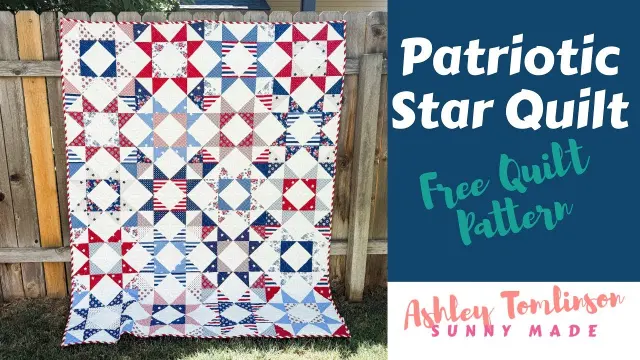
 How to Make a Half-Square Triangle Layer Cake Quilt
#Half Square Triangles
1 ideas
How to Make a Half-Square Triangle Layer Cake Quilt
Get new #Half Square Triangles ideas by email
Every Thursday: the week's best ideas, with the newest from #Half Square Triangles.
Related tags
Half-Square Triangles in Quilting
Half-square triangles, often called HSTs, are one of the most useful building blocks in quilting. As the name suggests, each unit is made of two triangles joined along a diagonal seam, creating a square that can be combined with others to form blocks, borders, and entire quilt tops. They look simple, but they can create a huge range of patterns, from classic, geometric layouts to softer, more scattered designs.
What half-square triangles are
A half-square triangle is a square patch made from two right triangles of the same size. In quilting, the shape is valued because it can be rotated in many directions, which means a single unit can suggest stars, arrows, pinwheels, diamonds, or chevrons depending on how it is placed.
These units have been used in patchwork for a very long time because they are efficient, adaptable, and easy to combine with other shapes. They are especially helpful when you want a design that feels structured without being complicated.
Read more
How they are made
There are several common ways to make half-square triangles, and the right method depends on how many units you need and how precise you want them to be.
- The simplest method is to sew two squares right sides together with a diagonal seam, then cut them apart.
- Many quilters make two HSTs at once by stitching on both sides of a marked diagonal line before cutting.
- For larger quantities, some prefer chain-piecing or other batch methods to keep the work consistent.
No matter the method, accuracy matters. Cutting carefully, sewing with a consistent seam allowance, and pressing neatly all help the units come out the correct size.
What beginners should know
If you are new to quilting, half-square triangles are a good place to practice basic skills. They teach you how to mark, sew, cut, press, and square up pieces. They also show why even small differences in size can affect the whole block.
A few practical habits make the process easier:
- Cut your squares slightly larger if you want room to trim.
- Press seams gently rather than ironing them flat and distorted.
- Use a ruler to square the unit after sewing if needed.
- Keep the diagonal seam straight and avoid stretching the bias edges.
Because the triangles are cut on the bias, they can stretch more easily than square pieces. Handle them carefully, especially before they are sewn into a larger block.
Ways they are used
Half-square triangles can stand alone as a repeating grid or serve as the quiet support for more complex patterns. They are often arranged into stars, sawtooth borders, spinning pinwheels, and angled stripes. You can also use them to create movement in a quilt, since the diagonal lines naturally guide the eye across the design.
When choosing fabrics, think about contrast. Strong contrast makes the triangle shapes stand out clearly, while low contrast creates a softer, more blended look. Both can be beautiful, depending on the feeling you want.
A timeless patchwork shape
The appeal of half-square triangles lies in their flexibility. They are straightforward to sew, easy to repeat, and endlessly adaptable. Once you understand how they work, you can use them in small projects or large quilts with equal confidence.
#Half Square Triangles: frequently asked questions
How do I get started making half square triangles as a beginner?
Start with two same-sized squares, place them right sides together, and sew a straight diagonal seam before cutting them apart to reveal two triangle units. This simple pairing exercise teaches marking, seam allowance and pressing, which are the skills everything else builds on. Practice on a handful of units before committing to a full block or quilt.
What do I need to make half square triangles?
You mainly need fabric squares, a rotary cutter or scissors, a ruler, a marking tool, pins and a sewing machine or needle and thread, plus an iron for pressing. A square ruler is especially handy because it lets you trim each unit to an exact size after sewing. No specialty notions are required to begin.
Which method of making half square triangles should I choose?
If you only need a few units, sewing two squares together along a diagonal and cutting them apart is the quickest way to learn. Stitching on both sides of a marked diagonal line gives you two identical units at once, which suits a small batch. For a large quilt, batch and chain-piecing approaches keep the work consistent and save time.
How do I care for half square triangle quilts so they hold their shape?
Because the diagonal edges are cut on the bias, they stretch easily, so handle the units gently and avoid pulling them before they are joined into a block. Press seams gently with an iron rather than dragging it across the fabric, which can distort the shape. Once finished, wash the quilt as you would any patchwork piece and dry it flat or on low to keep the seams crisp.
What can I make with half square triangles?
They work beautifully as a simple repeating grid, and they also build stars, pinwheels, sawtooth borders and angled stripes, or add a sense of movement to a design through their diagonal lines. Layer cake quilts are a popular project because precut squares pair neatly into many units. Small projects like cushions and table runners are a good low-pressure way to try a layout.
What are the most common mistakes with half square triangles?
The usual culprits are cutting squares too small to allow trimming, sewing an inconsistent seam allowance, and pressing seams in a way that stretches or distorts the unit. Stretching the bias edges while handling is another frequent problem. Cutting slightly oversized squares, squaring up each unit with a ruler, and pressing rather than ironing solve most of these issues.
Videos come from YouTube and posts from Instagram; titles and summaries are our own. All rights belong to their creators.