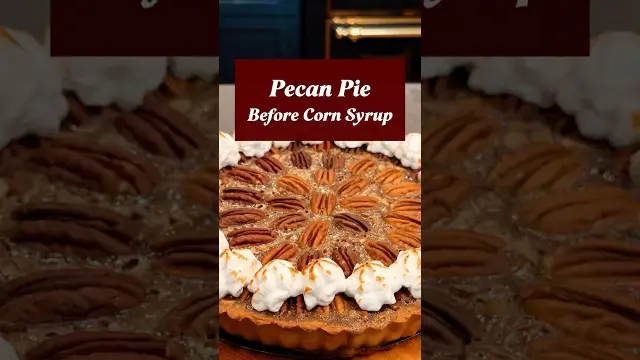
 A 1914 Pecan Pie Recipe Recreated for the Thanksgiving Table
#Historical Baking
1 ideas
A 1914 Pecan Pie Recipe Recreated for the Thanksgiving Table
Get new #Historical Baking ideas by email
Every Thursday: the week's best ideas, with the newest from #Historical Baking.
Related tags
Historical Baking: A Guide to Baking the Old-Fashioned Way
Historical baking is the practice of making breads, pies, cakes and biscuits using the ingredients, methods and equipment of earlier centuries. It sits somewhere between cooking and research: you read an old recipe, work out what it actually meant, and then try to make it behave in a modern kitchen. Some people come to it through family recipe cards, others through museums, living-history sites or a curiosity about how everyday food used to taste.
Where it comes from
For most of history, baking happened in a hearth. Dough was set in a heavy pot or on a stone floor beside the fire, and the baker judged heat by hand and eye rather than by a dial. Purpose-built ovens, often shared by a whole street or village, changed what was possible: once you had a hot, enclosed chamber, you could bake risen bread, then pastries, then the whole range of pies and cakes. Leavening followed a similar path, from wild yeast captured in a starter to the cultivated and chemical leavenings that made light cakes an ordinary household matter rather than a specialist's skill.
Main kinds of historical baking
Read more
- Hearth and oven breads, from flatbreads and soda breads to long-fermented sourdough loaves.
- Pies and tarts, once as much a way of keeping food as of presenting it, with sturdy crusts and simple fillings.
- Biscuits, shortbreads and small cakes built to keep well in a tin.
- Yeasted sweet doughs and enriched breads for holidays and celebrations.
- Puddings and steamed sponges, which needed no oven at all.
Techniques worth knowing
Old recipes often rely on feel rather than precision. You will meet instructions to "make a stiff dough", to bake "in a quick oven", or to use a "teacup" of this and a "gill" of that. Sourdough starters, hand kneading, blind baking with rice or beans, and working pastry with lard or butter by hand are all standard parts of the craft.
If you are starting out
- Begin with something forgiving: a simple soda bread, a shortcrust pastry or a plain biscuit.
- Copy the recipe out by hand and annotate as you go, noting what you changed and how it turned out.
- Treat old oven directions as hints. Use an oven thermometer and watch the bake closely the first time.
- Expect ingredients to differ. Flour is milled more consistently today, and modern yeast works faster than a wild starter; small adjustments are normal, not failure.
- Work in small batches. It keeps the experiment cheap and the kitchen calm.
- Be careful with raw egg and with recipes that call for long, warm standing times; when in doubt, refrigerate.
The pleasure of historical baking is not exact replication. It is the conversation between an old instruction and a working kitchen, and the moment a familiar food tastes unexpectedly new.
#Historical Baking: frequently asked questions
How do I get started with historical baking at home?
Start with a forgiving recipe such as a simple soda bread, a plain shortcrust pastry or a basic biscuit, so the technique matters more than precision. Copy the recipe out by hand so you can annotate what you changed and how the bake turned out. Work in small batches to keep the experiment cheap and the kitchen calm.
What equipment do I really need for historical baking?
Most of it is already in a normal kitchen: a bowl, a heavy pot or baking stone for hearth-style loaves, a rolling pin and a cloth for pastry. Two additions genuinely help, an oven thermometer and a set of scales, because old recipes assume you judge heat and quantity by feel. For steamed puddings and sponges you need only a lidded mould and a pan of simmering water, no oven at all.
Which kind of historical baking should I choose first?
Pick the branch that matches what you already like to eat, then pick the simplest recipe inside it. If you enjoy bread, begin with a flatbread or soda bread rather than a long-fermented sourdough; if you enjoy pastry, begin with shortcrust and a plain filling. Biscuits and small cakes are the easiest entry point overall, since they keep well and tolerate a rough hand.
How do I look after a sourdough starter or other old-style leavening?
Feed a starter regularly and keep it somewhere cool and out of direct sun, and expect it to behave more slowly than modern commercial yeast. Watch for a sour smell or a dark liquid on top, both of which mean it needs refreshing rather than rescue. If you bake only occasionally, dry a little out or store it chilled so you are not committed to baking every day.
What could I bake from history for a celebration table?
Enriched yeasted doughs and holiday breads, sturdy fruit pies and iced small cakes all come from celebration traditions and present well on a table. A recreated heritage pie is a good centrepiece because the old recipes were built to be shared and to hold their shape. Keep the rest of the menu simple so the historic bake stays the thing people remember.
What common mistakes should I avoid?
The usual trap is treating vague old directions as exact ones, so use an oven thermometer and watch the bake closely the first time rather than trusting a dial. Expect modern flour and modern yeast to behave differently from what the recipe assumed, and adjust without treating that as failure. Be careful with raw egg and with any recipe calling for long, warm standing times, and refrigerate when in doubt.
Videos come from YouTube and posts from Instagram; titles and summaries are our own. All rights belong to their creators.