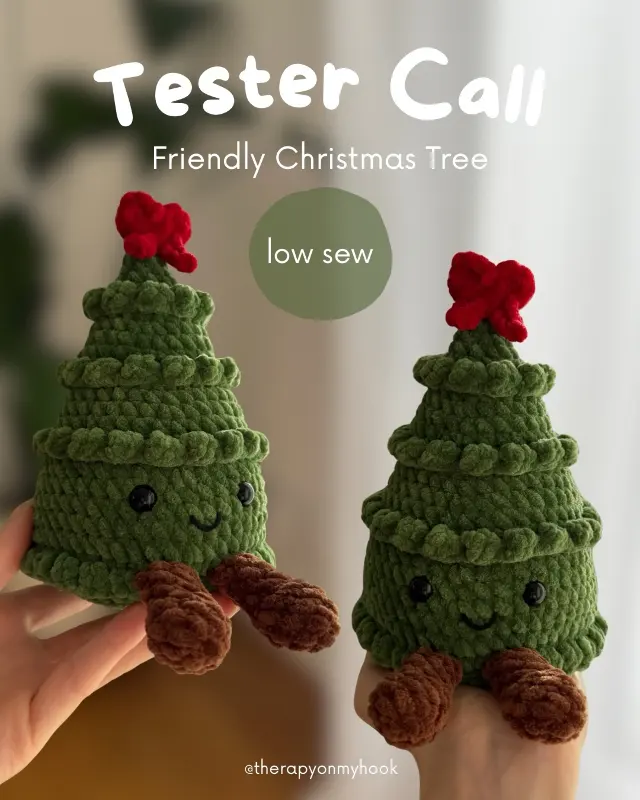
 Low-Sew Crochet Christmas Tree Plush Pattern Tester Call
#Holiday Crochet
1 ideas
Low-Sew Crochet Christmas Tree Plush Pattern Tester Call
Get new #Holiday Crochet ideas by email
Every Thursday: the week's best ideas, with the newest from #Holiday Crochet.
Related tags
Holiday Crochet: A Beginner's Guide to Festive Makes
Holiday crochet is the practice of making decorative and giftable items with a hook and yarn for celebrations across the year — most often for winter holidays, but also for Easter, harvest festivals, birthdays and the quieter seasonal markers like the arrival of spring. It sits somewhere between craft and ritual: the work is slow, it is usually done in the weeks beforehand, and the finished object tends to come out again every year.
Its appeal is partly practical. Crochet needs very little equipment — a hook, some yarn, a pair of scissors and a tapestry needle — and it can be picked up and put down in short sittings, which suits the busy stretch before a holiday. It is also forgiving of beginners, since most festive pieces are small and worked in simple shapes.
Common projects
The most familiar holiday crochet projects are ornaments: stars, snowflakes, bells, small stockings and tree decorations. They use tiny amounts of yarn, work up quickly and make good first projects. Beyond ornaments, crocheters make garlands and bunting, coasters and table runners, gift bags and pouches, cosy blankets, amigurumi figures, and wearable accessories such as mittens, hats and scarves. Larger pieces like stockings, tree skirts and blankets are usually long-term projects best started well ahead of the date.
Read more
Skills worth learning first
You can make a great deal with a handful of stitches. The chain, slip stitch, single crochet and double crochet cover most decorations and simple gift items. Shaping comes from increasing and decreasing, which lets you turn flat circles into baubles and flat rectangles into small trees or stockings. Working in the round, either in a spiral or in joined rounds, is the foundation of amigurumi and ornaments. Colour changes let you add stripes, snowflake motifs or a simple border. Reading a written pattern and understanding a chart are the two skills that open up the widest choice of designs.
Choosing materials
Cotton yarn holds shape crisply and takes starch well, which makes it a good choice for snowflakes and stars that need to stay flat and firm. Wool and wool blends are warmer and softer for wearables and blankets. Acrylic is durable, washable and widely available, which matters for anything a child will handle. Choose a hook size that matches the yarn label as a starting point, then adjust to your own tension — most crocheters work either tighter or looser than average, and gauge matters more for garments than for ornaments.
Practical tips
Make a small sample before committing to a large project so you know how the yarn behaves. Keep a note of the hook and yarn you used if you might want to repeat an item, because matching a size later is easier with records. Weave in ends as you go rather than leaving them all to the last evening. If you are making decorations to be stored, avoid heavily textured stitches that crush, and consider starching or blocking flat pieces so they hold their shape year after year. And if a project is meant as a gift, start earlier than feels necessary — the pleasure of holiday crochet comes from the unhurried part.
#Holiday Crochet: frequently asked questions
How do I get started with holiday crochet if I have never held a hook before?
Begin with a small ornament such as a star, snowflake or tiny stocking, since these use only scraps of yarn and simple shapes. Learn the chain, slip stitch, single crochet and double crochet first, as those few stitches cover most festive decorations. Pick a written pattern aimed at beginners and work through it slowly before trying anything larger.
What supplies do I actually need for holiday crochet projects?
The basic kit is small: a hook that matches your yarn, yarn itself, scissors and a tapestry needle for weaving in ends. You may also want stitch markers for working in the round and a little starch or blocking supplies if you plan to make flat decorations that need to hold their shape. Nothing else is strictly necessary to make ornaments, garlands or gift pouches.
Which yarn should I choose for ornaments versus wearables?
Cotton holds its shape crisply and takes starch well, which suits snowflakes, stars and anything that must stay flat and firm. Wool and wool blends are warmer and softer, so they work better for mittens, hats and blankets, while acrylic is durable and washable for pieces a child will handle. Match the hook to the yarn label as a starting point, then adjust for how tightly or loosely you naturally work.
How should I care for finished holiday crochet pieces so they last for years?
Starch or block flat decorations so they keep their shape in storage, and favour smooth stitches over heavily textured ones for anything being packed away, as texture tends to crush. Store pieces flat and dry rather than crammed into a box. Washables should be treated gently according to the yarn you chose, with cotton and acrylic tolerating more laundering than wool.
What are good holiday crochet projects for gifts and small occasions?
Ornaments, garlands and bunting, coasters, table runners, gift pouches and small amigurumi figures all work up quickly and make welcome gifts. Wearable accessories such as mittens, hats and scarves suit birthdays and colder celebrations. Larger pieces like stockings, tree skirts and blankets are long-term projects, so start them far earlier than feels necessary.
What mistakes should a beginner avoid in holiday crochet?
Starting a big project without making a small sample first is the most common one, since you learn how the yarn behaves only by trying it. Weave in ends as you go instead of saving them all for the final evening, and note down the hook and yarn you used so you can repeat an item later. If a piece is a gift, begin earlier than you think you need to.
Videos come from YouTube and posts from Instagram; titles and summaries are our own. All rights belong to their creators.