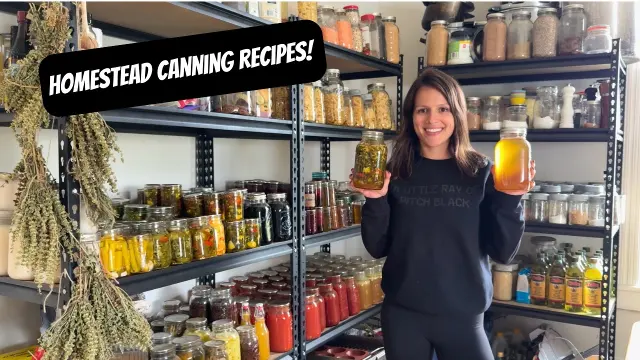
 Canning the Last of the Garden Harvest for Winter
#Homesteading
1 ideas
Canning the Last of the Garden Harvest for Winter
Get new #Homesteading ideas by email
Every Thursday: the week's best ideas, with the newest from #Homesteading.
Related tags
Homesteading: A Beginner's Guide to Simple Self-Sufficiency
Homesteading is the practice of shaping a household so that more of what it needs — food, warmth, repairs, medicine cabinet salves, everyday goods — comes from its own land, hands and skills rather than from a shop. The word carries a long history: in places like North America and Europe, "homestead" laws once granted land to families willing to settle and work it. Over time the term loosened, and today it describes a wide range of lives, from a few pots of herbs on a balcony to a smallholding with goats and an orchard. What ties them together is not acreage but intent: choosing to be a producer as well as a consumer.
The main directions
Homesteading is less a single discipline than a bundle of them. The common threads are food production, food preservation, home repair and making. You will meet gardeners who focus almost entirely on growing, preserving households that turn a harvest into jars and ferments, keepers of small livestock, and makers who spin, sew, build or repair what they would otherwise buy. Some people lean hard into self-sufficiency; others pick two or three skills that fit their lives and let the rest go.
Skills worth learning first
Read more
If you are starting out, the honest advice is to begin smaller than feels satisfying. A few containers of easy herbs and salad greens teach you about light, water and timing at low cost. From there, the skills that repay learning early include:
- Growing food: understanding your soil, sun and season, and composting what you don't eat.
- Preserving safely: water-bath canning of high-acid foods, drying, freezing and fermentation, always following tested recipes rather than family guesswork.
- Basic repair: sewing a seam, mending a tool handle, patching, sharpening.
- Cooking from scratch: bread, stocks, beans and simple preserving like pickles and jam.
- Keeping records: what you planted, when, what worked and what failed.
A note on safety and realism
Preserving food and keeping animals both have real safety margins, and it is worth learning them properly before you rely on them — tested canning methods, clean water, careful animal husbandry and hygiene in the kitchen. Be wary of anyone who promises that homesteading is effortless or that you should chase total independence. Nobody does everything, and the most contented homesteaders tend to be those who accept help, trade with neighbours and take pleasure in incremental progress.
Practical ways to begin
Start where you already have leverage: a windowsill, a garden bed, a balcony, a shared allotment. Learn one preserving method well before adding a second. Ask what you spend money on most often and whether it is something you could learn to make or grow. Meet people locally who keep animals or keep bees before you commit to either. Build a routine you can sustain on a wet week in the middle of winter, because that is what a homestead really is: an ordinary household, made a little more capable each year.
#Homesteading: frequently asked questions
How do I start homesteading when I live somewhere small?
Begin with whatever space you already have — a windowsill, a balcony, a shared plot or a single garden bed — and grow the things you actually eat. The point of starting small is that you learn about light, watering and timing without risking much, and you find out what you genuinely enjoy doing. Add one new skill or project each season rather than trying to build the whole picture at once.
What do I need before I take on animals or serious food preservation?
You need reliable knowledge more than equipment: tested preserving methods, a clean and organised workspace, and a realistic idea of the daily routine an animal requires. It also helps to spend time with people nearby who already keep animals or preserve food, so you can see the work in an ordinary week rather than an ideal one. Learn the safety margins properly first; shortcuts in canning or animal care are where things go wrong.
Which kind of homesteading should I choose?
Pick the direction that matches your time, space and temperament rather than the one that looks most impressive. Some households love growing and preserving food, others prefer making and repairing, and many are happiest choosing a couple of skills that fit their life and letting the rest go. Honest self-sufficiency across everything is rare, and aiming for it usually leads to burnout.
How do I keep a homestead going through a slow season?
Build a routine you can sustain on a wet, dark week in the middle of winter, because that is when enthusiasm is lowest. Keep indoor-friendly work such as mending, cooking from scratch, planning and record-keeping for those stretches, and let the outdoor tasks wait. Sharing work and swapping with neighbours also keeps things moving when motivation dips.
What are the most common mistakes people make when starting out?
The usual ones are starting far too big, buying equipment before learning the skill, and trusting untested recipes or guesswork for preserving food. Another is chasing total independence and refusing help, which tends to end in exhaustion rather than a working household. Record what you planted, made and repaired so the next attempt is easier than the last.
What can I make or grow to get the most out of my efforts?
Look at what you buy most often and ask whether it is something you could learn to grow, cook or make instead. Herbs, salad greens, bread, stocks, pickles and simple repairs are all good early wins because they are forgiving and you use them constantly. When the garden gives more than you can eat, turning the surplus into jars or ferments is the natural next step.
Videos come from YouTube and posts from Instagram; titles and summaries are our own. All rights belong to their creators.