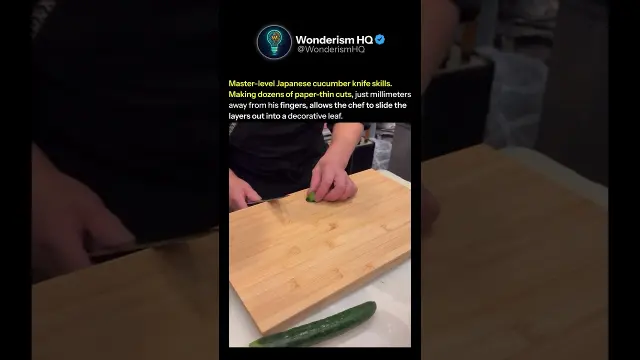
 Single-Bevel Japanese Knives and Precision Vegetable Cuts
#Japanese Knives
2 ideas
Single-Bevel Japanese Knives and Precision Vegetable Cuts
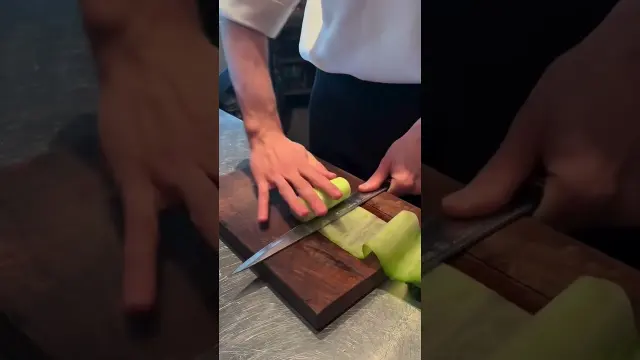 Katsuramuki: Paper-Thin Japanese Knife Technique
Get new #Japanese Knives ideas by email
Every Thursday: the week's best ideas, with the newest from #Japanese Knives.
Related tags
Japanese Knives: Shapes, Steel and Care Explained
A Japanese knife is less a single object than a whole family of blades, shaped by a metalworking tradition that grew up around sword smithing and later turned toward kitchen tools. What sets these knives apart is not only the steel but the logic behind them: thin edges, hard blades and shapes designed for one job done well. Understanding that logic makes choosing and using one much easier.
Single-bevel and double-bevel
The first distinction worth learning is how the blade is ground. A single-bevel knife is sharpened on one face only; the other side is hollowed or flat, and the edge meets the food at a very clean angle. These knives cut precisely and separate slices neatly, but they are made for a specific hand and demand some practice. A double-bevel knife is ground symmetrically, cuts on both sides and suits most cooks in most kitchens. If you are starting out, begin with a double-bevel blade.
The main shapes
Read more
- Gyuto: a general-purpose blade, the Japanese answer to the chef's knife.
- Santoku: shorter and broader, comfortable in a home kitchen.
- Nakiri: a tall, rectangular vegetable knife for clean downward cuts.
- Deba: a sturdy knife for working with fish.
- Yanagiba: a long single-bevel blade for slicing raw fish.
- Usuba: a traditional vegetable knife used for techniques such as paper-thin rolling cuts.
Steel and construction
Many Japanese knives are made from carbon steel, which takes a very fine edge and is easy to sharpen, but which discolours and rusts if left wet. Stainless and stainless-clad steels are far more forgiving and are a sensible choice for a busy kitchen. Many blades are laminated, with a hard core sandwiched between softer layers; others are forged from a single piece of steel, which is more demanding to make and to maintain. Hardness is a trade-off: a very hard, thin edge stays sharp for a long time but chips if twisted or forced.
Handles and balance
Traditional handles are light wood fitted over a narrow tang, giving a blade-forward balance that many cooks find natural for slicing. Western-style handles are heavier and fuller in the hand. Neither is better; try both if you can.
Simple care that pays off
Wash and dry your knife by hand straight after use, especially a carbon blade, and keep it out of the dishwasher. Store it on a rack or in a sheath rather than loose in a drawer. Do not cut frozen food, bone or hard seeds with a thin Japanese blade, and avoid scraping the board with the edge.
Sharpening
A whetstone is the kindest way to maintain these knives. A medium stone is enough for most upkeep; follow the angle already ground into the blade and keep it consistent, and finish with light, even strokes. A little practice on an inexpensive knife first will teach you more than any amount of reading.
#Japanese Knives: frequently asked questions
What is the best Japanese knife to start with?
Begin with a double-bevel blade, since it is ground symmetrically, cuts comfortably on both sides and suits most cooks in a normal kitchen. A gyuto is the all-purpose choice if you want a single knife that handles most prep, while a shorter santoku feels easier in a small home kitchen. Choose a stainless or stainless-clad steel for your first one, because it forgives the odd moment of neglect.
What is the difference between single-bevel and double-bevel Japanese knives?
A single-bevel knife is sharpened on one face only, with the opposite side flat or hollowed, so the edge meets food at a very clean angle and produces precise, tidy slices. That precision comes at a cost: these blades are ground for a particular hand and take practice to use well. A double-bevel knife is symmetrical and far more forgiving, which is why it is the sensible starting point for most people.
Which Japanese knife shape should I choose for the job I do most?
Match the blade to the work rather than collecting every shape. A nakiri or usuba suits vegetable prep and clean downward cuts, a deba is built for working with fish, and a long yanagiba is the traditional choice for slicing raw fish. For everyday cooking that mixes tasks, the gyuto or santoku covers the most ground.
How should I care for a Japanese knife day to day?
Wash and dry it by hand straight after use, particularly a carbon blade, and never put it in the dishwasher. Store it on a rack or in a sheath instead of loose in a drawer, where the edge can knock against other tools. A dry knife put away properly needs very little else from you.
What common mistakes damage a Japanese knife?
The usual culprits are forcing a thin, hard blade through frozen food, bone or hard seeds, and twisting it sideways mid-cut, which is how chips appear. Scraping the cutting board with the edge dulls it quickly, so push food aside with the spine instead. Leaving a carbon blade wet, even briefly, is the other easy way to cause trouble.
Do I need a whetstone to keep a Japanese knife sharp?
A whetstone is the kindest way to maintain these knives, and a medium stone covers most routine upkeep. Follow the angle already ground into the blade and keep it steady rather than trying to impose a new one, finishing with light, even strokes. Practising on an inexpensive knife first teaches you more than reading about it ever will.
Videos come from YouTube and posts from Instagram; titles and summaries are our own. All rights belong to their creators.