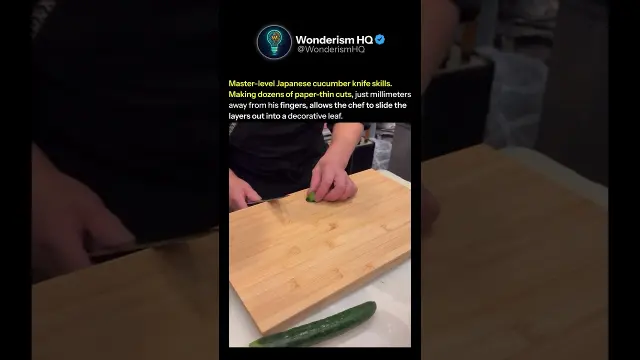
 Single-Bevel Japanese Knives and Precision Vegetable Cuts
#Katsuramuki
2 ideas
Single-Bevel Japanese Knives and Precision Vegetable Cuts
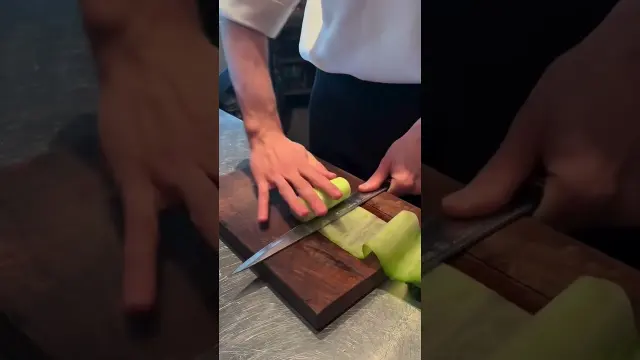 Katsuramuki: Paper-Thin Japanese Knife Technique
Get new #Katsuramuki ideas by email
Every Thursday: the week's best ideas, with the newest from #Katsuramuki.
Related tags
Katsuramuki: The Japanese Art of Paper-Thin Slicing
Katsuramuki is a Japanese cutting technique in which a vegetable is rotated against a knife held almost flat, so that the blade peels away one continuous, paper-thin sheet at a time. Instead of pressing the knife down through the food, you keep the blade still and turn the vegetable into it. The result is a sheet so thin it is nearly translucent, which can then be cut into fine julienne, ribbons, or decorative shapes.
The technique belongs to the everyday repertoire of Japanese home and professional kitchens, where it is used for radish, cucumber, carrot, and similar firm vegetables. You will see the resulting sheets as a garnish beside sashimi, folded into salads, wrapped around other ingredients, or shredded into the delicate threads known as tsuma. Beyond presentation, the cut changes texture: a paper-thin sheet of daikon softens quickly in dressing and tastes milder than a thick chunk.
Why the knife matters
Katsuramuki is traditionally done with a single-bevel Japanese knife, most often an usuba, which has a flat back and a wide, straight blade. The flat back lets the blade run flush against the vegetable without wandering, and the broad side helps the finished sheet fall away cleanly. A double-bevel knife can be used, but it takes more care, because the angled edge tends to steer itself off course. Whatever you use must be genuinely sharp. A dull blade bruises the surface, catches, and produces sheets of uneven thickness.
Read more
How the cut works
- Trim the vegetable so it sits flat, then square off one side to give the blade a starting surface.
- Hold the knife horizontally, edge facing you, with the flat of the blade resting against the cut face.
- Rest the vegetable against the blade and rotate it slowly toward the edge, keeping the knife level and steady.
- Let the sheet unroll over the back of the blade rather than pulling it away with your hand.
- Stop before you reach your fingers, set the sheet aside, and repeat with the newly exposed surface.
What beginners should know
The most common mistake is pushing the knife forward instead of turning the vegetable. Another is tilting the blade, which makes the sheet thick at one end and thin at the other. Work slowly, keep your wrists relaxed, and accept that the first sheets will be ragged; evenness comes with repetition. A vegetable with a regular, cylindrical shape is far easier than an irregular one.
Practice on daikon or cucumber, which are cheap, firm, and forgiving. Keep your hands and the cutting board dry so nothing slips, and sharpen before you start rather than fighting a blunt edge. Once the motion feels natural, katsuramuki becomes less a stunt and more a calm, useful habit, one that quietly improves everything you do with vegetables.
#Katsuramuki: frequently asked questions
What is katsuramuki, and what is it used for?
It is a Japanese cutting technique where a firm vegetable is turned against a nearly horizontal blade, peeling off a continuous paper-thin sheet. Those sheets are then used as garnish, wrapped around other ingredients, folded into salads, or shredded into fine threads. It also changes texture, since a thin sheet of daikon softens quickly in dressing and tastes milder than a thick piece.
How do I start learning katsuramuki?
Begin with a vegetable that has a regular cylindrical shape, since an even surface is much easier to rotate against the blade than an irregular one. Trim it so it sits flat, square off a side to give the blade a starting face, and work slowly with relaxed wrists. The first sheets will be ragged, and evenness comes from repetition rather than from trying harder.
What do I need to do katsuramuki at home?
You need a genuinely sharp knife and a firm vegetable such as daikon, cucumber, or carrot, plus a dry cutting board and dry hands so nothing slips. Traditionally the cut is done with a single-bevel Japanese knife, most often an usuba, because its flat back runs flush against the vegetable. A double-bevel knife works too, but it needs more care since the angled edge tends to steer off course.
Does the type of knife really make a difference for this cut?
It does, mainly in how easily the blade stays level. A single-bevel knife with a flat back and a broad, straight blade lets you keep the edge flush against the vegetable and lets the finished sheet fall away cleanly. A dull edge is the bigger problem either way, since it bruises the surface, catches, and gives you sheets of uneven thickness.
What are the most common mistakes beginners make?
The usual one is pushing the knife forward instead of turning the vegetable into a steady blade. Tilting the blade is the other, which leaves the sheet thick at one end and thin at the other. Keep the knife level, let the sheet unroll over the back of the blade rather than pulling it away, and stop before you reach your fingers.
How do I look after the knife used for this technique?
Keep the edge sharp and touch it up before you start rather than fighting a blunt blade mid-cut, since sharpness is what makes the cut clean and safe. Store it so the edge is protected, and dry it after washing. Keeping both hands and the board dry during the work is part of the same habit.
Videos come from YouTube and posts from Instagram; titles and summaries are our own. All rights belong to their creators.