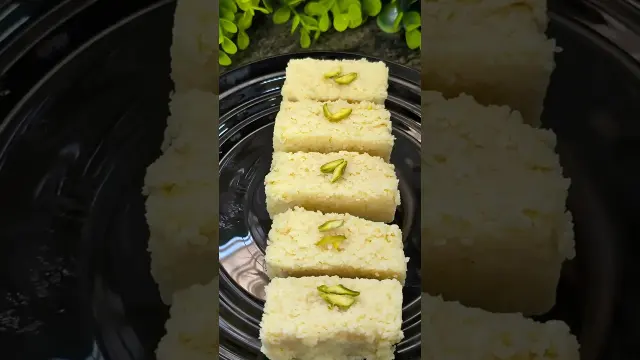
 Simple homemade Kalakand sweet recipe for Diwali
#Kalakand
1 ideas
Simple homemade Kalakand sweet recipe for Diwali
Get new #Kalakand ideas by email
Every Thursday: the week's best ideas, with the newest from #Kalakand.
Related tags
Kalakand: A Guide to India's Milk Cake Sweet
Kalakand is a soft, grainy milk sweet from the Indian subcontinent, often described as milk cake. It sits somewhere between barfi and a fresh cheese sweet: dense enough to cut into neat squares, yet moist and crumbly enough to melt on the tongue. Its flavour is simple and milky, lightly sweet, with the warmth of cardamom and the crunch of nuts on top. If you have eaten it fresh, you will know why it turns up so often at festivals, weddings and ordinary tea-time tables alike.
Where it comes from
The sweet is most often traced to Alwar, in the Rajasthan region of northern India, and is closely associated with the milk-rich cooking of that area, where surplus milk was long preserved by slow reduction. A similar preparation appears in Bengali sweet-making too, where it is known by the same name and made with slightly different textures. Over time the idea travelled: you will find versions across North India and wherever Indian sweet shops have set up, each with its own local habit of thickness, sweetness and garnish.
The two families of texture
Read more
Broadly, kalakand comes in two styles, and the difference lies in how the milk is handled.
- The grainy, curd-based kind is made by curdling hot milk with an acid such as lemon juice, then cooking the separated solids with sugar until the mixture thickens and holds together. This gives the characteristic slightly sandy, uneven grain.
- The smoother kind starts from paneer or from milk reduced slowly over low heat, then sweetened and stirred until it thickens. The result is denser and more uniform, closer to a soft barfi.
There is also a quicker route using condensed milk or a microwave, popular with home cooks who want the sweet without standing over a pan for an hour.
What beginners should know
The technique is short but unforgiving, so a few habits help.
- Use a heavy, wide pan. Milk catches and scorches easily in thin cookware, and a burnt base will flavour the whole batch.
- Keep the heat low and stir often once sugar goes in. Sugar makes the mixture catch faster.
- Judge doneness by feel, not by the clock. Take a small spoonful, let it cool a moment, and see whether it holds its shape. If it spreads, it needs longer.
- Add the acid gradually when curdling, and stop as soon as the milk separates cleanly into soft curds and pale whey. Too much acid leaves a sour edge.
- Flavour at the end with ground cardamom, and press the finished mixture into a greased or lined tray while it is still warm.
Setting, cutting and keeping
Let the tray cool undisturbed so the sweet firms up before you cut it. A knife dipped in warm water gives cleaner squares. Press chopped pistachios or almonds into the surface while the mixture is still tacky so they stay put.
Kalakand is best eaten within a day or two of making, while it is still soft. Keep it covered and cool, and bring it to room temperature before serving, as the texture tightens when cold.
#Kalakand: frequently asked questions
Is kalakand a hard sweet for a beginner to make?
The method is short but not forgiving, so beginners usually succeed by focusing on two things: a heavy, wide pan and low heat. Milk scorches quickly in thin cookware, and a burnt base flavours the whole batch. Stir often once the sugar goes in, because sweetened milk catches faster.
Should I make the grainy style or the smooth style?
Choose the grainy version if you want the classic crumbly, slightly sandy texture that people recognise as kalakand. Go for the smooth style, made from paneer or slowly reduced milk, if you prefer something denser and closer to a soft barfi. Home cooks in a hurry often take a shortcut route with condensed milk or a microwave instead.
How do I know when the mixture is ready to set?
Judge it by feel rather than by watching the clock. Take a small spoonful, let it cool for a moment, and see whether it holds its shape; if it still spreads, it needs more cooking. Pressing the warm mixture into a greased or lined tray right after is what gives you clean squares later.
What are the most common mistakes people make with kalakand?
Adding too much acid while curdling is the usual culprit, which leaves a sour edge, so add it gradually and stop as soon as the milk splits into soft curds and pale whey. The other frequent slip is rushing the heat or undercooking the mixture, which gives a sweet that slumps instead of slicing. Cutting it before it has cooled undisturbed also causes ragged edges, so a warm-water-dipped knife helps.
How should I store and serve it?
It is at its best eaten soon after making, while it is still soft, so plan to serve it fresh rather than keeping it for long. Store it covered and cool, then let it come back to room temperature before serving, since the texture tightens when cold. Press chopped pistachios or almonds onto the surface while the mixture is still tacky so the garnish stays put.
What occasion suits kalakand, and how do I present it?
It works equally well at festivals, weddings and an ordinary tea table, which is part of its charm. For a festive spread, cut it into neat squares, scatter nuts over the top and serve it alongside other milk sweets for contrast in texture. A simple tray, cut cleanly and garnished generously, looks more impressive than elaborate decoration.
Videos come from YouTube and posts from Instagram; titles and summaries are our own. All rights belong to their creators.