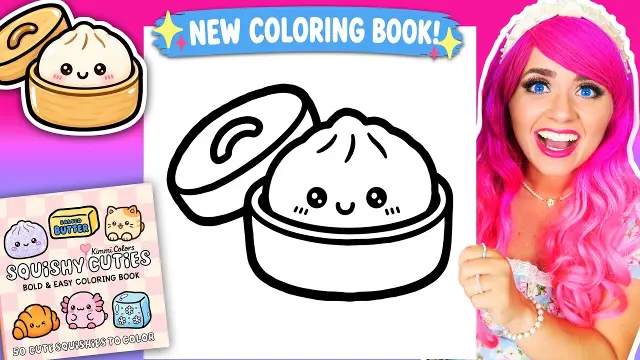
 Coloring a Cute Dumpling Squishy Illustration
#Kawaii Art
3 ideas
Coloring a Cute Dumpling Squishy Illustration
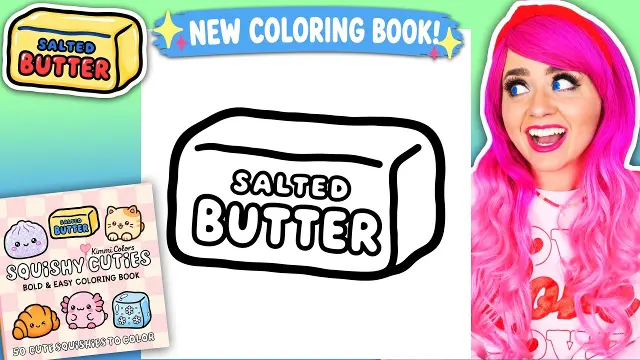 Coloring a Butter Squishy Page with Art Markers
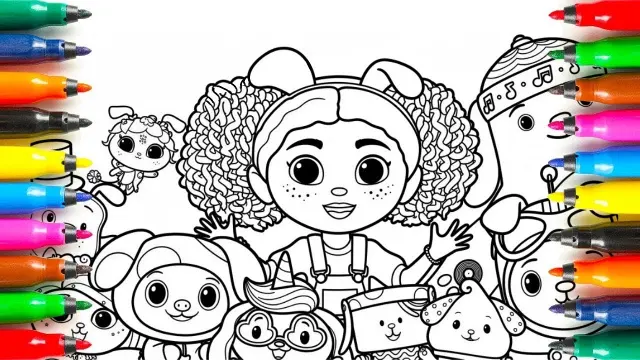 Coloring a Doghouse Selfie Page with Free Printable
Get new #Kawaii Art ideas by email
Every Thursday: the week's best ideas, with the newest from #Kawaii Art.
Related tags
Kawaii Art: A Beginner's Guide to Cute Illustration
Kawaii art is drawing, painting and colouring built around one idea: making things look lovable. The word comes from Japanese, where "kawaii" describes what is cute, charming or endearing, and it carries a gentleness that goes beyond prettiness. A raincloud, a toothbrush, a plate of rice can all be kawaii if they are drawn with the right shapes and expression. This is why the style travels so easily: it does not depend on a subject, only on how that subject is treated.
Where it comes from
The taste for cute, rounded, childlike imagery has deep roots in Japanese visual culture, but kawaii as a shared aesthetic took shape in the twentieth century through manga, anime, stationery and character merchandise. Schoolgirl handwriting, with its rounded letters and little doodled animals, became part of the wider culture, and illustrators carried the same softness into print and packaging. Today artists everywhere work in the style, so you will find kawaii drawing in Japan, Korea, the Philippines, Brazil, Europe and beyond, each place feeding in its own sense of humour.
The main shapes of the style
Read more
Kawaii art tends to share a set of visual habits. Forms are soft and rounded, with corners smoothed away. Heads are large in proportion to bodies, and bodies are often simplified to a bean or a blob. Eyes sit low and wide apart, faces are reduced to a few marks, and limbs are short. Expression does the heavy lifting: two dots and a small curve can carry surprise, sulking or delight.
Popular directions include character and mascot design, chibi figures, food with faces, animal portraits, and quiet domestic scenes. Some artists work in fine, delicate line; others use chunky outlines and flat colour. Pastel palettes are common, but a limited, confident palette works just as well, and coloured pencils, markers and watercolour each give the style a different texture.
Getting started
Begin with the simplest possible shape and build outward. Draw a light circle or bean in pencil, place the features low and close together, then commit to a single clean outline. Confident lines look cute; hesitant, broken lines rarely do. Keep your tools to a few colours at first, so the drawing reads clearly, and leave white space rather than filling every corner.
Study expressions rather than whole drawings. Fill a page with the same simple face and change only the eyes and mouth, and you will quickly learn how much a tiny shift can say. Look closely at work you admire and copy it as practice, then put it away and draw from memory.
Above all, be patient with yourself. Kawaii art looks effortless because it is reduced, and reduction takes practice. A wobbly first attempt still has charm, and charm is the whole point.
#Kawaii Art: frequently asked questions
How do I start drawing kawaii art if I’m a beginner?
Start with a very simple shape like a circle, bean, or rounded blob, then add the face and details slowly. Keep the lines clean and the features small and low on the face, because the style depends more on expression than complexity.
What supplies do I need for kawaii art?
You can begin with pencil and paper, then add a pen or marker for clean outlines and a small set of colors. Colored pencils, markers, and watercolour all work well, so the best choice is the one that helps you keep shapes soft and readable.
What kinds of subjects work best in kawaii art?
Almost anything can work, as long as it is drawn with a cute, friendly feel. Popular choices include characters, chibi-style figures, animals, food with faces, and everyday objects like clouds, dumplings, or houses.
How can I make my kawaii drawings look more adorable?
Use rounded shapes, large heads, small features, and simple expressions. Leaving some white space and choosing a gentle palette can also make the drawing feel lighter and more charming.
What are some easy kawaii art ideas for a fun page or printable?
Try coloring a cute food character, a squishy animal, or a playful little scene with a face. The page ideas in this style often work best when you give ordinary things a personality, like turning a dumpling or a doghouse into a sweet character.
What mistakes should I avoid in kawaii art?
Avoid making the drawing too busy, too detailed, or too stiff, because the style depends on softness and simplicity. Hesitant, broken outlines can also weaken the cute look, so it helps to commit to confident lines and keep the design clear.
Videos come from YouTube and posts from Instagram; titles and summaries are our own. All rights belong to their creators.