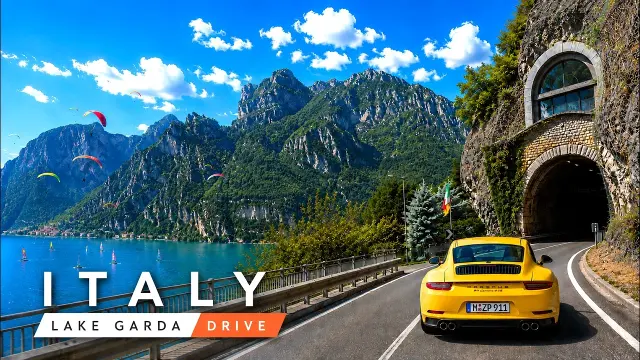
 Lake Garda Scenic Drive from Bardolino to Riva del Garda
#Lakeside Road
1 ideas
Lake Garda Scenic Drive from Bardolino to Riva del Garda
Get new #Lakeside Road ideas by email
Every Thursday: the week's best ideas, with the newest from #Lakeside Road.
Related tags
Lakeside Roads: A Guide to Driving the Shoreline
A lakeside road is exactly what the name suggests: a route that runs along the shore of a lake, usually for a stretch long enough to link several villages. What makes these roads distinctive is the constraint they work under. Lakes sit in basins, and the land rising from the water is often steep, so a shoreline route has to fit into a narrow strip between the water's edge and the slope above it. That single fact explains most of what a driver, cyclist or walker will notice.
Why they exist
Many lakeside roads grew out of older paths used by fishermen, farmers and traders moving between settlements around the water. Where the mountains came straight down to the shore, the only passable ground was the shoreline itself. Later engineering widened, straightened and sometimes tunnelled these routes, but the original logic survives: the road follows the water because there was nowhere else to put it.
The main kinds of lakeside road
Read more
- Shoreline roads, built close to the water, often with a low wall on the lake side and rock or retaining wall on the other. Views are constant, but the road is usually narrow.
- Terrace roads, running higher up the slope. They trade the water-level view for broader panoramas and easier gradients, and are often quieter.
- Short dead-end roads into side valleys, which some lakes have, worth taking for a viewpoint or a beach at the far end.
What catches people out
Width, mostly. These roads were rarely designed for two large vehicles to pass easily, and outside mirrors, low walls and overhanging rock leave little margin. Coaches, delivery vans and agricultural vehicles use them too, and meeting one on a bend is a normal part of the experience. Cyclists and walkers share the same narrow strip, often with no separate path. Tunnels and galleries appear without much warning, and some are unlit.
Practical habits
Drive slower than the limit allows when the road is tight, and let faster local traffic pass rather than holding it up. On blind bends, keep to your side and expect something coming the other way. Park only in marked bays; verges are often private or unstable. Early morning and late afternoon give the softest light and the emptiest road, and the middle of the day brings the most traffic. If you want to stop for a view, look for a proper lay-by rather than stopping on the carriageway.
Beyond the car
The same roads are among the best cycling and walking routes in any lake region, and boats often connect the villages the road serves. Going one way by water and back by road is a pleasant way to see a shore twice, and it removes the worry of finding parking at every stop.
#Lakeside Road: frequently asked questions
What exactly is a lakeside road?
It is a route that runs along a lake shore, often long enough to link several villages around the water. Its defining feature is the narrow band of land it occupies between the water's edge and the steep slope rising behind it, which shapes almost everything about how it looks and how it drives.
Why were these roads built right at the water's edge instead of higher up?
Many began as older paths used by fishermen, farmers and traders travelling between settlements around the lake. Where the land above the shore was too steep to cross, the shoreline was the only passable ground, so the road followed the water. Later work widened and tunnelled sections, but the original logic of hugging the shore survived.
Which kind of lakeside road should I choose?
Shoreline roads keep you close to the water with constant views, but tend to be narrow and busy with through traffic. Terrace roads climbing the slope offer wider panoramas, gentler gradients and quieter conditions. Short dead-end roads into side valleys are worth the detour if you want a viewpoint or a beach at the end.
How should I drive on a narrow lakeside road?
Go slower than the posted limit allows whenever the road is tight, and pull aside to let faster local traffic past rather than holding it up. On blind bends, stay firmly on your own side and assume something is coming the other way, since coaches, vans and farm vehicles use these routes too. Park only in marked bays, as verges are often private or give way under a wheel.
When is the best time to travel a lakeside road?
Early morning and late afternoon bring softer light and far quieter traffic, while the middle of the day is the busiest. If you want to stop for a view, use a proper lay-by rather than halting on the carriageway. Tunnels and galleries appear with little warning and some are unlit, so be ready for a sudden change in light.
Can I see the lake without driving the whole way?
Yes, these roads are also some of the best cycling and walking routes in a lake region, though cyclists and walkers usually share the same narrow strip as vehicles with no separate path. Boats often connect the villages the road serves, so going one way by water and back by road lets you see the shore twice and avoids hunting for parking at every stop.
Videos come from YouTube and posts from Instagram; titles and summaries are our own. All rights belong to their creators.