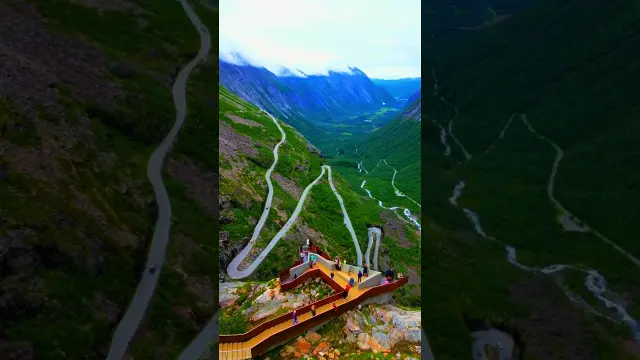
 A Visual Tour of the Most Beautiful Places on Earth
#Landscapes
4 ideas
A Visual Tour of the Most Beautiful Places on Earth
 Wonders of Japan: A 4K Journey Through Cities, Temples and Landscapes
 25 Surprising Scotland Facts About Geography and History
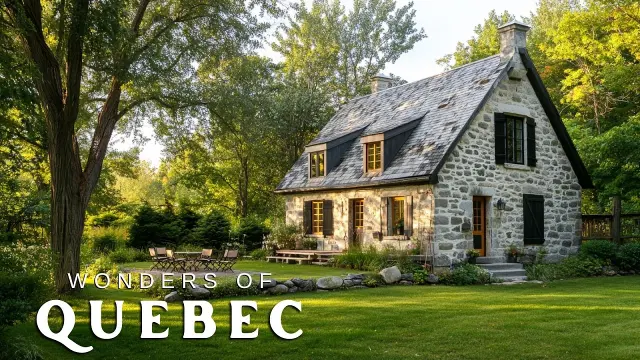 Wonders of Quebec Cultural and Landscape Tour
Get new #Landscapes ideas by email
Every Thursday: the week's best ideas, with the newest from #Landscapes.
Related tags
Landscapes: A Guide to Reading the World Around You
A landscape is more than a view. It is the visible result of a long conversation between geology, climate, water, plants and people. Mountains rise and wear down, rivers carve their beds, wind moves sand, roots hold soil in place, and generations of farmers, herders and builders leave their marks. When you look at a landscape, you are reading the outcome of processes that often began long before anyone was there to see them.
What shapes a landscape
Four forces do most of the work. The first is the ground itself: the rock beneath everything, and how hard or soft it is. The second is climate, which decides how much rain falls, how cold winters get, and how fast rock breaks apart. The third is living things, from moss to forests, which build soil and hold slopes together. The fourth is human activity, which shapes fields, hedges, terraces, roads and shorelines over centuries. Landscape is therefore never entirely natural or entirely made; nearly everywhere, the two are woven together.
The main kinds
Read more
Landscapes are usually grouped by their dominant character. Mountain and alpine scenery is defined by height and steepness, with distinct bands of vegetation as you climb. Coastal landscapes are shaped by tide, wave and wind, producing cliffs, dunes, estuaries and beaches that change constantly. River and valley landscapes are formed by flowing water and are often the most fertile and most densely settled. Plains and grasslands are wide, open and shaped by grazing and cultivation. Desert and dryland landscapes are defined by scarcity of water, not by emptiness. Forest landscapes range from dense and humid to open woodland. And cultural landscapes, such as terraced hillsides, hedgerow country or old mining valleys, are the ones where human work is the main author.
What beginners should notice
You do not need training to look well. Start with three questions. Where is the light coming from, and how does it change through the day? Light is the single greatest difference between a dull scene and a striking one, and early morning and late afternoon usually flatter the land. What are the layers? Most good views read from foreground to middle distance to horizon, and the transition between them is what gives a scene depth. And what is the scale? A landscape with nothing to measure against can feel flat; a path, a fence, a lone tree or a figure gives the eye a reference point.
Practical tips
Walk rather than drive. Slow movement lets you see how a place changes as you approach it, and many of the best views are a short distance from where people stop. Carry a simple map and learn the names of what you see; naming a ridge or a valley makes it easier to remember and to describe. Look behind you occasionally. And leave the place as you found it: stay on established paths, take nothing away, and remember that a landscape is a shared inheritance rather than a backdrop.
#Landscapes: frequently asked questions
How do I start learning about landscapes as a beginner?
Begin by noticing what is in front of you: the light, the layers from near to far, and the scale of the scene. A simple path, tree, fence, or person can help you understand the size and depth of a place.
What should I look for when choosing a landscape to explore or visit?
Choose the kind of setting that matches what you want to experience, such as mountains, coast, river valleys, open plains, forests, or dry country. If you are unsure, look for a place with clear foreground, middle distance, and horizon, since that often makes the landscape feel more complete and memorable.
What makes one landscape different from another?
Landscapes are shaped by the ground beneath them, the climate, water, plants, and human activity. That is why a mountain scene, a coastal scene, and a terraced hillside can feel so different even when they are in the same region.
How should I take care of a landscape when I visit it?
Stay on established paths, avoid disturbing plants or soil, and take nothing away. The best way to care for a landscape is to move through it gently and leave it as you found it.
What are some common mistakes people make when observing landscapes?
A common mistake is only looking straight ahead and missing how the scene changes behind you or as you move. Another is ignoring light, which can make the same place look flat at one time and dramatic at another.
Videos come from YouTube and posts from Instagram; titles and summaries are our own. All rights belong to their creators.