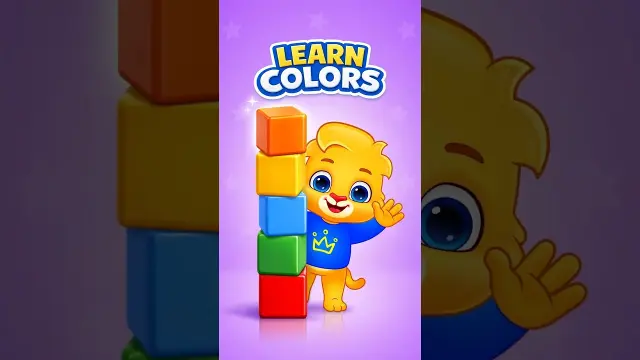
 Learn Colors with Stacking Blocks in Baby Learning Short
#Learn Colors
1 ideas
Learn Colors with Stacking Blocks in Baby Learning Short
Get new #Learn Colors ideas by email
Every Thursday: the week's best ideas, with the newest from #Learn Colors.
Related tags
Learning Colors for Children
What learning colours means
Learning colours is one of the first steps in helping a child describe the world. It usually begins with noticing and matching colours, then moves on to naming them and using them in speech. For many children, colours are learned naturally through play, books, clothes, food, toys, and everyday objects around the home.
Colour learning is not just about memorising words. It also helps with sorting, comparing, language development, attention, and observation. A child who can point out red, blue, or yellow is practising both thinking and communication skills.
How children usually learn colours
Read more
Most children learn colours gradually. At first, they may recognise a favourite colour before they can name it. Later, they begin to group objects by colour and use the correct word more consistently.
Simple activities can help:
- Point out colours during daily routines: a blue cup, a green towel, a yellow banana.
- Sort toys or blocks by colour.
- Read picture books and name the colours you see.
- Ask gentle questions like “Can you find something red?”
- Repeat the same colour words often in different settings.
Short, regular practice is usually better than long lessons. Children often need many chances to hear and use the same words.
Common ways to teach colours
There are many simple and effective ways to teach colours. Some children enjoy movement, while others learn best through hands-on play.
Useful approaches include:
- Stacking blocks or building toys in matching colours
- Colouring with crayons, pencils, or paint
- Sorting buttons, shapes, or pom-poms
- Matching coloured cards or objects
- Singing songs that repeat colour names
- Using everyday items such as socks, fruit, or cups
It can help to start with a few basic colours before introducing more shades. Some children also find it easier to learn colours in familiar contexts, such as “the red apple” or “the white cat,” rather than in isolation.
What beginners should know
Some children mix up colour names at first, and that is completely normal. Colour recognition develops at different speeds. A child may understand a colour well before being able to say the word reliably.
If you are helping a young child:
- Keep the language simple and consistent.
- Avoid correcting too often; instead, repeat the right word naturally.
- Use colour words in short sentences.
- Focus on play, not testing.
- Celebrate attention and effort, not just correct answers.
It is also helpful to remember that some children may need extra time to distinguish certain colours. Repetition, patience, and clear examples make a big difference.
Practical tips for everyday learning
You do not need special materials to teach colours. The home is full of opportunities.
Try these ideas:
- Talk about colours while dressing, cooking, or tidying up.
- Group laundry by colour with your child.
- Use colour words during errands and walks.
- Invite your child to choose between two coloured objects.
- Keep activities playful and brief.
The most important thing is to make colour learning part of ordinary life. When children hear colour words often and use them in simple play, they usually begin to understand them with confidence.
Videos come from YouTube and posts from Instagram; titles and summaries are our own. All rights belong to their creators.