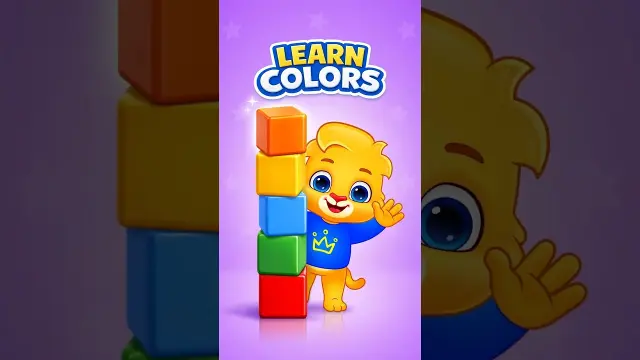
 Learn Colors with Stacking Blocks in Baby Learning Short
#Stacking Blocks
1 ideas
Learn Colors with Stacking Blocks in Baby Learning Short
Get new #Stacking Blocks ideas by email
Every Thursday: the week's best ideas, with the newest from #Stacking Blocks.
Related tags
Stacking Blocks Guide for Play and Learning
Stacking blocks are a classic toy made of separate pieces that can be arranged, balanced, nested, or built into towers and simple structures. They are usually made from wood, plastic, foam, or cardboard, and may come in different shapes, sizes, colors, or printed designs. At their simplest, they invite a child to place one piece on top of another; at their most open-ended, they become a tool for sorting, counting, storytelling, and imaginative play.
Their history is closely tied to early childhood play and education. Simple blocks have long been used because they are easy to understand, safe to handle when age-appropriate, and rich in learning possibilities. Unlike toys with only one fixed use, stacking blocks can grow with a child’s development. A baby may grasp and bang them, a toddler may stack and topple them, and an older child may use them to build patterns, towers, roads, or pretend scenes.
What children learn
Stacking blocks can support many basic skills in a natural way. They help children practice hand-eye coordination, fine motor control, balance, and spatial awareness. They also encourage problem-solving, patience, and early cause-and-effect thinking. When children sort blocks by color, size, or shape, they are also exploring classification and comparison. If you use them while naming colors, counting pieces, or talking about “more” and “less,” they become a gentle learning tool as well.
Read more
Main kinds of stacking blocks
There are several common types:
- Nesting blocks or cups that fit inside one another
- Traditional wooden blocks for free building
- Soft blocks for younger children
- Ring stackers, where pieces are placed onto a central post
- Shape sorters and block sets with matching openings
- Printed blocks with letters, numbers, animals, or pictures
Each type offers a slightly different experience. Some are designed for open-ended construction, while others focus more on matching, sequencing, or early concepts.
How to use them well
For beginners, simplicity is best. Start with a few blocks at a time so play feels manageable. Show how to stack one block carefully on another, then let the child experiment. It is normal for towers to fall; that is part of the learning. You can make the activity more engaging by asking your child to build “tall,” “wide,” “small,” or “same color” towers, but free play is just as valuable.
Practical tips
- Choose blocks that are sturdy and suitable for the child’s age and stage.
- For younger children, avoid small parts that could be a choking risk.
- Keep the set varied but not overwhelming.
- Use a flat surface for more stable building.
- Let children knock structures down and start again; repetition builds confidence.
- Clean blocks regularly, especially if they are shared.
Stacking blocks are most useful when they stay open-ended. They invite repeated play, simple creativity, and quiet concentration, making them a timeless choice for home play and early learning.
Videos come from YouTube and posts from Instagram; titles and summaries are our own. All rights belong to their creators.