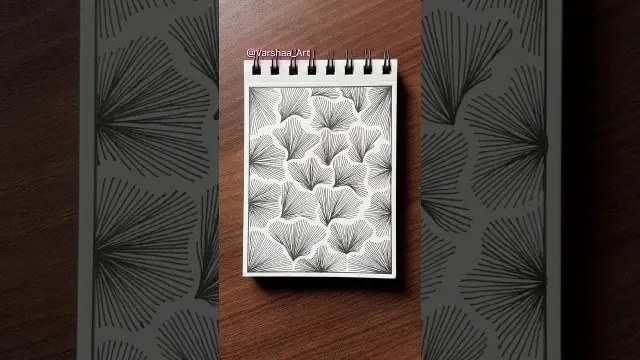
 Relaxing Step-by-Step Doodle Art Tutorial
#Line Art
1 ideas
Relaxing Step-by-Step Doodle Art Tutorial
Get new #Line Art ideas by email
Every Thursday: the week's best ideas, with the newest from #Line Art.
Related tags
Line Art: Simple Drawing with Clean Lines
Line art is drawing made mainly from lines, with little or no shading or color. It can be as simple as a single continuous outline or as detailed as an intricate pen drawing filled with texture and pattern. Because it focuses on shape, contour, and flow, line art is one of the most direct and expressive ways to draw.
What line art is
At its core, line art uses lines to define form. You may see it in illustrations, sketches, patterns, tattoos, logos, patterns for crafts, and decorative prints. Sometimes the lines are crisp and controlled; sometimes they are loose and sketchy. Both approaches are part of the same broad style.
Line art has a long history in drawing and printmaking, where artists used line to describe the world before relying on tone or color. It is also closely connected to ink drawing, pen-and-ink illustration, contour drawing, and technical drawing, though each of these can have its own purpose and look.
Read more
Common styles and uses
Line art can take many forms:
- Contour drawing: the outline of a subject, often with minimal detail
- Continuous line drawing: the pen stays on the page as much as possible
- Hatching and cross-hatching: repeated lines used to suggest shadow or texture
- Doodle-style line art: playful, flowing drawings with simple shapes and patterns
- Decorative line art: ornamental designs, florals, faces, lettering, or abstract forms
You might use line art for personal sketchbooks, greeting cards, invitations, wall prints, embroidery patterns, scrapbooking, or digital illustrations. It works especially well when you want a clean, elegant look or when you want the subject to feel light and uncluttered.
How to approach it as a beginner
If you are just starting, keep things simple. Line art does not have to be perfect to be effective. In fact, slight variation in line width and pressure can make a drawing feel more alive.
A few helpful habits:
- Start with simple subjects like leaves, faces, hands, flowers, or everyday objects
- Use a comfortable pen or pencil that gives you control
- Draw slowly at first, focusing on the shape rather than trying to fix every line
- Practice drawing with confidence; hesitant lines often look shakier than decisive ones
- Look for the outer edges and major curves before adding details
If you make a mistake, you can often turn it into part of the drawing. Line art is forgiving in that way, especially when the style is loose or hand-drawn.
Techniques to try
There are many ways to build a line drawing:
- Vary line weight to create emphasis and depth
- Leave white space to keep the image airy and balanced
- Use repeated marks to add texture
- Simplify forms into clear outlines
- Layer lines carefully when drawing patterns or detailed objects
If you want a cleaner result, work in one steady pass and avoid overworking the same area. If you want a more expressive result, allow the line to shift, taper, and breathe.
Practical tips
Good line art usually depends on clarity. Keep the composition simple, and let the lines do the work. Before you add detail, ask yourself what is essential and what can be left out. That restraint is often what gives line art its strength.
With practice, you’ll begin to see how much can be said with very little.
#Line Art: frequently asked questions
What exactly is line art?
Line art is drawing that relies on lines to describe shape, contour and flow, with little or no shading or color. It can be a single continuous outline or a detailed pen drawing full of texture and pattern, and it appears in illustration, pattern design, decorative prints and craft projects. Because it strips a subject down to its edges, it is one of the most direct and expressive ways to draw.
How do I start with line art if I've never drawn before?
Pick simple subjects such as leaves, flowers, faces, hands or everyday objects, and look for the outer edges and major curves before adding any detail. Work slowly at first and focus on the overall shape rather than correcting every line. Keep the composition uncluttered and let the lines carry the image.
What do I actually need to begin?
Very little: a pen or pencil that feels comfortable and gives you control, plus paper you don't mind experimenting on. Choose a tool that suits the look you want, since a fine tip gives crisp edges while a softer pencil allows looser, sketchier marks. From there, practice matters far more than supplies.
Which style of line art should I choose?
It depends on what you want the drawing to do. Contour drawing keeps the outline minimal, continuous line drawing keeps the pen moving on the page, hatching and cross-hatching build shadow and texture from repeated marks, and doodle or decorative styles lean playful and ornamental. Try a few and notice which one you enjoy, because that is usually the one you'll keep practicing.
Why do my lines look shaky, and what are the usual beginner mistakes?
Hesitant, sketchy marks read as uncertain, so drawing with confidence and in one steady pass usually looks cleaner than going over the same area repeatedly. Other common traps are adding too much detail before the main shape is clear, and overworking a section until it loses freshness. Remember that slight variation in line width and pressure makes a drawing feel alive rather than sloppy.
What can I make with line art once I've practiced a bit?
Line art suits greeting cards, invitations, wall prints, embroidery and scrapbooking patterns, sketchbook pages and digital illustration. It works best when you want a clean, elegant look or a subject that feels light and uncluttered. Simple doodle-style pieces are also an easy, relaxing place to build confidence before tackling more intricate designs.
Videos come from YouTube and posts from Instagram; titles and summaries are our own. All rights belong to their creators.