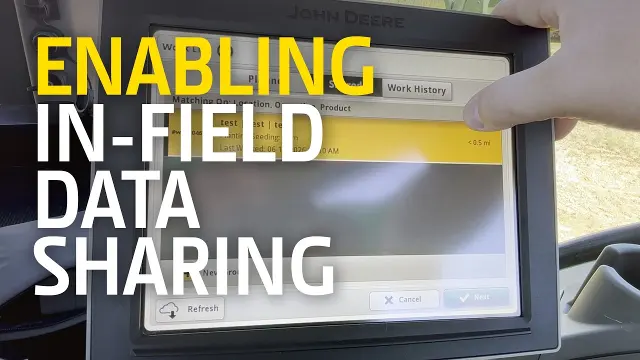
 How to Enable In-Field Data Sharing on John Deere Displays
#Machinery
1 ideas
How to Enable In-Field Data Sharing on John Deere Displays
Get new #Machinery ideas by email
Every Thursday: the week's best ideas, with the newest from #Machinery.
Related tags
Machinery: A Beginner's Guide to the Machines Around Us
Machinery is the collective name for the machines and mechanical systems people build to do work — to lift, cut, move, shape, mix, print, sew or carry things that would be slow, heavy or impossible to do by hand. The word covers an enormous range: a hand-cranked sewing machine, a tractor in a field, a lathe in a workshop and the escalator in a shopping centre all belong to it. What they share is a simple idea. Energy goes in, a mechanism transforms it, and useful motion comes out.
Where it comes from
The history of machinery is a history of small improvements. Levers, pulleys, screws and gears were understood long before anyone wrote the theory down; water wheels and windmills turned natural movement into grinding and pumping power; the steam engine later made power portable, and electricity eventually made it quiet and clean. Each step kept the same principle: fewer wasted movements, more work done.
The main kinds
Read more
You can group machinery loosely by what powers it. Manual machines rely on your own strength — presses, hand drills, mills, spinning wheels. Motorised machines take fuel or electricity, from workshop tools to agricultural and construction equipment. Automated machinery follows a programme with little human guidance. You can also sort by job: cutting, forming, lifting, transporting, processing, or printing and finishing.
A separate and much-loved category is the decorative one. Old machines are kept for their cast iron, brass and enamel, their lettering, their visible gears. Some are restored to working order, others are simply displayed. Vintage industrial style borrows those shapes for furniture, lighting and interiors, and mechanical motifs turn up in jewellery, illustration and craft.
What beginners should know
Start by learning what a machine is for before learning how it looks. Understand a few of the classic simple machines — the lever, the wheel and axle, the inclined plane, and their relatives the pulley, the wedge and the screw — and much of what you see stops being mysterious.
If you want to work with machinery yourself, prioritise safety over enthusiasm. Read the manual, keep guards in place, wear eye and hearing protection, tie back hair and loose sleeves, and never reach into a moving part. Learn how to stop a machine before you learn how to start it. When handling fuel, batteries or sharp tooling, follow the maker's instructions exactly.
If you are restoring something old, photograph it thoroughly before taking it apart, keep every screw and spring labelled, and be realistic: some parts cannot be replaced safely and some repairs belong to a specialist. Cleaning gently is almost always better than aggressive polishing, which can strip the finish that gave an object its character.
Finally, slow down. Machinery rewards patience — a careful setup, a sharp blade and a steady hand will always beat force.
Whether you photograph factories, collect old tools, sew on your grandmother's machine or simply admire how a crane moves, there is something here worth looking at twice.
Videos come from YouTube and posts from Instagram; titles and summaries are our own. All rights belong to their creators.