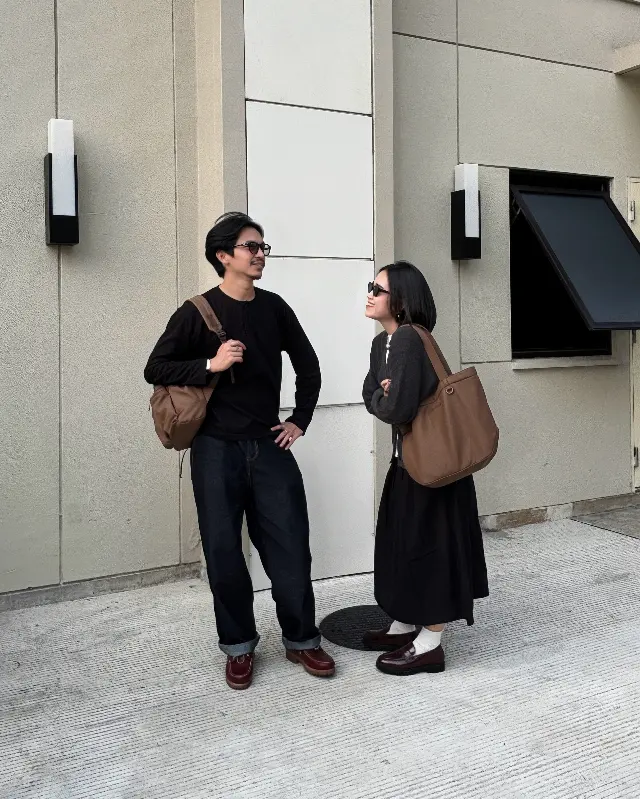
 Matching Couple Outfit Ideas for Casual Little Dates
#Matching Outfits
2 ideas
Matching Couple Outfit Ideas for Casual Little Dates
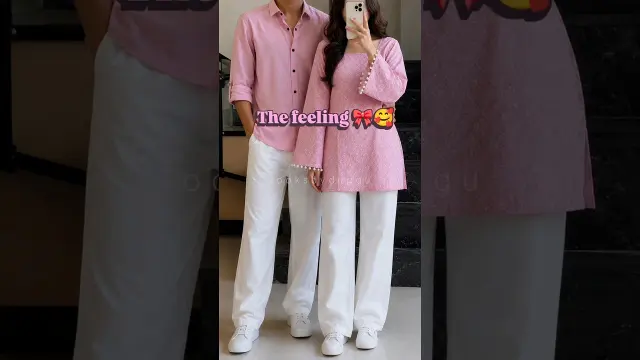 Matching Fashion Trends and Couple Outfit Ideas
Get new #Matching Outfits ideas by email
Every Thursday: the week's best ideas, with the newest from #Matching Outfits.
Related tags
Matching Outfits: A Guide to Dressing in Harmony
Matching outfits are clothes chosen so that two or more people look deliberately related when they stand together. The idea is older than it might seem: families once dressed alike out of practicality, since fabric was expensive and garments were sewn in batches, and formal occasions have long called for coordinated dress. What changed is the reason. Today people match mostly for pleasure, for photographs, and for the small ritual of marking that they belong together.
Where matching outfits appear
Couples wear them on dates, on trips and at celebrations. Families use them for gatherings, portraits and holiday mornings. Friends coordinate for parties, concerts and travel. Parent-and-child pairs are probably the most forgiving version of all, because a small copy of a big outfit reads as charming rather than contrived. Matching also has a place in dance troupes, choirs and teams, where looking unified is part of the point.
The main approaches
Read more
Identical dressing is the boldest and the easiest to execute: the same garment in two sizes. It works best for casual pieces, for children, and for a single photographed moment rather than an entire day.
Coordinated dressing keeps the shapes different but the colours the same, so a dress and a shirt share a shade without either person feeling costumed.
Complementary matching uses colours that sit opposite or next to each other on the colour wheel, or two tones of the same family, so the pair reads as intentional without being identical.
Echoing, the subtlest version, repeats one small element: the same stripe, the same fabric texture, the same shade in a scarf, a lining, a pair of shoes. From a distance it looks like two well-dressed people; up close it looks like a decision.
What beginners should know
Start with a shared palette rather than a shared garment. Choose two or three colours that suit both people, then let each dress in their own style within that range. Neutral bases make this almost foolproof: denim, white, black, beige and navy will match with nearly anything.
Think about proportion. If one person wears a large print, the other is usually better in a solid or a fine texture; two competing patterns of the same scale can look busy. Balance volume the same way, so a loose silhouette next to a fitted one.
Consider the setting. Matching clothes photograph well against plain backgrounds and disappear in crowded, colourful ones. Outdoors, light and shadow matter more than exact shade.
Practical tips
Choose pieces each person would happily wear alone, otherwise the outfit stays in the wardrobe. Prioritise comfort and the weather, since no one looks relaxed while adjusting a collar or shivering. Keep it simple for long days and more playful for short events. And remember that a single shared detail is often enough: a matching colour, a similar collar, a common accessory. The pleasure of matching comes from the connection it shows, not from how closely the clothes duplicate one another.
#Matching Outfits: frequently asked questions
How do I start matching outfits without looking like we tried too hard?
Begin with a shared colour palette instead of a shared garment: settle on a small set of shades that suit everyone, then let each person dress in their own style within that range. Neutral bases such as denim, white, black or navy are the easiest place to begin because almost anything sits well beside them. From there you can add one common detail and stop.
Which style of matching is best for beginners?
Coordinated or echoing approaches are far more forgiving than dressing identically, because the shapes stay personal while the colours or a single element tie the group together. Identical outfits work well for children and for one photographed moment, but they are harder to carry through a whole day. If you are unsure, repeat one small thing — a stripe, a texture, a scarf — and let the rest differ.
What should I keep in mind about proportion and pattern?
If one person is wearing a large or busy print, the other usually looks better in a solid colour or a fine texture, since competing patterns of a similar scale become visually noisy. Volume works the same way: a loose silhouette reads best next to a fitted one so the pair looks balanced rather than bulky. Thinking about the two outfits as one composition solves most of this.
Common mistakes people make with matching outfits?
The most frequent slip is choosing clothes nobody would wear on their own, which usually means the outfit never leaves the wardrobe. Others are ignoring comfort and weather, over-matching until the pair looks costumed, and forgetting the setting — coordinated colours photograph beautifully against a plain background but vanish in a crowded or colourful scene. A single shared element is usually enough.
How do I care for matching pieces so they stay in step?
Wash garments of the same fabric and shade together and follow each care label, so both fade and wear at a similar rate rather than one drifting ahead of the other. Store sets in a way that keeps them from creasing unevenly, and check them together before an event so a worn or faded piece can be swapped in time. Treating them as a pair in the laundry is really the whole trick.
Any ideas for a specific occasion, like a photo or a holiday morning?
For photographs, keep the palette simple and the background plain so the connection between the outfits is what the eye notices. For a relaxed family gathering or holiday morning, pick comfortable pieces in a shared shade that everyone can move and eat in, with a small matching detail for the pictures. Short events can take something more playful; long days should stay easy.
Videos come from YouTube and posts from Instagram; titles and summaries are our own. All rights belong to their creators.