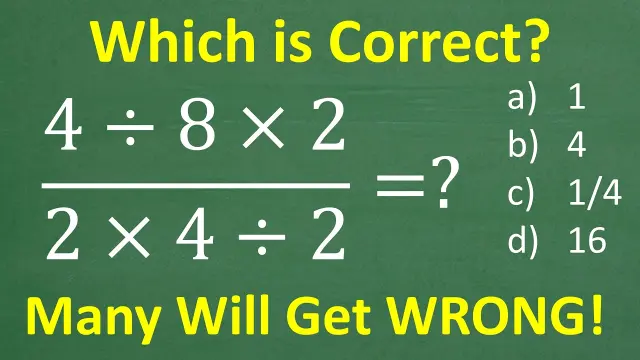
 Common Mistakes When Solving Basic Math Order of Operations
#Math Problem
4 ideas
Common Mistakes When Solving Basic Math Order of Operations
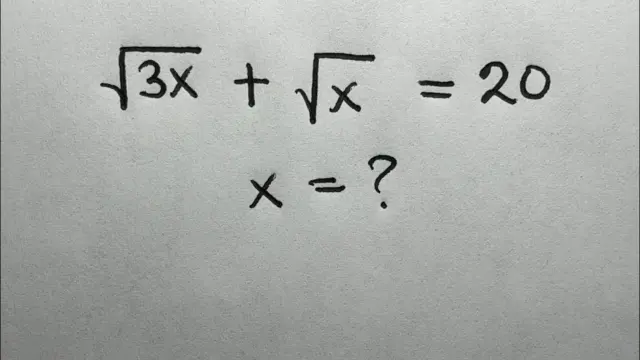 Solve for X in This Exponential Algebra Equation
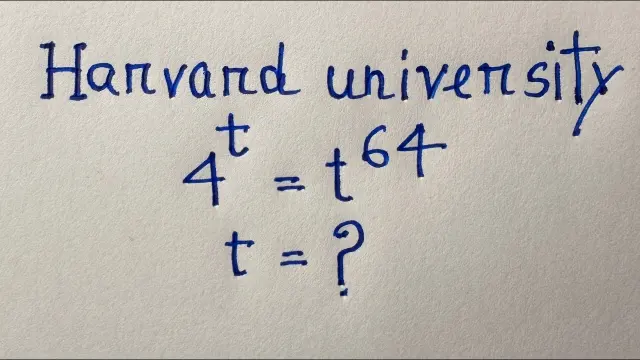 Solving an Exponential Math Olympiad Question Step by Step
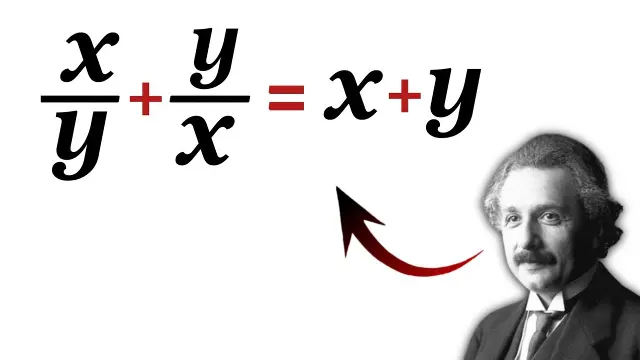 Nice Math Olympiad Question and Radical Simplification
Get new #Math Problem ideas by email
Every Thursday: the week's best ideas, with the newest from #Math Problem.
Related tags
Understanding Math Problems
Math problems are questions that ask you to find an unknown value, explain a relationship, or prove that something is true. They can be simple or complex, but they usually follow the same idea: use numbers, symbols, logic, and known rules to reach an answer. You meet math problems everywhere, from schoolwork to everyday tasks like measuring, comparing, budgeting, and timing.
What a math problem can be
A math problem may ask you to calculate, simplify, solve for an unknown, or interpret a situation in words. Some problems are purely numerical, while others use shapes, graphs, patterns, or real-life contexts. The main goal is not just to get an answer, but to show clear reasoning along the way.
Common kinds of math problems
Read more
- Arithmetic problems use basic operations such as addition, subtraction, multiplication, and division.
- Algebra problems use letters or symbols to stand for unknown values.
- Geometry problems involve shapes, angles, area, perimeter, volume, and spatial relationships.
- Word problems describe a situation in sentences and ask you to translate it into math.
- Number pattern problems ask you to notice structure and continue or explain a sequence.
- Logic and reasoning problems focus on careful thinking rather than long calculations.
Each type has its own style, but the same habits help with all of them: read carefully, identify what is given, and decide what is being asked.
How to approach a problem
A good first step is to slow down and understand the wording. Underline key numbers, units, and important phrases. Then ask yourself what information is known and what is unknown. If the problem is long, it often helps to rewrite it in simpler words or turn the situation into an equation, diagram, or table.
Try these basic steps:
- Read the problem more than once.
- Write down the given information.
- Circle or mark what you need to find.
- Choose a method that fits the problem.
- Work through the steps neatly.
- Check whether your answer makes sense.
Useful habits for beginners
If you are just getting started, focus on understanding rather than rushing. Many mistakes happen because of skipped steps, not because the idea is impossible. Keep your work organized, especially in algebra and multi-step word problems. Writing each step clearly makes it easier to spot errors later.
It also helps to practice different styles of problems. When you see enough examples, you start to recognize patterns and common structures. If a problem feels hard, try a simpler version first or use a diagram to see it more clearly.
When to double-check your answer
Always review your work if the result seems too large, too small, or unlike the values in the problem. Recheck signs, units, and arithmetic. For word problems, make sure your final answer actually answers the question that was asked.
Math problems are really about careful thinking. With practice, you learn how to break a question into smaller parts, choose the right tools, and trust your reasoning step by step.
Videos come from YouTube and posts from Instagram; titles and summaries are our own. All rights belong to their creators.