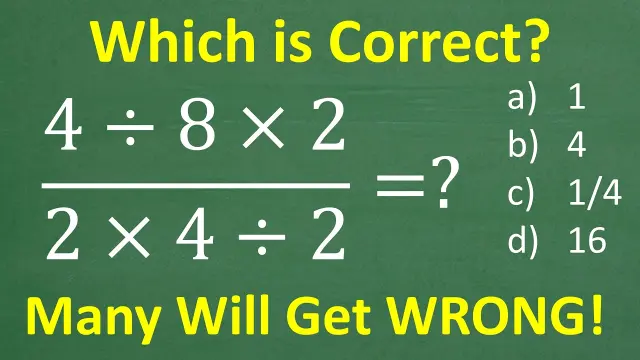
 Common Mistakes When Solving Basic Math Order of Operations
#PEMDAS
4 ideas
Common Mistakes When Solving Basic Math Order of Operations
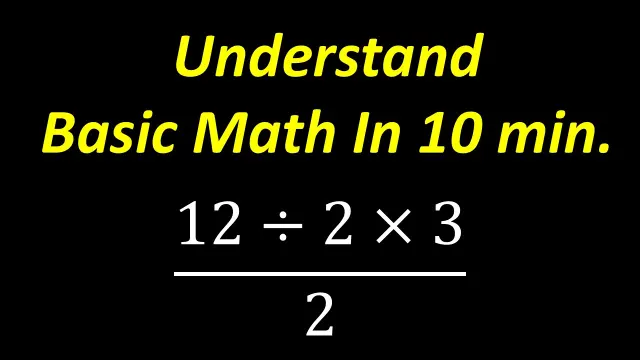 Ten Minute Quick Review of Essential Basic Mathematics
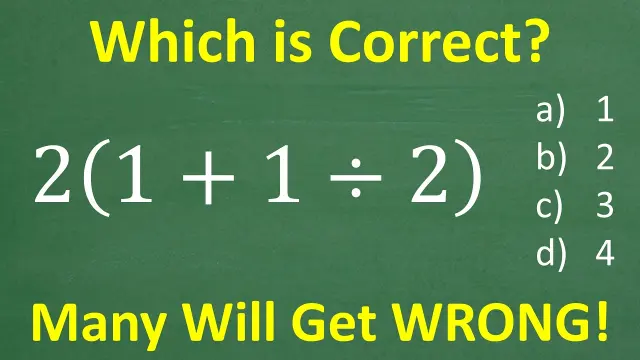 Solving Numeric Expressions Using the Order of Operations
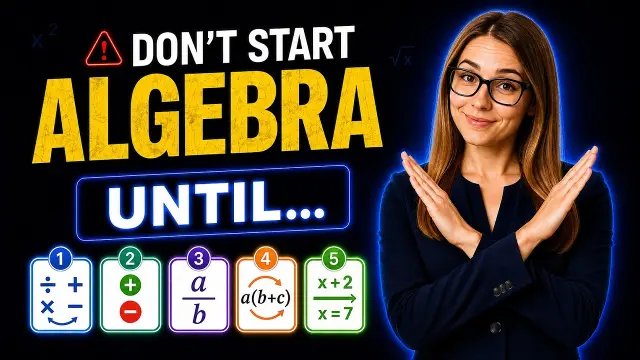 Five Essential Foundational Math Skills Before Starting Algebra
Get new #PEMDAS ideas by email
Every Thursday: the week's best ideas, with the newest from #PEMDAS.
Related tags
Understanding PEMDAS in Basic Mathematics
What PEMDAS means
PEMDAS is a simple way to remember the order of operations in mathematics. It tells you which steps to do first when an expression has more than one kind of operation. Without a clear order, the same expression could be solved in different ways and give different answers.
The letters stand for Parentheses, Exponents, Multiplication, Division, Addition, and Subtraction. The main idea is not that every operation is done strictly one letter at a time, but that certain groups of operations come before others.
Why the order matters
Read more
Mathematics needs a shared set of rules so that expressions mean the same thing to everyone. Order of operations helps you read and solve equations correctly. It is especially important in algebra, but it also appears in everyday calculation, budgeting, measurement, and checking formulas.
For example, the expression 3 + 4 × 2 does not mean the same thing as (3 + 4) × 2. Parentheses change the meaning by telling you what to solve first.
The basic sequence
A useful way to think about PEMDAS is:
- First, work inside parentheses or other grouping symbols.
- Next, handle exponents or powers.
- Then do multiplication and division from left to right.
- Finally, do addition and subtraction from left to right.
It helps to remember that multiplication and division are at the same level, as are addition and subtraction. If both appear in one expression, you move from left to right rather than always doing multiplication before division or addition before subtraction.
Common types of grouping
Parentheses are the most familiar grouping symbols, but you may also see brackets or braces in more advanced work. These symbols still tell you to solve the grouped part first. If there are nested groups, begin with the innermost one and move outward.
Tips for beginners
- Rewrite the expression neatly before you begin.
- Work one step at a time and avoid skipping ahead.
- After each step, copy the result carefully into the next line.
- If you are unsure, circle the operations that must be done first.
- Check your answer by reading the expression again from left to right with the rules in mind.
It can also help to speak the order aloud at first: parentheses, exponents, multiplication and division, addition and subtraction. With practice, the sequence becomes natural.
A simple example
In 8 + 6 ÷ 3, division comes before addition. First solve 6 ÷ 3 to get 2, then add 8 + 2. The answer is 10.
In 8 + (6 ÷ 3), the parentheses make the grouping clear, but the answer is the same because the division still comes first.
Building strong math habits
Understanding PEMDAS is one of the foundations of confidence in mathematics. It reduces careless mistakes and helps you make sense of more complex problems later. If you practice slowly and consistently, the order of operations becomes a reliable tool rather than a memorized trick.
Videos come from YouTube and posts from Instagram; titles and summaries are our own. All rights belong to their creators.