 AP Statistics Unit 4 Review on Probability and Random Variables
#Math Help
5 ideas
AP Statistics Unit 4 Review on Probability and Random Variables
 Comprehensive Algebra Basics Review for Beginners
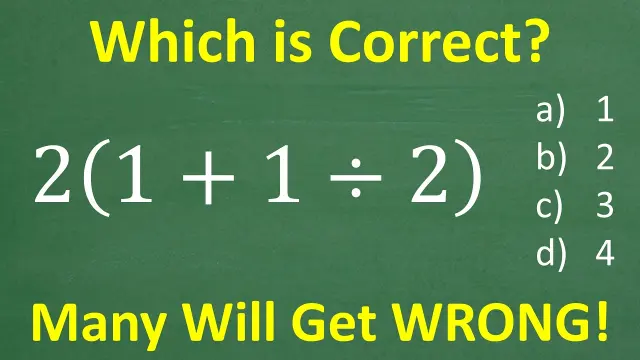 Solving Numeric Expressions Using the Order of Operations
 Comprehensive Slow Explanation of Everything in Algebra
 Full GED Math Practice Test Walkthrough and Review
Get new #Math Help ideas by email
Every Thursday: the week's best ideas, with the newest from #Math Help.
Related tags
Math Help: Understanding the Basics of Math
Math help can mean many things, from learning the basics of arithmetic to making sense of algebra, geometry, or word problems. At its heart, math is the language of patterns, quantities, and relationships. It is used in school, work, budgeting, cooking, building, measuring, and many everyday decisions. When people say they need math help, they are often looking for a way to understand not just the answer, but the process behind it.
What math help usually covers
Math is usually taught in layers. It begins with counting, comparing numbers, addition, subtraction, multiplication, and division. From there, it moves into fractions, decimals, percentages, ratios, and negative numbers. Later topics often include algebra, geometry, data handling, and basic trigonometry. Each step builds on the last, so gaps in earlier understanding can make later topics feel harder than they really are.
For many learners, the challenge is not math itself, but the way it is presented. A problem may look confusing because of the words used, the symbols involved, or the need to choose the right method. Good math help makes the ideas simpler, not just the answer faster.
Read more
Common kinds of math support
There are many ways to get help with math:
- Step-by-step explanations that show how each part of a problem works
- Practice problems that let you repeat a skill until it feels familiar
- Visual aids such as number lines, drawings, grids, and charts
- Word problem strategies that help you find the useful information
- Review of common rules and formulas so you know when to use them
If you are working through a topic, it helps to focus on one skill at a time. For example, before moving to algebra, make sure you are comfortable with fractions and multiplication facts. Small gaps can turn into bigger confusion later.
Helpful habits for learning math
A steady approach works better than trying to memorize everything at once. Try these habits:
- Read the question carefully and underline what is being asked
- Write down each step instead of doing everything in your head
- Check whether your answer makes sense
- Practice similar problems after learning a new skill
- Keep a list of formulas, rules, or common mistakes you often forget
If you get stuck, go back to the idea behind the problem. Ask what the numbers mean, what operation is needed, and whether the problem is asking for an exact answer or an estimate. Often, math becomes clearer once you slow down and separate the problem into smaller parts.
A simple way to build confidence
The best math help is patient and consistent. Start with easy examples, then move to harder ones once the first step feels clear. Do not worry if progress feels slow at first; understanding math often happens in layers. With regular practice, careful reading, and a willingness to make and correct mistakes, you can build confidence and improve your skills over time.
Videos come from YouTube and posts from Instagram; titles and summaries are our own. All rights belong to their creators.