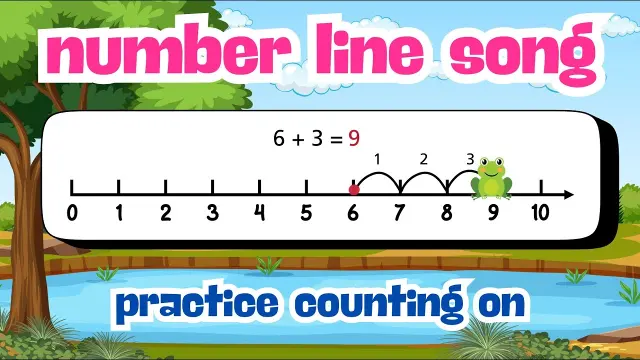
 Number Line Addition Song and Strategies for Kids
#Math Strategies
2 ideas
Number Line Addition Song and Strategies for Kids
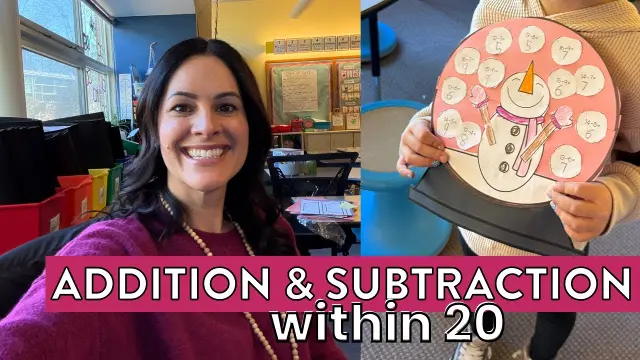 Teaching First Grade Math Strategies for Numbers Within Twenty
Get new #Math Strategies ideas by email
Every Thursday: the week's best ideas, with the newest from #Math Strategies.
Related tags
Math Strategies for Everyday Problem Solving
What math strategies are
Math strategies are the methods people use to understand numbers and solve problems. They help you work out an answer in a way that makes sense, rather than relying on memory alone. A good strategy can make maths feel more manageable because it gives you a clear path from the question to the solution.
People use math strategies in school, at work, and in everyday life. You might use them to add a bill, compare prices, estimate time, divide ingredients, or check whether an answer is reasonable. The best strategy is not always the fastest one; it is the one that fits the problem and helps you stay accurate.
Common kinds of strategies
Read more
There are many ways to approach maths, and different problems call for different methods. Some common strategies include:
- Counting on or back: useful for simple addition and subtraction
- Using a number line: helpful for seeing jumps between numbers
- Breaking numbers apart: a good way to make addition and subtraction easier
- Making tens or other friendly numbers: useful when working with place value
- Estimation: good for checking if an answer is sensible
- Drawing a picture or model: helpful when the problem is easier to see than to calculate
- Looking for patterns: useful in number sequences and repeated problems
- Using known facts: such as facts you already know to solve a harder problem
These strategies can be used alone or together. As you get more comfortable, you may notice that you naturally choose different methods depending on the numbers and the type of question.
How to choose a strategy
When you first see a maths problem, take a moment to understand what it is asking. Ask yourself:
- Is this an addition, subtraction, multiplication, or division problem?
- Can I solve it mentally, or would writing it out help?
- Are the numbers close to a round number or easy to split apart?
- Would a picture, table, or number line make it clearer?
There is often more than one correct way to solve a problem. If you are learning, it can be very helpful to try one method, then solve the same problem a second way. That builds understanding and makes your thinking stronger.
Tips for beginners
If maths feels difficult, start with small, familiar numbers. Focus on understanding the idea behind the method, not just the steps. It is also helpful to explain your thinking out loud or write it down in simple stages. This can show you where your reasoning is clear and where you need more practice.
A few practical tips:
- Work slowly at first and check each step
- Use scratch paper to keep your thinking organized
- Estimate before and after solving to check your answer
- Practice one strategy until it feels comfortable, then try another
- Do not worry if a method looks different from someone else’s; many strategies can be correct
Why strategies matter
Math strategies build confidence because they give you tools instead of guesses. They also help you understand numbers more deeply, which makes later topics easier to learn. Over time, using strategies well can improve both accuracy and speed. Most importantly, they remind you that maths is not just about getting the answer, but about making sense of how the answer works.
Videos come from YouTube and posts from Instagram; titles and summaries are our own. All rights belong to their creators.