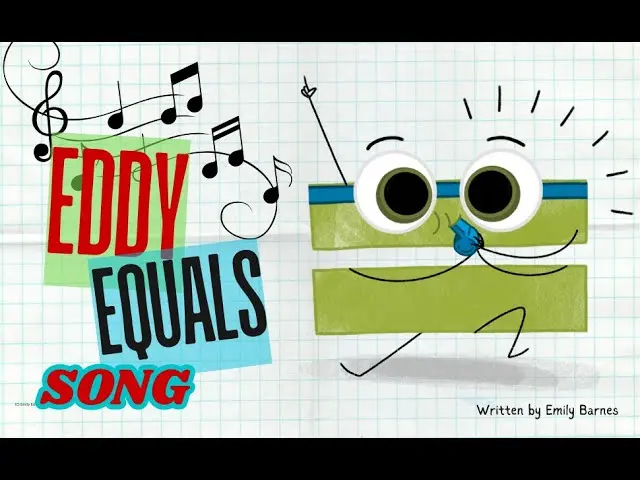
 Addition and Subtraction Math Facts Song with Eddy Equals
#Math Vocabulary
1 ideas
Addition and Subtraction Math Facts Song with Eddy Equals
Get new #Math Vocabulary ideas by email
Every Thursday: the week's best ideas, with the newest from #Math Vocabulary.
Related tags
Math Vocabulary: Key Terms for Understanding Maths
What math vocabulary means
Math vocabulary is the set of words and phrases used to describe numbers, shapes, operations, patterns, and relationships. It includes everyday terms like add, subtract, equal, and total, as well as more specific words such as fraction, angle, perimeter, and coefficient. If you are learning maths, building your vocabulary is just as important as practising calculations, because many problems become much easier once you understand the language being used.
Math language comes from many sources, especially Greek and Latin, which is why some terms may feel unfamiliar at first. Over time, though, the words become useful shortcuts. A clear vocabulary helps you follow instructions, explain your thinking, and spot what kind of answer a question needs.
Common kinds of math words
Read more
Math vocabulary usually falls into a few groups. Number words describe quantities and values, including whole numbers, decimals, fractions, ratios, and percentages. Operation words tell you what to do with numbers, such as add, subtract, multiply, divide, increase, and compare.
There are also words for shapes and space, like side, vertex, edge, area, volume, and symmetry. In algebra, you will meet words such as variable, expression, equation, and term. In measurement, you may see unit, length, mass, time, temperature, and capacity. As maths becomes more advanced, the vocabulary grows, but the ideas often stay connected to these basic groups.
Why the words matter
Many maths mistakes happen because a question is misunderstood rather than because the calculation is wrong. Words like sum, difference, product, quotient, estimate, and round each point to a different action. Similar-looking terms can mean very different things, so it helps to read carefully and learn them in context.
Math vocabulary also helps you make sense of symbols. For example, the equals sign means two expressions have the same value, while an inequality sign shows one side is greater or smaller than the other. Knowing the words behind the symbols makes the ideas clearer and less mysterious.
How to learn it well
A good way to learn math vocabulary is to use it often. Try saying the steps out loud when you solve a problem. Write short definitions in your own words. Group related terms together, such as shape words, measurement words, or algebra words. You can also make simple flashcards with a term on one side and an example on the other.
When you meet a new word, look for clues in the sentence and in the numbers around it. Many maths words are easier to understand when you see them in a real problem instead of memorising them alone. Drawing a sketch, making a table, or using objects can also help connect the word to the idea.
A few practical tips
Start with the most common words and build slowly. Do not worry if some terms take time to settle in; even experienced learners revisit them. If a problem feels confusing, underline the action words first. Finally, practise using the terms yourself, because speaking and writing them clearly is one of the best ways to remember them.
Videos come from YouTube and posts from Instagram; titles and summaries are our own. All rights belong to their creators.