 The Best Way to Get Better at Maths Olympiads
#Mathematics
63 ideas
The Best Way to Get Better at Maths Olympiads
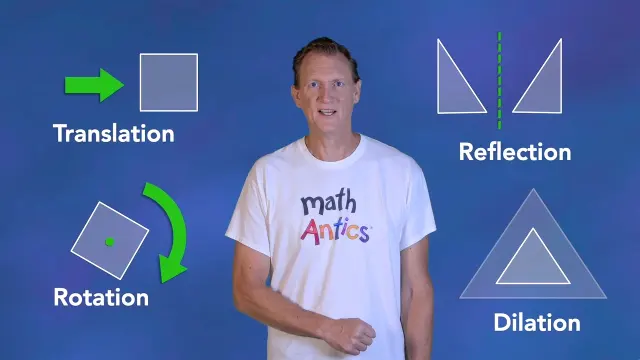 Geometric Transformations Explained Simply
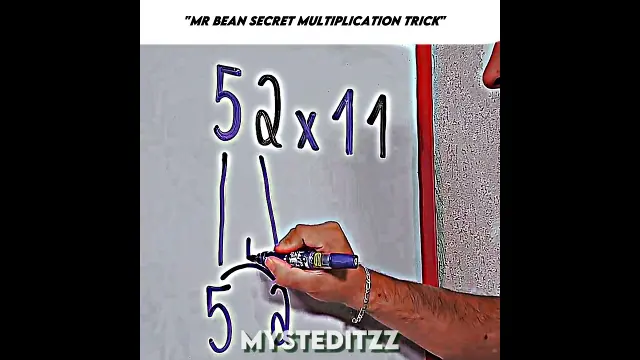 Quick Mental Trick to Multiply Two-Digit Numbers by 11
 The Story Behind the Navier-Stokes Math Problem
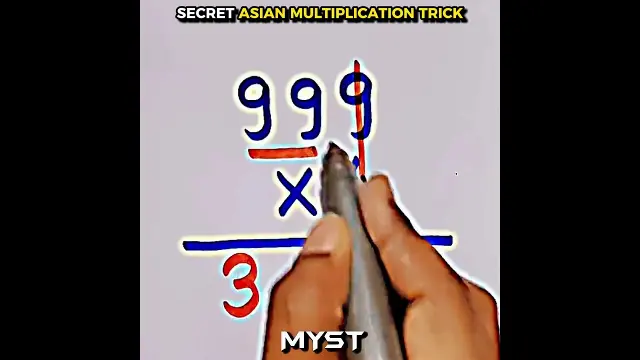 Fast Column Split Trick for Large Number Multiplication
 Complete Probability Concepts and Previous Year Questions for JEE
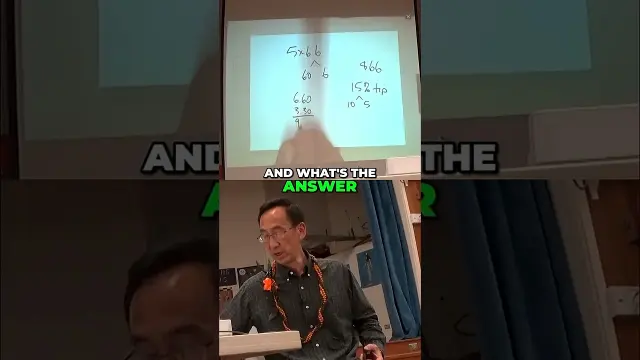 Simple Mental Math Trick for Calculating Tips Quickly
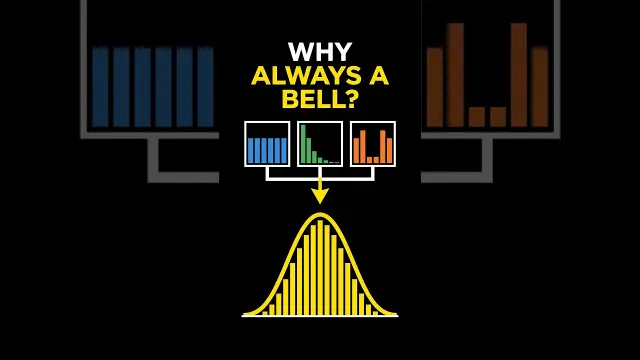 Why the Normal Distribution Appears Everywhere in Mathematics
 My Journey to the British Mathematical Olympiad Round 2
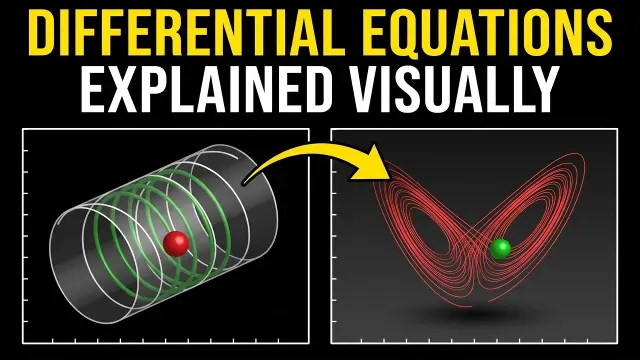 Building Intuition For Differential Equations
 Did AI Solve One of Math's Hardest Problems?
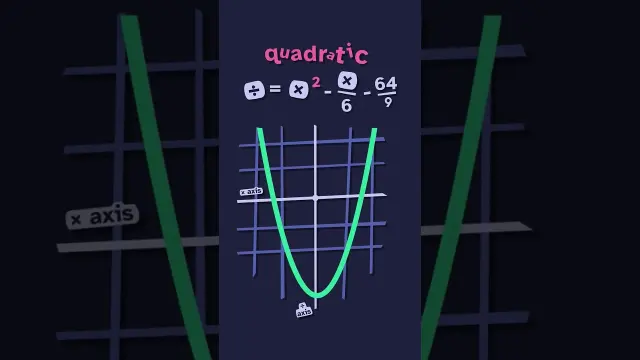 Understanding the Quadratic Formula in Algebra
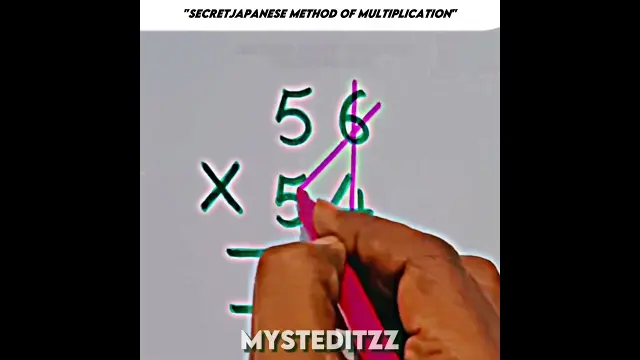 Secret Speed Multiplication Method for Matching Tens
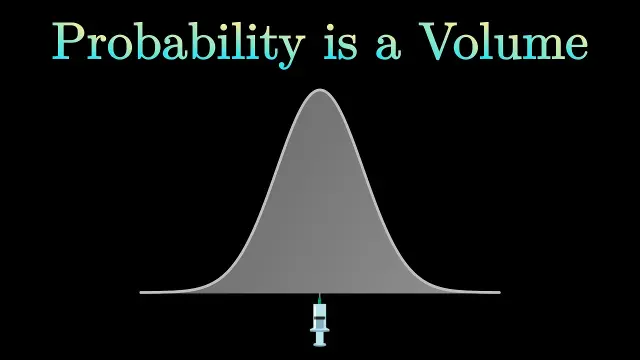 Intuitively Understand Probability Through Set Theory and Measure Theory
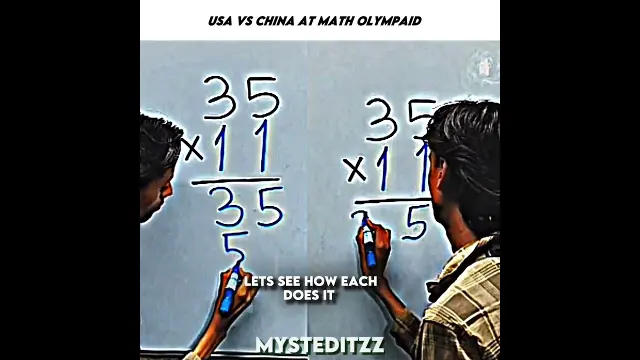 Comparing Standard Math with a Fast Olympiad Shortcut
Get new #Mathematics ideas by email
Every Thursday: the week's best ideas, with the newest from #Mathematics.
Related tags
Mathematics: The Language of Numbers and Patterns
Mathematics is the study of numbers, shapes, patterns, quantity, and logical relationships. It helps you describe the world in a precise way, from simple counting to complex models of space, change, and uncertainty. It has roots in some of the earliest human efforts to measure, trade, build, and observe the sky, and it has grown into a broad field used in science, engineering, economics, design, and everyday problem-solving.
What mathematics includes
At its core, mathematics is not only about calculation. It is also about structure, proof, and reasoning. Some of its main branches are:
- Arithmetic: the basic work of addition, subtraction, multiplication, and division
- Algebra: using symbols to represent unknown values and relationships
- Geometry: the study of shapes, sizes, angles, and space
- Trigonometry: relationships within triangles and periodic patterns
- Calculus: how things change continuously, such as motion or growth
- Statistics and probability: collecting, interpreting, and understanding data and chance
Read more
Each branch has its own language, but they all rely on the same habits of thought: noticing patterns, testing ideas, and following rules carefully.
Why mathematics matters
Mathematics is useful because it helps you make sense of information and solve problems clearly. It can show whether a plan is practical, whether a pattern is consistent, or how different factors affect one another. In daily life, you use mathematics when you compare prices, estimate time, measure ingredients, read graphs, or manage a budget. In more advanced settings, it supports research, technology, navigation, architecture, and many other fields.
How mathematicians work
A mathematician often begins with a question, then looks for patterns, examples, or relationships. Sometimes the goal is to calculate an answer. Other times, the goal is to prove that something is always true. Proof is one of the defining features of mathematics: it is a careful argument that shows why a statement must hold, not just that it seems to work in a few cases.
You may also meet different ways of approaching a problem:
- Visual thinking, using diagrams or geometric ideas
- Symbolic thinking, using equations and expressions
- Numerical thinking, using values and calculation
- Logical thinking, using steps and rules to build an argument
What beginners should know
If you are learning mathematics, it helps to be patient with yourself. Many topics build on earlier ones, so understanding the basics matters. Try to focus on why a method works, not only on memorizing steps. When a problem feels difficult, rewrite it in simpler language, draw it, or break it into smaller parts.
A few practical habits can help:
- Practice regularly, even in short sessions
- Check your work carefully
- Learn from mistakes instead of rushing past them
- Use examples to understand abstract ideas
- Ask what a result means, not just how to compute it
Mathematics can seem abstract at first, but it often becomes clearer when you connect it to something concrete. Once you start to see patterns and relationships, the subject can feel less like a set of rules and more like a powerful way of thinking.
Videos come from YouTube and posts from Instagram; titles and summaries are our own. All rights belong to their creators.