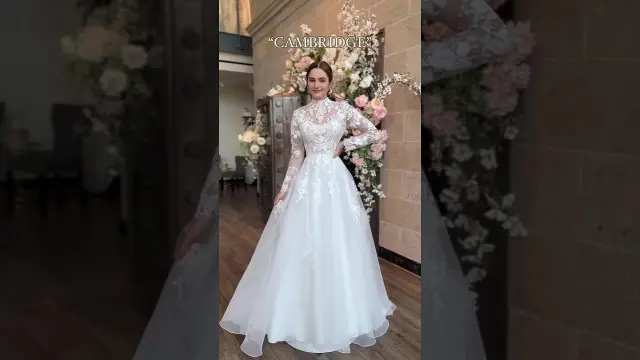
 Five Modest Wedding Dress Silhouettes for the Modern Bride
#Mermaid Silhouette
1 ideas
Five Modest Wedding Dress Silhouettes for the Modern Bride
Get new #Mermaid Silhouette ideas by email
Every Thursday: the week's best ideas, with the newest from #Mermaid Silhouette.
Related tags
Mermaid Silhouette: The Fitted Dress That Flares
A mermaid silhouette is a dress shape that follows the contours of the body closely from the bust through the waist and hips, stays narrow past the thigh, and then opens into a wide flare near or below the knee. The name comes from the line it draws: a long, fitted tail finishing in a sweeping fin. Nothing about the cut is loose or forgiving by accident; the whole effect depends on a close fit through the torso and a sudden release of volume at the hem.
Where it sits among dress shapes
The mermaid is one point on a spectrum. A sheath runs straight from shoulder to hem with no flare at all. A fit-and-flare or A-line begins to open at the waist or hip. A trumpet gown is the mermaid's closest relative, flaring a little higher, around mid-thigh, so the "tail" is shorter and easier to move in. If you are drawn to the shape but worried about walking, a trumpet or a soft A-line is often the compromise that satisfies the same instinct.
What it is used for
Read more
Mermaid gowns belong to formal dressing: eveningwear, black tie, galas and, most of all, weddings. Because the shape holds a clean, uninterrupted line, it photographs with a strong outline and reads as polished from a distance. It also puts the interest at the hem, where lace, beading, ruffles or a fan of pleated fabric can spread outward.
Fabric and construction
The cut only works in a fabric with some body. Structured crepe, mikado, heavy satin and lined lace all hold the flare; anything very soft collapses at the knee and loses the fin. Many dresses add boning or an inner corset through the bodice to keep the front smooth, and a hidden panel of stretch fabric or a walking slit at the back makes the narrow hem navigable. A train is common, and so is a bustle so the train can be lifted for dancing.
What beginners should know
Fit is everything. A mermaid is altered at the waist and hips, not let out across them, so choose a size that accommodates your largest measurement and plan to take in the rest. Try the dress on with the undergarments you intend to wear, and choose smooth, seamless pieces; shapewear is optional, not a requirement.
In the fitting room, do not just stand and look. Sit down. Climb a step. Walk the length of the shop. A mermaid makes for a short stride, and you want to know how that feels before you commit.
Finally, where the flare begins can usually be moved up or down during alterations. That single change is what makes the silhouette work for different heights and proportions. There is no body that cannot wear it; there is only a flare point in the wrong place. If the line flatters where it starts, the rest follows.
#Mermaid Silhouette: frequently asked questions
What exactly is a mermaid silhouette dress?
It is a gown that hugs the bust, waist and hips, stays narrow down through the thigh, and then releases into a wide sweep near or below the knee. The name describes the line it draws — a long fitted tail ending in a fin. Because that line depends on a close fit up top and a sudden burst of volume at the hem, it reads as a formal shape rather than an everyday one.
How does a mermaid differ from a trumpet or an A-line?
The three sit on a single spectrum of where the volume starts. A-line and fit-and-flare open at the waist or hip, a trumpet breaks around mid-thigh, and the mermaid holds its narrow line furthest down before flaring. If you love the look but want an easier stride, a trumpet or a soft A-line gives you much of the same effect with more room to move.
Which fabrics suit this shape best?
You need a fabric with some body — structured crepe, mikado, heavy satin or lined lace all hold the flare at the hem. Anything very soft tends to collapse below the knee, and the fin disappears. Good gowns also hide structure in the bodice and add a stretch panel or back slit so the narrow part stays walkable.
Will I be able to walk and dance in one?
Yes, but the stride is deliberately short, so test it rather than assume — sit down, climb a step, and walk the length of the shop while you have it on. A back slit, a hidden stretch panel, or a bustle that lifts the train for dancing makes a real difference. If it still feels restrictive, the point where the flare begins can usually be raised during alterations.
What mistakes do first-time buyers make?
The big one is sizing to a smaller measurement: a mermaid is taken in at the waist and hips rather than let out, so start from your largest measurement and plan to alter the rest. Another is judging it standing still in front of a mirror, or trying it on over the wrong undergarments. Bring the smooth, seamless pieces you intend to wear and move around in the dress before deciding.
Where would I actually wear a mermaid gown?
Formal settings: eveningwear, black tie events, galas, and weddings above all. The uninterrupted line photographs with a clean outline and looks polished from across a room, while the interest sits at the hem where lace, beading or pleated fabric can spread outward. For a more covered look, a higher neckline or sleeves keeps the shape intact.
Videos come from YouTube and posts from Instagram; titles and summaries are our own. All rights belong to their creators.