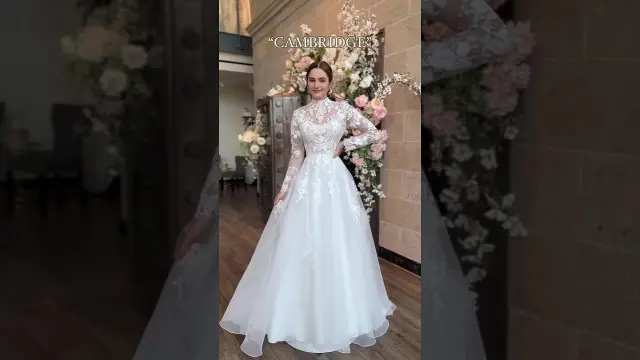
 Five Modest Wedding Dress Silhouettes for the Modern Bride
#Modest Bridal
1 ideas
Five Modest Wedding Dress Silhouettes for the Modern Bride
Get new #Modest Bridal ideas by email
Every Thursday: the week's best ideas, with the newest from #Modest Bridal.
Related tags
A Guide to Modest Bridal: Graceful Coverage for Your Wedding
Modest bridal is the art of putting together a wedding look that keeps the coverage you want — a higher neckline, covered shoulders, sleeves, a skirt that reaches the floor — without giving up any of the elegance a wedding day asks for. It is not a single style or a compromise. It is a way of choosing, piece by piece, what you feel comfortable and beautiful in, and then making those choices work together.
Where it comes from
Covering the body at a wedding is part of many religious and cultural traditions, and every one of them dresses it a little differently: a gown with long sleeves and a high neck, a layered skirt, a veil worn over the shoulders, a shawl or wrap for the ceremony. Plenty of brides choose modest silhouettes for reasons that have nothing to do with faith either — comfort, warmth, family expectations, or simply preferring the way a covered shoulder looks in photographs. The common thread is intention: you decide where the lines fall, and the dress follows.
Silhouettes to know
Read more
An A-line or ballgown skims the body and falls away from the hips, which makes it easy to keep covered and easy to move in. A column or sheath cut gives a long, clean line and works best in fabrics that do not cling. A fit-and-flare with a fuller skirt below the knee balances shape with coverage. When you try gowns, walk, sit, climb a step and raise your arms — a modest dress that restricts you will not feel graceful on the day.
Necklines, sleeves and layers
High necks, bateau necks and soft illusion panels that sit over a solid lining all give coverage while keeping the neckline interesting. For sleeves, consider long fitted sleeves, gentle bell or bishop shapes, or a three-quarter length that clears the wrist. Detachable sleeves, boleros, capelets and structured jackets are useful because they let one dress change character between the ceremony and the celebration.
Fabrics and finishing
The fabric is where modest dressing succeeds or fails. Hold samples up to a window: crepe, mikado and heavier satin generally stay opaque, while fine chiffon, tulle and lace often need a lining or an underlayer beneath them. Ask how the dress is lined through the bodice and skirt, and check how it behaves in bright light and in flash photography. If a dress you love is nearly right, matching fabric can be added for sleeves or a higher back, so bring swatches when you go for alterations.
Practical advice
Write down your requirements before you shop — covered shoulders, sleeve length, neckline height, skirt — and give them to the consultant first, so you are shown things that can actually work. Leave time for alterations; raising a neckline or adding sleeves is normal tailoring, not a favour. Think about the whole day, not just the ceremony: heat, dancing, long hours on your feet. And keep one small thing that feels entirely like you — an heirloom veil, a favourite colour in the lining, a headpiece you love. Modest bridal is at its best when the coverage is simply the frame around a bride who looks like herself.
#Modest Bridal: frequently asked questions
How do I start planning a modest bridal look?
Begin before you shop by writing down what coverage means for you: neckline height, shoulders, sleeve length and skirt. Bring that list to the appointment and give it to the consultant straight away so you are shown dresses that can actually work. Deciding the lines yourself first keeps the search focused instead of reactive.
What should I look for in a modest wedding dress beyond the neckline?
A covered bodice is only part of it — check how the fabric reads in daylight and in flash photography, and ask how the dress is lined through both bodice and skirt. Fine chiffon, tulle and lace often need an underlayer, while crepe, mikado and heavier satin tend to stay opaque on their own. Then move in the dress: walk, sit, climb a step and raise your arms before deciding.
Which silhouette works best for a covered wedding look?
An A-line or ballgown is the easiest starting point because it falls away from the hips, keeps coverage simple and lets you move freely. A column or sheath gives a long clean line but needs a fabric that does not cling. A fit-and-flare with a fuller skirt below the knee is a good middle option when you want shape without losing coverage.
How can I adapt a dress I love that isn't quite modest enough?
Raising a neckline, adding sleeves or building up a back are ordinary tailoring jobs, not special favours — just allow proper time for them. Bring fabric swatches to the alterations appointment so the added pieces match in tone and weight. Detachable sleeves, boleros, capelets and structured jackets are also useful for changing a single dress between the ceremony and the celebration.
What mistakes should I avoid when shopping for a modest bridal gown?
The most common one is leaving alterations too late, since adding sleeves or lifting a neckline takes time you may not have near the date. Another is judging a dress only while standing still in a fitting room, without testing how it behaves when you sit, dance or spend hours on your feet. Also resist buying for the ceremony alone — think about heat, movement and the length of the whole day.
How do I keep a modest wedding look feeling personal?
Coverage works best when it frames the bride rather than hiding her, so keep one element that is unmistakably yours. An heirloom veil, a favoured colour in the lining, or a headpiece you love can carry that without breaking the overall line. The intention behind the choices is what makes the look feel like a person and not a rule.
Videos come from YouTube and posts from Instagram; titles and summaries are our own. All rights belong to their creators.