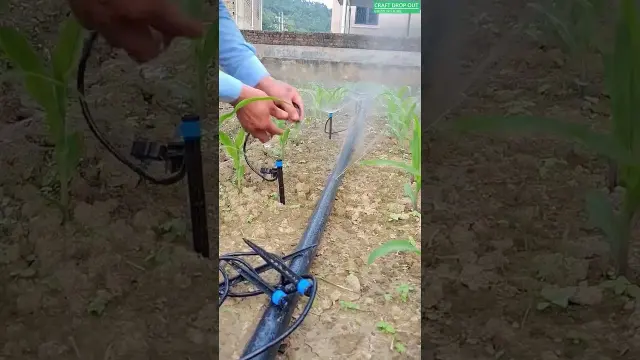
 Fast and Clean Micro Sprinkler Irrigation Setup for Crops
#Micro Sprinkler
1 ideas
Fast and Clean Micro Sprinkler Irrigation Setup for Crops
Get new #Micro Sprinkler ideas by email
Every Thursday: the week's best ideas, with the newest from #Micro Sprinkler.
Related tags
Micro Sprinklers: A Small-Scale Guide to Gentle Irrigation
A micro sprinkler is a small irrigation device that throws water out in a fine spray or a light jet over a limited radius, usually somewhere between one and a few metres. It sits at the end of a thin tube or on a low stake close to the ground, running on modest pressure from a garden tap, a small pump or a gravity tank. It belongs to the wider family of micro-irrigation, the branch of watering that brings water to individual plants rather than throwing it across a whole field.
Where it comes from
Micro-irrigation grew out of the drip and trickle systems developed in the twentieth century, when growers began looking for ways to water crops precisely while using less. Drip delivered water drop by drop at the root; micro sprinklers were the answer for situations where a wider wetting pattern was wanted, or where a fine mist served a purpose beyond simply wetting soil. The idea spread from commercial orchards and nurseries into greenhouses, market gardens and finally home plots, where small kits made the same principles affordable.
The main kinds
Read more
- Static or spray-type heads: a fixed pattern, often a fan or a circle, wetting a patch of ground around the plant.
- Rotating or whirling heads: a moving stream that sweeps a larger circle more slowly.
- Jet or micro-jet models: a stronger, more directed stream, useful for taller or more widely spaced plants.
- Mist and fogging heads: extremely fine droplets, used for cooling air or raising humidity rather than for soaking soil.
Each type has its own throw, flow rate and droplet size, and these are the numbers that matter most when you choose.
What beginners should know
Start with pressure and flow. Every head is designed for a particular operating pressure; too little and the spray collapses into a dribble, too much and it turns into a harsh jet or mists away on the wind. Read the specification of the head and check what your water supply actually delivers before buying a set. Filtration comes next: fine nozzles block easily, so a filter at the start of the line is not optional. Then plan spacing, so that each plant receives roughly the same amount and the wetting circles just overlap without wasting water on paths.
Practical tips
- Group plants with similar water needs on the same line, so one run serves them all sensibly.
- Water early in the morning when evaporation is low and foliage dries during the day.
- Watch the wind: fine sprays drift, and a breezy site may call for larger droplets or closer spacing.
- Flush the lines and clean the heads periodically; a single blocked nozzle quietly starves its plant.
- Keep sprays off walls and paving to avoid staining and waste.
Used with a little care, a micro sprinkler system turns watering from a chore into something the garden mostly does for itself, gently and with far less waste than a hose left running.
#Micro Sprinkler: frequently asked questions
How do I start with a micro sprinkler system in a small garden?
Begin by finding out what your water supply actually delivers in terms of pressure and flow, since every head is built to work within a certain range. Then choose heads that match that supply, add a filter at the start of the line, and lay out the tubing so plants with similar needs sit on the same run. Setting it up in a small section first lets you see how the spray behaves before committing to the whole plot.
What do I need for a basic micro sprinkler setup?
At its simplest you need a connection to your tap, pump or gravity tank, a length of thin tubing, the sprinkler heads themselves, and stakes or clips to hold them near the ground where you want them. A filter at the beginning of the line is essential rather than optional, because fine nozzles clog easily. A timer or simple tap valve is a convenient extra if you want watering to happen without you standing there.
Which kind of micro sprinkler head should I pick?
Think about the wetting pattern you want rather than the name on the packet: static spray heads wet a fixed patch around a plant, rotating heads sweep a wider circle more slowly, and jet models throw a stronger, more directed stream for taller or widely spaced plants. Mist and fogging heads produce very fine droplets and are really for cooling air or lifting humidity, not for soaking soil. Match the throw, flow and droplet size to your planting and your site's exposure to wind.
How do I look after a micro sprinkler system?
Flush the lines and clean the heads from time to time, since a single blocked nozzle will quietly starve the plant it serves while everything else looks fine. Check and rinse the filter as well, because it is what keeps grit out of the fine openings in the first place. A quick glance over the bed while the system runs will show you any head that has stopped spraying properly.
Can micro sprinklers do anything besides watering the soil?
Yes — the misting types are used to cool the air in a greenhouse or conservatory and to raise humidity around plants that like a damp atmosphere. They are also handy for delicate seedlings and cuttings that would be disturbed by a heavier stream. Keep in mind these fine sprays drift in a breeze, so they work best in a sheltered spot.
What mistakes do beginners make with micro sprinklers?
The usual ones are buying heads without checking the pressure they need, skipping filtration, and spacing emitters so unevenly that some plants get drenched while others stay dry. Watering in the middle of the day or in windy conditions wastes a lot of the spray before it reaches the ground. Pointing sprinklers at walls, fences and paving is another easy slip that leads to staining and wasted water.
Videos come from YouTube and posts from Instagram; titles and summaries are our own. All rights belong to their creators.