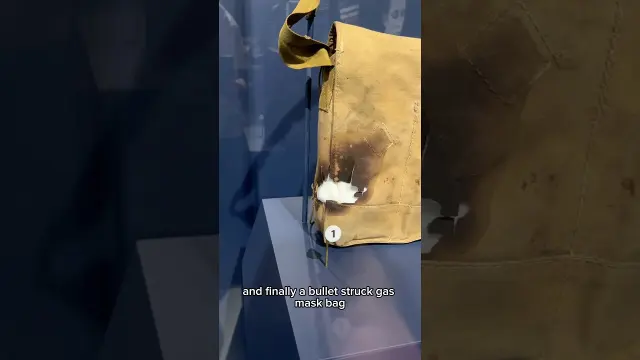
 My Favorite Artifacts from the National Museum of the Marine Corps
#Military History
1 ideas
My Favorite Artifacts from the National Museum of the Marine Corps
Get new #Military History ideas by email
Every Thursday: the week's best ideas, with the newest from #Military History.
Related tags
Military History: A Beginner's Guide to Wars and Armies
Military history is the study of armed conflict and everything that surrounds it: how armies were raised and paid, how battles were won or lost, how soldiers lived and died, and how societies remembered what happened afterwards. It is one of the oldest kinds of history written, because people have always wanted to explain victory and defeat, and it has grown far beyond the simple recital of campaigns.
What counts as military history
The field is broader than most people expect. There is operational history, which reconstructs what happened on a campaign or in a battle and why. There is the study of strategy and doctrine, the ideas commanders carry into war. There is technological history, following how weapons, armour, ships, fortifications and transport changed over time. There is the social side, which looks at who served, how they were recruited, what they ate, what they were paid, how their families coped. And there is the history of memory and commemoration, which asks how later generations choose to remember a conflict. Medical care, logistics, intelligence, and the experience of civilians all fall within it too.
How the work is done
Read more
Military historians draw on a wide range of sources and treat all of them with caution. Official records, orders, and reports show what institutions intended and claimed. Letters, diaries and memoirs show what individuals saw, though memories fade and writers sometimes flatter themselves. Newspapers, propaganda and later histories reveal how events were presented at the time and afterwards. Archaeology adds what documents leave out: the position of a trench, the wear on a blade, the contents of a soldier's pocket. Battlefields, cemeteries and museum collections are themselves documents, which is why the study of artifacts sits so naturally alongside the study of campaigns.
Where to begin
If you are new to the subject, start narrow rather than broad. Pick a single event, unit, ship, or region and read about it properly instead of trying to absorb whole centuries at once. Read on several levels: a general overview for the shape of events, then a detailed study, then a firsthand account, because each one corrects the others. Whenever you read about a battle, look at a map; terrain explains a great deal that text alone cannot.
Ask who wrote your source, when, and for whom. A dispatch written during a campaign and a memoir written decades later are both useful, but they answer different questions. Be wary of accounts that present a war as a single tidy story with clear heroes; real conflicts are messy, and the records are usually incomplete. Visits to museums and preserved sites are worth the effort, and so is listening carefully to family stories, even when you cannot verify every detail. Above all, keep your curiosity factual and your tone respectful: military history deals with real suffering, and the more carefully you study it, the more human, and less glamorous, it becomes.
#Military History: frequently asked questions
How do I get started with military history without feeling overwhelmed?
Start with one narrow subject — a single campaign, unit, ship, or region — rather than trying to cover whole centuries at once. Read on three levels at the same time: a general overview for the shape of events, a detailed study for depth, and a firsthand account for the human view. Keep a map open whenever you read about a battle, since terrain explains much of what the text alone cannot.
What kinds of sources should I look for, and how much can I trust them?
Mix official records and orders with letters, diaries, memoirs, newspapers, and archaeological finds, because each type answers a different question. Always ask who wrote a source, when, and for whom: a dispatch written during a campaign and a memoir written decades later are both useful but not equally reliable. Expect gaps and contradictions rather than one tidy story, and treat dramatic claims with caution.
Which area of military history should I choose to focus on?
It depends on what already holds your attention — battles and campaigns, strategy and doctrine, weapons and fortifications, or the social side of who served and how they lived. If you enjoy objects and places, technology, artifacts, and battlefield archaeology may suit you best. If you care more about people, logistics, medical care, or civilian experience, the social and commemorative side of the field will feel richer.
How should I care for military artifacts, documents, or family keepsakes?
Keep paper, photographs, uniforms, and metal items dry, out of direct sunlight, and away from damp basements or hot attics, and handle them with clean hands rather than gloves that reduce your grip. Store documents flat and unfolded, keep metal and leather from touching, and avoid irreversible repairs or heavy cleaning at home. For anything valuable or fragile, ask a museum conservator or archivist for guidance before you intervene.
What are common mistakes people make when studying or visiting military history sites?
The most common is reading a conflict as a tidy story with clear heroes, which flattens the messiness real records contain. Another is relying on a single source, or on memory alone, without checking it against other accounts. When visiting battlefields, cemeteries, and museums, remember that these places commemorate real suffering — go slowly, read the labels, and keep the tone respectful.
Videos come from YouTube and posts from Instagram; titles and summaries are our own. All rights belong to their creators.