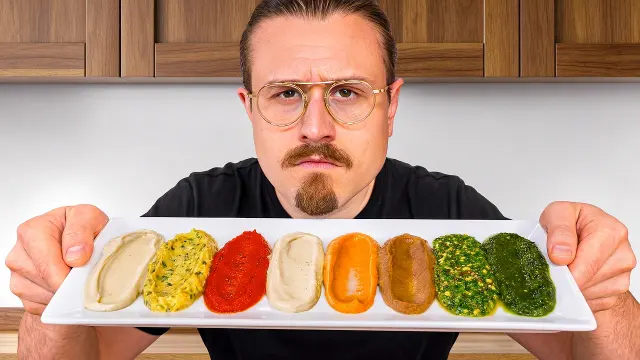
 Modern Mother Sauces Worth Learning by Heart
#Mother Sauces
1 ideas
Modern Mother Sauces Worth Learning by Heart
Get new #Mother Sauces ideas by email
Every Thursday: the week's best ideas, with the newest from #Mother Sauces.
Related tags
Mother Sauces: The Base of Everything
A mother sauce is a base: a simple, adaptable preparation that you finish in different ways to make dozens of other sauces. Learn five of them well and you stop following sauce recipes one at a time, because you can see where each one is going.
The idea comes from the classic French kitchen, where cooks codified a small family of foundations and treated everything else as a variation. The list has shifted over the years, but the core has stayed steady.
The classic five
- Béchamel: milk thickened with a white roux. Mild and neutral, it becomes a cheese sauce for gratins, a base for creamy pasta bakes, or a white sauce for vegetables.
- Velouté: a light stock, usually chicken or fish, thickened with a blond roux. It is the quiet sauce behind many poultry and seafood dishes, often finished with cream, butter or herbs.
- Espagnole: brown stock and brown roux with tomato and aromatics, simmered long and slowly. Dark, deep and concentrated, it is the ancestor of the brown sauces served with red meat.
- Sauce tomate: tomatoes cooked down slowly with aromatics until sweet and thick. Plain in the best sense, and endlessly forgiving.
- Hollandaise: egg yolks emulsified with warm butter and lemon. Rich, pale and fragile, it belongs with eggs, fish and spring vegetables.
Read more
Many cooks now count mayonnaise, vinaigrette or a simple reduction of stock among the basics too. The principle matters more than the exact list.
What they have in common
Every mother sauce thickens in one of two ways: with a starch, usually a roux of equal weights of butter and flour cooked together, or by emulsifying fat into liquid. The starch sauces are patient and reheat well. The emulsions are quick and less forgiving.
With a roux, cook it long enough to lose the raw flour taste but keep the heat moderate so it does not scorch. Add warm liquid to a warm roux, whisk steadily, and let the sauce simmer briefly so the thickness settles.
With an emulsion, add the fat slowly at first, whisking constantly, and keep everything warm rather than hot. If it splits, start a fresh yolk in a clean bowl and dribble the broken sauce back in.
Small habits that help
- Season at the end, and taste as you go, since stocks and cheeses vary a lot in salt.
- Keep a finished sauce warm rather than reheating it hard, and press cling film onto the surface to stop a skin forming.
- Strain a sauce if you want it glossy; leave it rustic if you want texture.
- Treat the classic proportions as starting points. A little more stock, a little less butter — the sauce tells you what it needs.
None of these sauces is a museum piece. Add mushrooms and shallots, swap the milk for stock, finish with herbs or citrus, and you have something of your own built on a foundation you understand.
#Mother Sauces: frequently asked questions
What actually makes a sauce a "mother sauce"?
It's a base preparation rather than a finished dish — something simple and neutral enough that you can steer it in many directions at the end. The idea comes from the classic French kitchen, which treated a small family of foundations as the source of everything else. Once you know the base, you can improvise variations instead of following a different recipe each time.
Which mother sauce should a beginner learn first?
Sauce tomate or béchamel are the friendliest starting points, since both are forgiving and easy to judge by taste and texture as they cook. Velouté comes next if you already have good stock on hand, while hollandaise is worth attempting once you're comfortable whisking constantly and watching heat. Learning one well before moving to the next works better than trying all of them at once.
What ingredients and equipment do I need to start?
For the starch-based sauces you mainly need butter, flour, milk or stock, and a heavy pan with a whisk, since a roux of equal parts butter and flour is what thickens them. For the emulsions you'll want egg yolks, warm butter, and something acidic like lemon, plus a bowl you can keep at a steady gentle warmth. Aromatics such as onion, herbs and tomato round out the brown and tomato sauces.
How do I keep a sauce from turning lumpy or splitting?
With a roux-based sauce, add warm liquid to a warm roux and whisk steadily as you go, then let it simmer briefly so the thickness settles. With an emulsion, add the butter slowly at the start and keep everything warm rather than hot. If an emulsion does break, start a fresh yolk in a clean bowl and dribble the broken sauce back into it.
Can I make these ahead, and how should I reheat them?
Most of them keep well, but they behave differently: the starch-thickened sauces reheat patiently, while emulsions are best made close to serving. To hold a finished sauce, keep it warm rather than reheating it hard, and press cling film directly onto the surface so a skin doesn't form. Season again at the end, since flavour dulls with resting.
What are the common mistakes people make with them?
The usual ones are undercooking the roux so the raw flour taste lingers, or cooking it so hard that it scorches, and adding cold liquid all at once instead of gradually. Another is salting too early, when stocks and cheeses vary so much in salt that you end up over-seasoned. Treat the classic proportions as starting points — a little more stock or less butter is often what the sauce actually wants.
Videos come from YouTube and posts from Instagram; titles and summaries are our own. All rights belong to their creators.