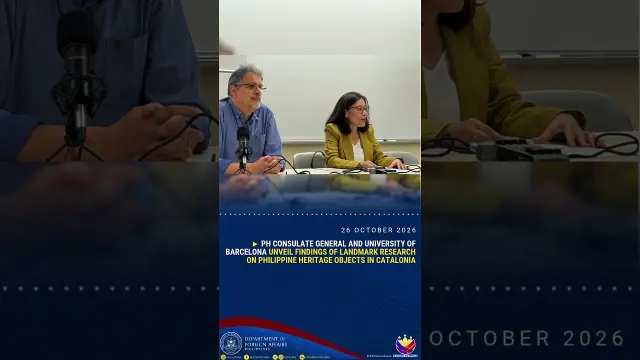
 796 Philippine Objects Documented in Catalonia's Museums
#Museum Research
1 ideas
796 Philippine Objects Documented in Catalonia's Museums
Get new #Museum Research ideas by email
Every Thursday: the week's best ideas, with the newest from #Museum Research.
Related tags
Museum Research: Studying Collections and Their Stories
A museum is often judged by what hangs on its walls, but most of its knowledge lives somewhere less visible. Museum research is the ongoing work of finding out what a collection actually contains: what each object is, where it came from, who made it and why, how it was used, and what condition it is in today. It is part detective work, part scholarship, and part care.
What it is for
Research underpins almost everything a museum does. It shapes exhibitions and the labels you read beside a display case. It decides how an object should be stored, handled or treated. It answers questions from visitors, artists and descendants of the people an object once belonged to. It also corrects old mistakes: collections inherit gaps and assumptions from the people who assembled them, and research is how those are found and openly acknowledged rather than quietly kept.
Provenance, or where things come from
Read more
A central strand is provenance, the recorded history of ownership and movement. Researchers trace an object through auction records, family papers, shipping documents, photographs and old catalogues, building a chain that may have missing links. Provenance matters for understanding an object's meaning, for establishing legal and ethical title, and for identifying items that were removed from their places of origin through conflict or coercion. This work is slow and often inconclusive, and honest researchers say so.
Reading the object itself
Close study of the physical thing yields what documents cannot. Conservators and curators examine materials, tool marks, stitching, repairs and wear patterns. They may use imaging techniques that reveal underdrawings or hidden structure, and materials analysis that identifies pigments, fibres or alloys. Documentation is its own discipline: photographing an object from every angle, recording its dimensions and condition, and writing descriptions precise enough that someone who never saw it could still recognise it.
The people and skills involved
Museum research is rarely solitary. Curators, conservators, registrars, archivists, librarians, educators and external specialists work together, and much of the deepest knowledge sits with communities of origin who are now increasingly part of the process. Good practice means asking people what an object means to them, not only what it is made of.
Care and access
Research runs alongside preservation. The more a museum knows about an object, the better it can decide whether it can travel, be displayed, be handled by researchers, or should rest in storage. Public access belongs here too: catalogues, digitised archives and study rooms let outside researchers and curious visitors continue the work.
If you want to begin
Start with one thing that puzzles you and follow it patiently. Learn to take thorough notes and label photographs properly. Read the documentation others have written before adding your own. Ask questions of people who know the material better than you do, and be willing to record uncertainty plainly. That habit of careful, honest attention is the heart of the practice.
#Museum Research: frequently asked questions
How do I start doing museum research if I have no formal training?
Begin with a single object or question that genuinely puzzles you rather than trying to survey a whole collection. Take careful notes, label your photographs properly, and read the documentation others have already written before adding your own. Curiosity plus patience matters more at the start than credentials.
What do I need before I can research an object in a museum?
You usually need permission from the institution and a clear sense of what you are asking, since study rooms and storage access are arranged in advance. Bring gloves if requested, a way to record details accurately, and the discipline to handle things minimally. Knowing what has already been published about the piece saves everyone time.
What is provenance, and why does it matter so much?
Provenance is the recorded history of an object's ownership and movement, pieced together from auction records, family papers, shipping documents, photographs and old catalogues. It helps explain what an object means, establishes legal and ethical title, and can reveal items removed from their places of origin through conflict or coercion. The chain often has missing links, and honest researchers say so rather than filling gaps with guesses.
How is research different from conservation?
They run alongside each other rather than being separate jobs. The more a museum knows about an object, the better it can judge whether the piece can travel, go on display, be handled by researchers, or should rest in storage. Conservators and curators also read the object itself, studying materials, tool marks, repairs and wear that documents never record.
Who actually does museum research?
It is rarely solitary work. Curators, conservators, registrars, archivists, librarians and educators collaborate, often with outside specialists brought in for particular materials or questions. Communities of origin are increasingly part of the process, and good practice means asking what an object means to them, not only what it is made of.
What mistakes should I avoid when writing up my findings?
The most common slip is presenting a neat story where the evidence is thin, so record uncertainty plainly instead of smoothing it over. Label photographs properly and write descriptions precise enough that someone who never saw the object could still recognise it. Read existing documentation first, and ask people who know the material better than you do.
Videos come from YouTube and posts from Instagram; titles and summaries are our own. All rights belong to their creators.