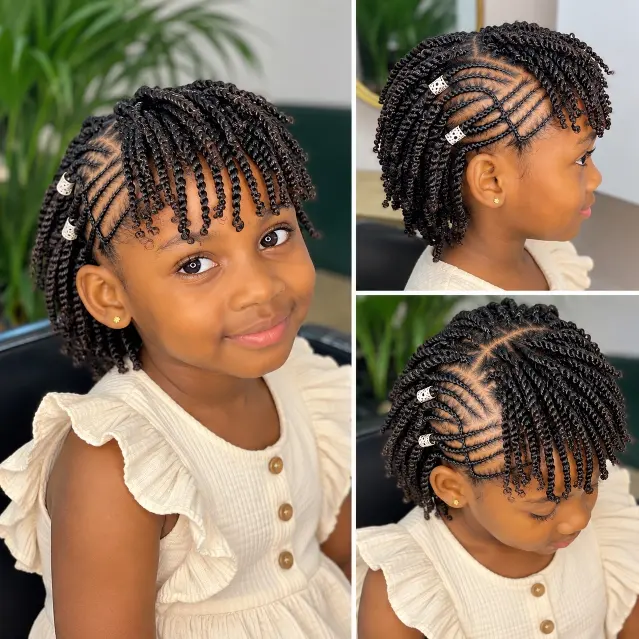
 Kids Twist Combo Hairstyle
#Natural Hair
39 ideas
Kids Twist Combo Hairstyle
Get new #Natural Hair ideas by email
Every Thursday: the week's best ideas, with the newest from #Natural Hair.
Related tags
Natural Hair: Care, Styles, and Basics
What natural hair means
Natural hair usually refers to hair worn in its own texture, without chemical straightening or relaxing. It can be curly, coily, kinky, or a mix of patterns, and it often needs a different kind of care from straight hair because the natural bends in the strand can make it easier for moisture to leave the hair.
Natural hair has a long cultural history, especially in communities where textured hair has been worn, styled, and protected in many different ways for generations. Today, people choose natural hair for many reasons: comfort, identity, convenience, or simply because they like how it looks and feels.
Understanding texture and needs
Read more
There is no single natural hair type. Some hair is loose and wavy, some forms soft curls, and some has tight coils or zigzag patterns. Within the same head, you may notice different textures, densities, and porosity levels. That is why one routine rarely works for everyone.
A helpful approach is to learn how your own hair responds to water, conditioner, oils, and styling products. If your hair feels dry, breaks easily, or tangles quickly, it may need gentler handling, more regular conditioning, or simpler styling. If your hair feels weighed down easily, lighter products may suit it better.
Core care habits
Natural hair usually does best with a routine that balances cleansing, conditioning, moisture, and protection.
- Cleanse the scalp and hair regularly enough to remove buildup, but avoid harsh washing that leaves the hair stripped.
- Condition after washing to help soften the hair and make detangling easier.
- Use water-based moisture first, then seal it in if your hair benefits from oils or creams.
- Detangle gently, preferably when the hair is damp and coated with conditioner.
- Handle the hair with patience, especially around the ends, which are often the oldest and most fragile part.
Nighttime care matters too. A satin bonnet, scarf, or pillowcase can reduce friction and help preserve styles.
Popular natural hair styles
Natural hair can be worn in many ways, from loose and full to tucked away for convenience. Common styles include twist-outs, braid-outs, wash-and-go styles, buns, puffs, bantu knots, braids, flat twists, and two-strand twists. Protective styles like twists, braids, and tucked-up styles can help reduce daily manipulation when they are installed and removed carefully.
The best style is one that suits your hair, your schedule, and how much handling your hair can comfortably tolerate. A style should never feel painful or overly tight.
What beginners should know
If you are new to natural hair, keep things simple at first. Start with a basic cleanser, conditioner, and one or two styling products. Pay attention to how your hair reacts instead of following every routine you see elsewhere. Healthy natural hair often comes from consistency, not complexity.
A few practical tips help most people:
- Trim damaged ends when needed to keep the hair neat.
- Avoid rough brushing on dry hair.
- Be careful with heat, and use it sparingly.
- Protect your edges and scalp from tension.
- Be patient with shrinkage, which is a normal part of many natural textures.
Natural hair is flexible, expressive, and personal. With steady care and gentle habits, you can learn what helps your own texture look and feel its best.
Videos come from YouTube and posts from Instagram; titles and summaries are our own. All rights belong to their creators.