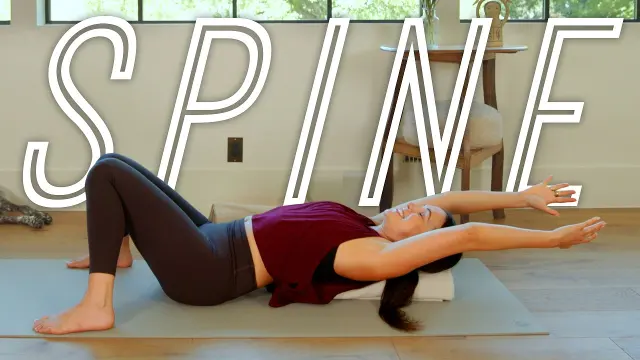
 Yoga Practice for Neck Hump and Upper Spine Posture
#Neck Hump
1 ideas
Yoga Practice for Neck Hump and Upper Spine Posture
Get new #Neck Hump ideas by email
Every Thursday: the week's best ideas, with the newest from #Neck Hump.
Related tags
Neck Hump: Posture, Causes and Gentle Daily Habits
A neck hump is the rounded curve that can develop at the base of the neck, where the cervical spine meets the upper back. You may hear it called a dowager's hump, a buffalo hump, or simply a "text neck" curve. It is not a bone that grows there. It is a shape made of the spine's position, the muscles that hold it, and the soft tissue around it, which is why it can be influenced by how you move and sit over years rather than overnight.
How it forms
The upper spine has a natural forward curve. When the head sits far in front of the shoulders for long stretches, the deep neck muscles work harder while the muscles between the shoulder blades weaken. Over time the body adapts to that position, and the transition between neck and upper back becomes more pronounced. Extra cushioning of fat in the same area can add to the shape. This is common with age, with long hours at a screen, and after periods when movement has been limited. In a smaller number of cases a hump is linked to a hormonal or bone condition, so a hump that appears quickly, hurts, or comes with other symptoms is worth showing to a doctor or physiotherapist rather than treating on your own.
What helps
Read more
The encouraging part is that posture-related curves respond well to steady, unremarkable habits. Aim for gentle and consistent over intense and occasional.
- Notice your head position. The ears sitting roughly above the shoulders is a useful mental image; the chin should not be pushed back, only lightly drawn in.
- Change position often. No single posture is perfect, and the body tolerates variety far better than an hour of stillness.
- Strengthen what pulls the shoulders back. Rows with a band, gentle shoulder-blade squeezes, and wall slides all work the mid-back without loading the neck.
- Open the front of the body. The chest and the front of the shoulders tighten with screen use; slow doorway stretches ease that pull.
- Move the upper spine. Soft thoracic rotations and cat-cow motions keep the segment between neck and mid-back mobile.
Starting well
Begin with a few minutes a day and stop at the first sign of sharp pain, dizziness, numbness or tingling in the arms. Discomfort from unfamiliar muscles is normal; nerve symptoms are not. Sleep and general activity matter as much as any exercise, since the body rebuilds tissue at rest.
Yoga, Pilates and simple mobility routines suit this area well because they combine awareness with movement. Choose one you will actually repeat, and give it weeks rather than days before expecting a visible change.
#Neck Hump: frequently asked questions
How do I start working on a neck hump at home?
Start small: a few minutes a day of gentle movement, done consistently, beats an occasional long session. Begin with simple awareness of where your head sits and one or two easy exercises that pull the shoulder blades back. Stop at any sharp pain, dizziness, or tingling into the arms, and have a hump that appeared suddenly or hurts checked by a professional.
What do I need to get started?
Very little — a wall, a doorway, a mat, and ideally a light resistance band cover most of it. The work is mostly about position and repetition rather than equipment. If a curve came on quickly, is painful, or arrives with other symptoms, the first step is a professional assessment rather than a home routine.
Which approach should I choose — yoga, Pilates, or plain stretching?
Whichever one you will genuinely repeat is the right one. Yoga and Pilates tend to suit this area because they pair body awareness with movement rather than isolating a single muscle. Give your choice several weeks before judging it, and let a teacher know what you're working on so they can offer alternatives.
What does everyday care for the upper back look like?
Vary your position through the day instead of holding one 'perfect' posture for hours. Keep the ears roughly over the shoulders without jamming the chin back, and ease the tight chest and shoulder front with slow, unhurried stretches. Sleep and general daily activity count as much as any exercise, because tissue recovers at rest.
What are the most common mistakes?
Going too hard too soon, and expecting a visible change in a matter of days. Another frequent slip is stretching the neck itself while ignoring the mid-back, which is where the supporting muscles need the work. Pushing through nerve symptoms such as numbness or tingling instead of stopping is the one to avoid entirely.
If I'm self-conscious about the curve, how do I dress around it?
Soft, open necklines and a few well-placed layers tend to draw the eye upward and across the shoulders rather than to the base of the neck. A collar that stands slightly away from the neck, or hair swept forward on one side, can soften the line in photos. Comfort matters most — clothing that lets you sit and move freely will do more for how you carry yourself than any clever cut.
Videos come from YouTube and posts from Instagram; titles and summaries are our own. All rights belong to their creators.