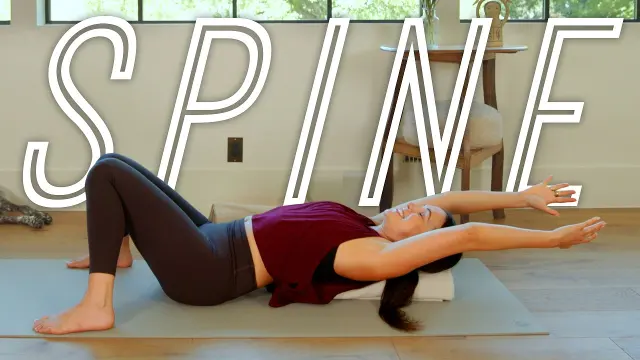
 Yoga Practice for Neck Hump and Upper Spine Posture
#Upper Spine
1 ideas
Yoga Practice for Neck Hump and Upper Spine Posture
Get new #Upper Spine ideas by email
Every Thursday: the week's best ideas, with the newest from #Upper Spine.
Related tags
Upper Spine: Posture, Movement and Everyday Care
The upper spine is the stretch of the back that runs from the base of the skull through the neck and across the shoulders to the point where the ribcage ends. In anatomy it covers the cervical and upper thoracic vertebrae, the muscles that hold the head upright, and the shoulder blades that float over the ribs. It is the busiest region of the skeleton in daily life: almost everything you do with your eyes, hands and attention starts with a movement there.
The curve of the upper back is not a flaw. A gentle outward curve in the thoracic spine and a small inward curve in the neck are the shape that lets the spine share load like a spring. Problems tend to appear when the shape becomes fixed in one position for too long. Hours at a screen, a phone held low, a heavy bag on one shoulder or a long drive all encourage the head to drift forward and the shoulders to round. The muscles at the front of the chest shorten, the deep muscles between the shoulder blades weaken, and the neck takes on more work than it was designed for.
Many people describe this as a "neck hump" or a rounded upper back. It is worth saying plainly that posture is one factor among several, and that changes in the shape of the upper spine can have causes that only a healthcare professional can assess. If you have pain that persists, numbness, tingling or weakness in the arms, or a curve that is changing, speak to a doctor or physiotherapist rather than working from general advice.
What helps in practice
Read more
Movement variety matters more than any single perfect posture. No position is ideal for hours at a time, so the useful habit is to change position often: stand, walk, roll the shoulders, look up and away from the screen.
- Set screens roughly at eye level and keep the chin gently tucked rather than jutting forward.
- Take short breaks to open the chest, reaching the arms back and drawing the shoulder blades toward each other.
- Strengthen the upper back with rows, band pulls or simple prone lifts, and keep the neck mobile with slow, pain-free turns and tilts.
- Carry loads evenly and lighten what you can.
- Sleep with a pillow that keeps the neck roughly in line with the rest of the spine.
Yoga and gentle practice
Yoga suits this area because it combines mobility, strength and breath awareness. Chest openers such as a supported backbend over a rolled blanket, cat and cow for spinal movement, thread-the-needle for the upper back, and gentle neck releases all work well. Move slowly, stay within a comfortable range, and let the breath stay easy. A mild stretch is fine; sharp pain is a signal to stop.
Progress in the upper spine is slow and undramatic, which is exactly why consistency beats intensity. A few minutes most days, done kindly, will do more than an ambitious session once a month.
#Upper Spine: frequently asked questions
How do I start working on my upper spine posture at home?
Begin with awareness rather than a routine: notice how often you stay in one position, then build the habit of changing it — standing up, rolling the shoulders, looking away from the screen. Add a couple of gentle movements you can repeat easily, such as chest openers and slow neck turns, and keep them comfortable rather than ambitious.
What do I need to practise for the upper spine?
Very little equipment is required — floor space, a wall, and something like a rolled blanket or a firm cushion for supported chest openers will cover most of it. A resistance band or a light weight is handy later if you want to strengthen the muscles between the shoulder blades. What matters most is regularity, not gear.
Should I choose yoga or strength work for a rounded upper back?
They complement each other rather than compete: yoga brings mobility, breath awareness and gentle opening of the chest, while rowing-style pulling movements build the upper-back strength that holds the shoulders back. A sensible approach blends the two, keeping the neck mobile and the front of the chest from staying shortened. Pick whichever you will actually do often.
How do I look after my upper spine during a long working day?
Set your screen roughly at eye level and keep the chin gently tucked rather than pushed forward, then break up sitting with short, frequent changes of position. Carry bags evenly and lighten the load where you can, and choose a pillow that keeps the neck roughly in line with the rest of the spine at night.
What are the common mistakes people make with upper spine posture?
The usual ones are chasing one 'perfect' posture and holding it rigidly for hours, and going hard once in a while instead of gently and often. Another is pushing into sharp pain during stretches, when a mild stretch is the useful signal and pain means stop. It also helps to remember that posture is only one factor in the shape of the upper back.
When should I see a professional instead of following general posture advice?
If you have persistent pain, numbness, tingling or weakness in the arms, or a curve that is changing, have it assessed by a doctor or physiotherapist rather than working from general tips. Changes in the shape of the upper spine can have causes that only a healthcare professional can properly evaluate.
Videos come from YouTube and posts from Instagram; titles and summaries are our own. All rights belong to their creators.