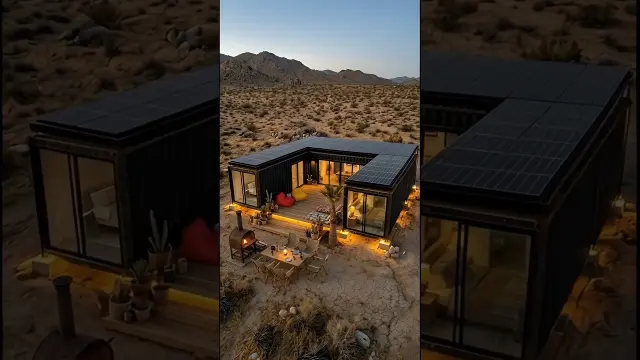
 U-Shaped Shipping Container Home With Solar Power
#Off Grid
1 ideas
U-Shaped Shipping Container Home With Solar Power
Get new #Off Grid ideas by email
Every Thursday: the week's best ideas, with the newest from #Off Grid.
Related tags
Off Grid Living and Self-Sufficient Homes
What off grid means
Off grid living means arranging your home and daily life so you are not dependent on public utilities for everything. In practice, that usually means producing your own electricity, managing your own water supply, handling waste safely, and thinking carefully about heat, food, and storage. For some people, off grid is a full-time way of life. For others, it is a cabin, retreat, or home that simply runs more independently.
The idea has deep roots in rural and self-reliant living. People have always lived this way in places where utility networks were unavailable or impractical. Today, off grid living can also be a deliberate choice for privacy, independence, lower consumption, or a closer connection to nature.
Common systems in an off grid home
Read more
The most familiar part of off grid living is power. Many homes use solar panels, batteries, and sometimes a backup generator to cover basic electricity needs. Wind power and micro-hydro systems can also be part of a setup when the site and conditions allow it. The right system depends on the climate, land, energy use, and how much independence you want.
Water is another key piece. Off grid homes may rely on a well, rainwater collection, a nearby spring, or hauled water. Whatever the source, safe storage and sensible use are important. Wastewater and sewage also need careful planning, often with septic systems or composting toilets where permitted.
Heating and cooling vary widely. Some homes use wood stoves, efficient insulation, passive solar design, or simple ventilation to reduce energy needs. Good orientation, shading, and airtight construction can make a big difference before you even think about equipment.
Styles of off grid living
Off grid living can look very different from one home to another. A small cabin may be simple and seasonal. A family home may be designed for year-round comfort. Tiny houses, earth-sheltered homes, container homes, and traditional rural houses can all be adapted for off grid use if the systems are planned well.
The style you choose should fit the land and your routine. A compact home is often easier to heat and power. A larger home may be more comfortable but usually needs more energy and more maintenance. The best off grid setup is often the one that matches your actual needs, not an idealized version of self-sufficiency.
What beginners should know
Start by reducing demand before you build any system. Efficient lighting, thoughtful appliance choices, and careful water use make off grid life much easier. It is also wise to design for backup. Even a well-planned home can face cloudy weather, dry seasons, or equipment issues.
You should also understand local rules before making plans. Land use, building codes, water rights, and sanitation rules can affect what is possible. It helps to think about access too: roads, deliveries, emergency services, and storage all matter more when you live farther from town.
Practical tips
- Begin with a realistic budget for both setup and upkeep.
- Size systems for your actual daily habits, not for occasional use.
- Prioritize insulation, water storage, and waste handling early.
- Keep backup options for power, water, and heat.
- Choose durable materials and simple systems you can maintain yourself.
- Plan for seasonal changes, especially in weather and daylight.
Off grid living works best when it is practical, flexible, and well matched to the place you live. It is less about doing without everything and more about designing a home that can stand on its own.
Videos come from YouTube and posts from Instagram; titles and summaries are our own. All rights belong to their creators.