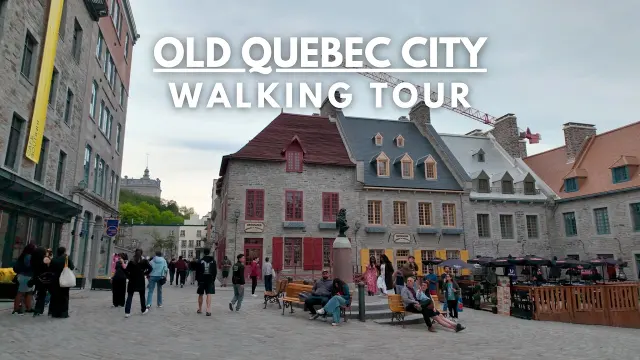
 Evening Walking Tour Through Historic Old Quebec City
#Old Quebec
4 ideas
Evening Walking Tour Through Historic Old Quebec City
 Forty Eight Hours Exploring Old Quebec City Landmarks
 Exploring European Architecture and Sights in Quebec City
 Exploring the Best Sights and Neighborhoods of Quebec City
Get new #Old Quebec ideas by email
Every Thursday: the week's best ideas, with the newest from #Old Quebec.
Related tags
Old Quebec: A Guide to North America's Walled City
Old Quebec is the historic core of Quebec City, the part of the city that grew up inside its own defensive walls on the cliff above the St. Lawrence River. Step through one of its gates and the street plan, the stone, the language and the rooflines all change at once; it is one of the few places in North America where an old European townscape survives as a lived-in neighbourhood rather than a reconstruction.
Where it comes from
The district began as a French colonial settlement and trading post on the river, then passed through French and British rule, each layer leaving its mark on the buildings and institutions. What preserved it was partly accident and partly intent: the city eventually spread far beyond the fortifications, so the old streets were never cleared to make room for new ones, and the walls, gates and citadel were later kept as monuments rather than defences. That combination of surviving architecture and intact fortifications is why the historic district is recognised as a UNESCO World Heritage Site.
Two levels, one district
Read more
Old Quebec is easiest to understand as two parts joined by slopes, stairs and a funicular. The Upper Town sits on the promontory, with the fortifications, the citadel, the boardwalk overlooking the river, religious buildings and grand institutional architecture. The Lower Town gathers around the old market square near the water, where the streets narrow into the quarter known as Petit-Champlain, one of the oldest continuously inhabited corners of the city.
What to look for
The pleasure here is in the fabric of the place: rough stone walls, steep roofs with dormers and tall chimneys, shutters, slate, small-paned windows, inner courtyards, and the layers of building where one century leans against another. Look above the shopfronts as much as at them. The gates and ramparts reward a slow walk, as do the quieter residential lanes away from the main squares, where people still hang laundry and grow flowers in pots.
Practical advice
Wear shoes you can walk in for hours; the streets are cobbled and often steep, and the stairs between the two towns are the fastest way up and down. Go early in the morning or after dinner if you want the squares to yourself. In winter, the ground turns to ice and the wind off the river is sharp, so dress in layers and tread carefully. Take a small museum or two rather than only the outdoor sights, and remember that this is a neighbourhood: keep your voice down in the residential streets and give people room on their own doorsteps.
Above all, allow time to get lost. Old Quebec is small enough to cross on foot and dense enough that a wrong turn usually leads to a courtyard, a stairway or a view you would otherwise have missed.
#Old Quebec: frequently asked questions
How should I start exploring Old Quebec for the first time?
A good way to begin is by entering through one of the gates and wandering on foot so you can feel how the streets, stone buildings, and rooftops change inside the walls. Start in either the Upper Town or Lower Town, then let slopes, stairs, and small lanes connect the two parts of the district.
What is the best way to see the main sights in Old Quebec?
Walk slowly and look up as much as you look ahead, because many of the best details are above the shopfronts. The fortifications, gates, river views, and quieter residential streets all reveal different sides of the neighborhood, and the side streets often lead to the most charming discoveries.
What should I wear or bring when visiting Old Quebec?
Wear comfortable shoes, since the streets are cobbled, steep in places, and often require a lot of walking. It also helps to dress in layers, especially if you are visiting in colder weather or planning to spend time along the river-facing viewpoints.
How do I choose between the Upper Town and the Lower Town?
Choose the Upper Town if you want grand views, fortifications, major landmarks, and a more elevated cityscape. Choose the Lower Town if you prefer narrow historic streets, a more intimate atmosphere, and a setting that feels close to the river and the oldest parts of the city.
What are common mistakes to avoid when visiting Old Quebec?
One common mistake is rushing through the district and only seeing the main squares, which means missing the courtyards, side lanes, and lived-in details that make the area special. Another is treating it like a theme park rather than a real neighborhood, so it is better to keep your voice down and be mindful around homes and doorways.
Videos come from YouTube and posts from Instagram; titles and summaries are our own. All rights belong to their creators.