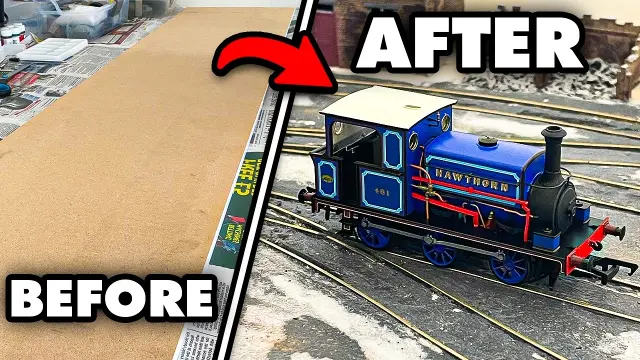
 Building A First OO Scale Model Railway From Scratch
#OO Gauge
1 ideas
Building A First OO Scale Model Railway From Scratch
Get new #OO Gauge ideas by email
Every Thursday: the week's best ideas, with the newest from #OO Gauge.
Related tags
OO Gauge Model Railways Guide
What OO gauge is
OO gauge is one of the most familiar scales for model railways, especially in the United Kingdom. It is used to make miniature trains, track, buildings, and scenery that represent real railways in a smaller size. Many people are drawn to OO gauge because it offers a good balance between detail and practicality: the models are small enough to build a realistic layout, but large enough to handle comfortably.
The term “gauge” is often used loosely here, although it refers to the distance between the rails. In OO modelling, the scale and track gauge are closely linked in everyday use, and the standard system has become the best-known format for many home layouts.
Where it comes from
Read more
OO gauge developed from early model railway traditions that aimed to reproduce full-size trains in a manageable format for home use. Over time it became strongly associated with British railways, stations, and landscapes, though you can model many subjects in it. It remains popular because it suits both simple oval layouts and more complex scenes with yards, branches, and countryside settings.
What it is used for
People use OO gauge to create working model railways, display models, and detailed scenic layouts. Some layouts are made for continuous running, while others are designed around shunting, station work, or a specific route or era. You can model steam, diesel, or electric scenes, freight traffic, passenger services, or a mix of everything.
Main kinds and styles
OO gauge layouts can be built in many styles:
- Beginner loops: simple layouts with one or two circuits for basic running
- Branch lines: smaller stations and rural scenes with gentle operations
- Main line scenes: larger stations, passing loops, and busier traffic
- Freight yards: layouts focused on wagon movements and shunting
- Fiddle-yard layouts: hidden areas used to move trains in and out realistically
- DCC or analogue layouts: different ways of controlling trains, depending on your preference and equipment
You may also choose a time period, such as steam-era stations, diesel depots, or modern rail scenes. The choice affects the trains, buildings, road vehicles, and scenery you use.
What beginners should know
If you are new to OO gauge, start small and keep the plan simple. A layout that is easy to finish is usually more satisfying than one that becomes too large too quickly. Think about three things first: the space you have, the kind of trains you like, and how you want the layout to operate.
It helps to plan track placement before buying too much equipment. A clear, uncluttered design is easier to build and maintain. Curves, sidings, and platforms should suit the stock you want to run. It is also wise to allow space for scenery, access, and wiring.
Practical tips
- Choose one era or setting first so your layout feels consistent
- Test track and electrical connections before fixing everything permanently
- Build scenery in layers, starting with landforms and then adding grass, roads, trees, and buildings
- Keep access in mind so you can reach derailed trains or hidden areas
- Store rolling stock carefully to avoid damage to small details
OO gauge rewards patience. You do not need a large room or a huge budget to enjoy it. A modest layout with well-chosen trains, neat trackwork, and thoughtful scenery can feel very complete. The most successful layouts usually grow step by step, with each part built to suit the next.
#OO Gauge: frequently asked questions
How do I start with OO gauge if I've never built a model railway before?
Begin with a modest plan you can realistically finish rather than a sprawling dream layout. Decide on your available space, the sort of trains you enjoy, and how you want the railway to run — continuous circuits or slower shunting work. Build one section at a time and let the layout grow as your confidence does.
What do I actually need to get a first OO gauge layout running?
At its heart you need track, a controller, some rolling stock, and a flat baseboard to fix everything to. From there you add scenery materials, buildings, and wiring as the layout develops. Test the track and electrical connections before committing anything permanently, so faults are easy to fix.
Which style of OO gauge layout should I choose?
It depends on what you enjoy watching: a simple loop suits relaxed running, a branch line suits gentle station work, and a freight yard suits shunting and wagon movements. Picking one era or setting first keeps the trains, buildings, and scenery looking consistent. Hidden fiddle yards are worth considering if you want trains to appear and disappear convincingly.
How do I look after OO gauge models and keep them running well?
Keep track clean and store rolling stock carefully so delicate details like buffers and handrails don't get knocked. Handle models by the body rather than fragile parts, and keep them away from damp and dust when not in use. A little routine attention to wheels and pickups prevents most frustrating running problems.
Can I build an OO gauge layout in a small space or on a tight budget?
Yes — OO gauge rewards patience more than money or square footage. A compact layout with well-chosen trains, neat trackwork, and thoughtful scenery can feel complete and satisfying. Smaller branch-line or shunting themes often work better in limited space than busy main-line scenes.
What mistakes do beginners most often make with OO gauge?
The usual ones are starting too large, buying stock before planning the track, and forgetting to leave access for reaching derailed trains or hidden areas. Another is fixing everything down before testing, which makes later changes painful. Plan the curves, sidings, and platforms around the stock you actually intend to run.
Videos come from YouTube and posts from Instagram; titles and summaries are our own. All rights belong to their creators.