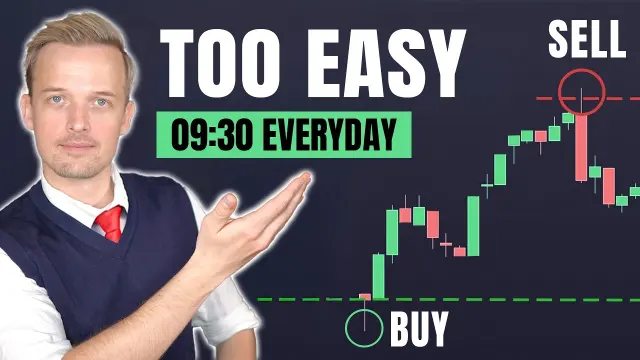
 Touch and Turn Scalping: Trading the Market Open Range
#Opening Range
1 ideas
Touch and Turn Scalping: Trading the Market Open Range
Get new #Opening Range ideas by email
Every Thursday: the week's best ideas, with the newest from #Opening Range.
Related tags
Opening Range: A Beginner's Guide to the First Minutes
Every trading session begins with a burst of activity. Orders that built up overnight hit the market at once, news is digested, and prices swing before settling into a direction. The span of price movement during those first minutes is called the opening range, and it is one of the oldest reference points in short-term trading.
What the opening range is
The opening range is simply the highest and lowest price reached during a chosen window at the start of a session. Traders often use the first fifteen, thirty, or sixty minutes, but the length is a choice rather than a rule. Once the window closes, those two prices — the range high and the range low — are drawn on the chart as horizontal lines. Everything that happens afterwards is read in relation to them.
The concept comes from the observation that the opening auction concentrates information: it is where the market votes on price after a gap, a news release, or a quiet overnight period. Because so many participants watch the same levels, they tend to act as magnets and decision points.
Read more
Main approaches
The best-known style is the opening range breakout. A trader waits for the range to form, then treats a decisive move above the high or below the low as a signal that the session has picked a direction, entering in the direction of the break with a stop on the other side of the range.
The opposite approach is the fade, or reversal. Here a push beyond the range that fails to hold is read as exhaustion, and the trader positions back toward the middle of the range, expecting the false move to unwind.
A third style sits between the two and is often called touch and turn. Rather than buying the first break, the trader waits for price to return to the broken level, test it from the other side, and then continue. The retest is used as confirmation, and the level itself becomes the reference for risk.
These ideas apply across stocks, index futures, currencies, and commodities, though the length of the window and the character of the open differ from market to market.
What beginners should know
Start by defining your window before the session begins, and do not move the lines once they are drawn. Treat the range as a map of where risk is defined, not as a prediction.
Volume matters. A break on thin activity behaves very differently from one accompanied by heavy participation, and the first minutes are often noisy enough to produce breaks that immediately fail. Be aware of scheduled economic releases and earnings, which can turn an ordinary open into something chaotic. Position size should be set before entry, with the stop placed where the idea is proven wrong rather than where the loss feels comfortable.
Finally, keep a record of each session: the size of the range, whether a break held or failed, and how you reacted. Patterns in your own notes will teach you more than any single setup. Trading carries real risk of loss, and no approach to the open guarantees an outcome — treat this as education, not as a promise.
#Opening Range: frequently asked questions
What exactly does the opening range mean in trading?
It is the highest and lowest price reached during a short chosen window right at the start of a session, drawn afterwards as two horizontal lines on the chart. Everything that follows is read in relation to those levels, because so many participants watch them. It works as a map of where risk is defined, not as a forecast.
How do I decide how long the opening window should be?
The length is a personal choice rather than a fixed rule, and traders settle on anything from a few minutes to the better part of the first hour. What matters is deciding before the session begins and keeping it consistent. Redrawing the lines after the fact destroys the value of your own record.
What is the difference between trading the breakout and fading the range?
A breakout trader waits for the range to form and treats a decisive push beyond the high or low as the session choosing a direction. A fade trader reads a push that fails to hold as exhaustion and positions back toward the middle of the range. A third style, touch and turn, waits for price to return and retest the broken level before continuing.
What mistakes do people new to the opening range make most often?
The usual ones are drawing the levels retroactively, acting on a break that comes with thin participation, and overlooking scheduled news that can turn an ordinary open chaotic. Setting position size in advance and placing the stop where the idea is proven wrong — rather than where the loss feels comfortable — keeps small errors from growing. Trading carries a real risk of loss, so treat any approach as education.
Can this approach be used outside of stocks?
The same ideas carry over to index futures, currencies, and commodities, since every market has an opening burst where overnight orders and news get absorbed. The length of the window and the temperament of the open differ from one market to the next, though. Treat it as a framework to adapt rather than a recipe to copy.
How can I tell whether my reading of the open is improving?
Keep a short record of each session: how wide the range was, whether a break held or failed, and how you responded in the moment. Patterns in your own notes will teach you more than any single setup. Over time that log shows which conditions suit you and which simply produce noise.
Videos come from YouTube and posts from Instagram; titles and summaries are our own. All rights belong to their creators.