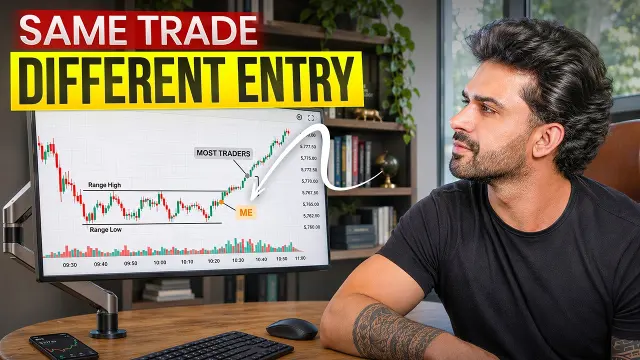
 Opening Range Breakout Strategy: Entering Before the Break
#Options
1 ideas
Opening Range Breakout Strategy: Entering Before the Break
Get new #Options ideas by email
Every Thursday: the week's best ideas, with the newest from #Options.
Related tags
Options Trading: A Beginner's Guide to the Basics
An option is a contract between two parties. It gives the buyer the right — but not the obligation — to buy or sell an underlying asset at an agreed price on or before an agreed date. The seller, often called the writer, takes on the obligation to honour that trade if the buyer exercises the right. Options exist on shares, indices, currencies, commodities and more, and they are used both to speculate on price moves and to manage risk in a portfolio you already hold.
Calls and puts
There are only two kinds of option, and everything else is built from them. A call gives its buyer the right to buy the underlying asset at the strike price. Buyers of calls generally expect the price to rise. A put gives its buyer the right to sell at the strike price, so put buyers generally expect the price to fall or want protection against a decline.
The moving parts
Read more
Four things define an option contract. The strike price is the level at which the trade would happen. The expiration date is the last day the contract can be exercised. The premium is what the buyer pays the seller for the right, and it is the most the buyer can lose. The underlying asset is whatever the contract is written on. The relationship between the current market price and the strike is described as in the money, at the money or out of the money, and it changes as the market moves.
A premium is made up of two components: intrinsic value, which is what the option would be worth if exercised right now, and time value, which reflects how much could still change before expiration. Time value shrinks as expiration approaches, which is why options are said to decay. Volatility expectations also feed into the price, since a bigger possible range of outcomes makes the right more valuable.
The four basic positions
You can buy a call, sell a call, buy a put or sell a put. Buying options caps your loss at the premium but means you must be right about direction and timing, because the clock works against you. Selling options collects the premium up front but carries a much larger potential obligation, and a short call can in principle lose far more than the premium received. This asymmetry is the single most important thing to understand before trading.
Common approaches
Simple strategies are often the most instructive. A covered call involves selling a call against shares you already own, trading some upside for income. A protective put is insurance on a holding you want to keep. Spreads combine two or more options to define the risk more tightly. Straddles and strangles are used when you expect a large move but are unsure of direction. Rule-based approaches, such as trading around the opening range of a session, fall into the speculative end of the spectrum.
What beginners should know
Learn the mechanics on paper first, with a small position size and a clear plan for exit before you enter. Understand that most options expire, that premium is a real cost, and that leverage magnifies mistakes as readily as gains. Read the contract specifications, know your maximum loss, and treat every position as risk capital. Nothing here is a recommendation — options carry substantial risk of loss and suit people who can afford it.
#Options: frequently asked questions
What is an option, in simple terms?
An option is a contract giving its buyer the right, but not the obligation, to buy or sell an underlying asset at an agreed price on or before an agreed date. The other side of the trade, the writer, is obligated to honour the deal if the buyer chooses to exercise. That right is paid for up front, which is why the buyer's cost is known from the start.
What is the difference between a call and a put?
A call gives the buyer the right to buy the underlying at the strike price, so call buyers are generally positioned for a rise. A put gives the right to sell at the strike, which appeals to those expecting a decline or wanting protection for something they already hold. Every more elaborate strategy is assembled from these two building blocks.
What makes up the premium on an option?
The premium has two parts: intrinsic value, which is what the contract would be worth if exercised immediately, and time value, which reflects how much could still change before expiration. Time value fades as expiration approaches, so options are said to decay, and expectations about volatility also feed into the price because a wider possible range of outcomes makes the right more valuable.
How does buying an option differ from selling one?
A buyer pays the premium and that premium is the most they can lose, but they need to be right about both direction and timing because the clock works against them. A seller collects the premium up front and instead takes on an obligation, which in the case of a short call can in principle cost far more than the premium received. That asymmetry is the key thing to grasp before doing either.
What are some common ways people use options?
Simple structures are often the most instructive: a covered call sells a call against shares already owned, trading some upside for income, while a protective put acts as insurance on a holding the owner wants to keep. Spreads combine options to define risk more tightly, and straddles or strangles are used when a large move is expected but its direction is unclear.
What should someone new to options keep in mind?
Understanding the mechanics before committing real money matters more than picking a clever strategy, which is why practising with small positions and a pre-planned exit is common advice. Leverage magnifies mistakes as readily as gains, the premium is a genuine cost, and every position is best treated as risk capital. Options carry a substantial risk of loss, so the contract specifications and maximum possible loss are worth reading before entering anything.
Videos come from YouTube and posts from Instagram; titles and summaries are our own. All rights belong to their creators.