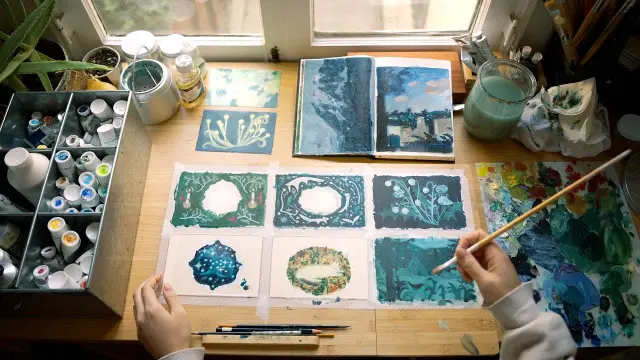
 Calm Oil and Gouache Holiday Card Painting Process
#Painting Process
2 ideas
Calm Oil and Gouache Holiday Card Painting Process
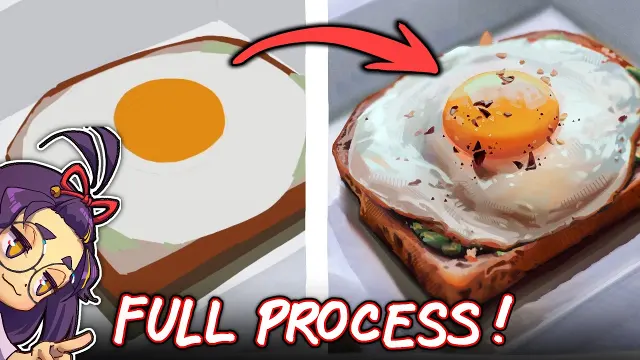 Creating Colorful Digital Paintings Through Color Studies
Get new #Painting Process ideas by email
Every Thursday: the week's best ideas, with the newest from #Painting Process.
Related tags
Painting Process: How a Picture Comes Together
Every painting is the visible result of a series of decisions, and that series is what painters mean by process. It is not a single method but a working order: a way of moving from a vague idea to a finished surface without losing your footing along the way. Understanding the stages helps you recognise where a picture is going wrong, and it makes the difference between painting by accident and painting on purpose.
From idea to drawing
Most paintings begin long before paint is touched — with a thumbnail sketch, a colour study, a photograph, or simply a walk where something catches your eye. Beginners often skip this part and start straight onto the final surface, which is where the frustration usually comes from. A few small sketches cost little and settle the big questions early: the composition, the placement of light and dark, the size of the shapes.
The underpainting
Read more
The underpainting is the first layer, usually thin and simple. It establishes the value structure — where the lights and darks sit — and gives later layers something to sit on. In oil painting this is traditionally a warm or neutral wash; watercolour painters often work from a light wash upward, and digital painters build a similar base with flat, unblended colour. Keep it loose. Detail belongs later.
Blocking in and layering
Blocking in means placing the main masses of colour without fussing over edges. From there, painters either work from broad to fine, gradually refining, or work all over the surface at once, bringing the whole image forward together. Mixing and layering techniques differ by medium: oils and acrylics allow opaque layers over dry paint, watercolour builds depth through transparent washes that never quite cover what is beneath, and gouache sits somewhere between, opaque but reworkable.
Direct and indirect approaches
Two broad temperaments run through the whole tradition. The indirect approach builds a picture slowly in layers, with drying time between them and often a good deal of planning. The direct approach — alla prima, wet paint into wet paint in one sitting — favours freshness and speed, and rewards confidence more than correction. Neither is better. Many painters move between them depending on the subject.
What beginners should know
- Work from a limited palette at first; fewer choices make colour easier to judge.
- Step back from the surface regularly. Distance reveals problems that close attention hides.
- Let a layer dry when the medium asks for it, rather than fighting it.
- Keep a study or sketchbook for experiments you would not risk on a finished piece.
- Finish more small paintings than you abandon; finishing is itself a skill.
A process is a scaffold, not a rule. The point of learning one is to reach the moment where you no longer need to think about it — when the order of work becomes instinct and attention can go entirely to what you are looking at.
#Painting Process: frequently asked questions
How do I start a painting so I don't get stuck halfway?
Start on paper rather than on the final surface — a thumbnail sketch, a small colour study, or a photograph you've simplified settles composition, shape sizes and the placement of light and dark before paint is involved. Deciding those things early means the painting itself becomes a matter of execution instead of guesswork. Once the plan is clear, lay in a thin, loose first layer and keep detail for later.
What materials do I actually need to begin painting?
You need paint, something to paint on, and a small number of brushes in sizes you'll genuinely use — a limited palette is easier to judge colour with than a full set, and it keeps mixtures clean. Add a sketchbook or cheap studies surface for experiments you wouldn't risk on a finished piece. Extras like mediums or varnishes can wait until you know what your chosen paint actually asks for.
Should I paint in layers or all at once?
Those are the two temperaments painters work in: building a picture slowly in layers with drying time between them, or working wet paint into wet paint in a single sitting for freshness and speed. The layered approach forgives correction and suits careful planning, while the direct approach rewards decisiveness. Neither is better, and plenty of painters switch between them depending on the subject in front of them.
How do I choose between oil, watercolour, gouache and acrylic?
The difference that matters most is how each one behaves when you layer: oils and acrylics let you put opaque paint over dry paint, watercolour builds depth through transparent washes that let what's beneath show through, and gouache sits between the two — opaque but reworkable. Pick the behaviour that matches how you like to work rather than the one that looks most impressive. Whichever you choose, respect its drying rhythm instead of fighting it.
What mistakes do beginners make most often?
The common ones are jumping straight onto the final surface with no plan, fussing over detail while the big shapes are still wrong, and abandoning pieces before they're resolved. Step back from the work regularly, because distance shows problems that close attention hides. Finishing more small paintings than you throw away is itself a skill worth practising.
How should I look after a painting and my materials once the session ends?
Clean your brushes properly at the end of every session, since dried paint in the ferrule ruins a brush faster than anything else, and keep lids and caps sealed so paints stay workable. Let layers dry as long as the medium asks rather than rushing the next stage on top of tacky paint. Store finished work flat or hanging away from damp and direct sun, and keep it dust-free.
Videos come from YouTube and posts from Instagram; titles and summaries are our own. All rights belong to their creators.