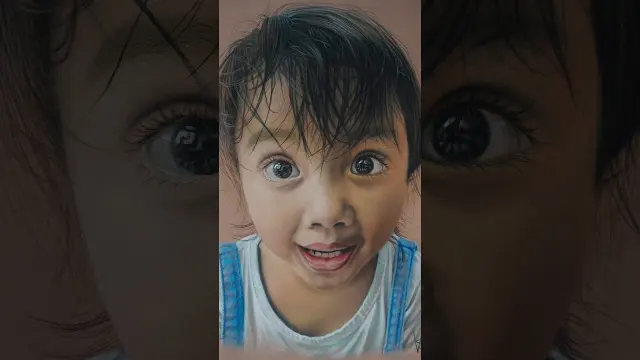
 Creating a Soft Pastel Portrait of a Young Child
#Pastel Drawing
1 ideas
Creating a Soft Pastel Portrait of a Young Child
Get new #Pastel Drawing ideas by email
Every Thursday: the week's best ideas, with the newest from #Pastel Drawing.
Related tags
Pastel Drawing: A Beginner's Guide to Technique and Materials
Pastel drawing is the art of making pictures with sticks of pigment rather than with wet paint. A pastel is essentially pure colour bound lightly together — usually with just enough gum or wax to hold its shape — so what you press onto the paper is close to the raw pigment itself. That directness is what gives pastel work its particular character: soft, luminous colour that sits on the surface of the paper and seems to glow rather than sink into it.
A little background
Artists have drawn with coloured chalks since the Renaissance, when portraitists used red and black natural chalks for sketches and finished studies. Pastels as we know them were taken up in Europe for portraiture in the following centuries, and later the French Impressionists adopted them enthusiastically for capturing light and atmosphere quickly, often outdoors. Because pastels need no drying time and no solvents, they remain one of the most immediate drawing media available.
The main kinds
Read more
- Soft pastels are the classic choice: crumbly, heavily pigmented, and easy to smudge. They suit broad colour, blending, and expressive skies or skin tones.
- Hard pastels contain more binder and less pigment. They sharpen to a point more readily and are useful for fine lines and early layers.
- Pastel pencils wrap a pastel core in wood, giving you control for detail, edges, and small shapes.
- Oil pastels are bound with oil and wax instead of a water-soluble binder. They are creamier, stick more firmly, and behave almost like a waxy crayon. They blend differently from soft pastels and are generally not mixed with them.
Paper and surfaces
Pastel needs texture — the pigment grips the ridges of the paper, called the tooth. Smooth paper will simply slide. Pastel paper is usually toned rather than white, which lets you judge colours honestly and gives a mid-tone base you can work both lighter and darker from. A coloured ground also lets the paper show through in places and hold the drawing together.
Techniques worth knowing
Layering is the heart of the medium, and the order matters. Start with hard pastels, applying firm, deliberate strokes to establish your colour and values. As you move on to softer pastels, gradually lighten your touch: the softer sticks deposit colour so readily that a gentle pressure is enough. If you press hard at every stage you fill the paper's tooth too soon, and there is nowhere left for the later, more delicate layers to go.
Blending with a fingertip, a paper stump or a soft cloth smooths transitions, though blending everything can dull the colours and flatten the picture. Scumbling — dragging a light touch of one colour over another — leaves speckled, vibrating colour that reads as texture. Many artists begin with an underpainting, a loose wash of colour or a base layer of hard pastel, to establish values before detail.
Getting started
Work on a slightly tilted board so dust falls away rather than settling in the picture. Keep a few sheets of paper between your hand and the drawing to prevent smudging. Build dark values gradually; pastel can be lightened but only with difficulty once it is heavily applied. Fixative can protect a finished piece, though it often deepens the darks slightly, so test it first. Most of all, give yourself permission to be loose — pastel rewards a light hand and patient layers.
#Pastel Drawing: frequently asked questions
What do I actually need to start pastel drawing?
You can begin with a small set of pastels in a range of values, a toned paper made with enough tooth to grip the pigment, and a board you can tilt slightly so dust falls away from the picture. Add a soft cloth or paper stump for blending and a spare sheet under your hand to keep the surface clean. Nothing needs to dry or be mixed with a solvent, so the medium is ready to use straight from the stick.
How do I decide between soft pastels, hard pastels, pastel pencils, and oil pastels?
Soft pastels are the most crumbly and heavily pigmented, which makes them ideal for broad colour, blending, and soft skies or skin; hard pastels hold a point better and suit fine lines and first layers; pastel pencils give control for small details and crisp edges. Oil pastels are bound with oil and wax, so they feel creamier, grip the surface more firmly, and blend like a waxy crayon rather than a chalky stick. Because the two families behave so differently, most people keep oil pastels out of a drawing built from soft ones.
Why does my pastel work turn muddy or flat?
The usual culprits are blending every area until the transitions are uniformly smooth, and pressing hard from the very first stroke. Heavy pressure fills the paper's tooth early, leaving no room for the lighter, more delicate layers that give pastel its luminosity, and once dark pigment is packed in it is hard to lift back out. Try building values gradually with hard pastels, keeping your touch lighter as you move to softer sticks, and blending only where you want a smooth transition.
Should the paper be white or coloured?
Toned paper is generally easier, because a mid-value ground lets you judge colours honestly and gives you somewhere to go both lighter and darker. It also allows the paper to show through in places, which can unify a picture and keep it from looking overworked. Smooth paper is best avoided altogether, since pastel needs texture to grip.
How do I protect a finished pastel drawing?
Pastel never fully sets, so treat the surface as fragile: hold the sheet by its edges, and store or transport it flat with a sheet of glassine over the face. A light application of fixative can help, though it tends to deepen the darks, so test it on a spare piece first. For display, frame it under glass with a mat or spacer so nothing presses against the artwork.
Can pastel be used for portraits, and how would I approach one?
Pastel is well suited to portraits because the sticks sit on the surface and give skin a soft, glowing quality that wet media struggle to match. On toned paper, establish the drawing and your values first with harder pastels in firm, deliberate strokes, then move to softer sticks and a lighter hand for the modelling of the face. Keep the paper between your hand and the work so the fresh layers stay clean, and resist the urge to smooth every transition — a little scumbled colour reads as living skin better than a blended one.
Videos come from YouTube and posts from Instagram; titles and summaries are our own. All rights belong to their creators.