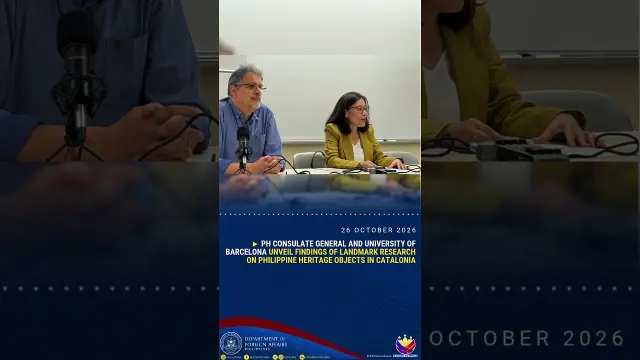
 796 Philippine Objects Documented in Catalonia's Museums
#Philippine Artifacts
1 ideas
796 Philippine Objects Documented in Catalonia's Museums
Get new #Philippine Artifacts ideas by email
Every Thursday: the week's best ideas, with the newest from #Philippine Artifacts.
Related tags
Philippine Artifacts: A Guide to Material Heritage
Philippine artifacts are the objects people in the archipelago made, used, and treasured — everything from earthenware pots pulled out of the soil to a grandmother's woven blanket still folded in a wooden chest. Because the Philippines is made of many islands and many communities, and because it sat on long trading routes linking Southeast Asia, China, India, the Arab world, Spain, and the Americas, its material heritage is unusually layered. A single household can hold an object shaped by indigenous craft, foreign trade, and colonial faith all at once.
What Counts as an Artifact
In practice, the word covers three overlapping things. Archaeological artifacts are excavated finds: pottery, stone and shell tools, glass beads, ornaments, burial vessels. Ethnographic artifacts are objects made and used by living communities — baskets, looms, blades, fishing gear, ritual pieces. Heirlooms are objects kept and passed down within families, whether precious or plain. All three are worth documenting; all three carry information beyond their beauty.
Materials and What They Reveal
Read more
Clay, stone, shell, gold, brass, hardwood, bamboo, abaca, cotton, and pineapple fibre each behave differently and each points somewhere: to a shoreline, a forest, a weaving village, a trade route. Learn to read wear, patina, repairs, and tool marks. They often tell you more about an object's life than its shape does.
Main Kinds You Will Encounter
- Pottery and burial vessels, including jars with carved lids and burial goods
- Gold and personal ornaments: beads, chains, earrings, belt fittings
- Textiles and weaving, from everyday cloth to ceremonial dress
- Woodcarving, including religious images and anito figures
- Tools, weapons, and household objects in metal, wood, and shell
- Documents, prints, and devotional objects
For Beginners
Provenance is everything. Ask who made an object, where it came from, and how it was acquired before you admire it. Study context, not just the piece — an object without a story is much harder to learn from. Visit museums, talk with elders and artisans in the communities concerned, and be sceptical of anything that looks too clean, too complete, or too conveniently ancient.
Ethics matter here. Grave goods, sacred objects, and church pieces belong to someone. Cultural property laws, repatriation conversations, and the principle of free, prior, and informed consent from source communities are not obstacles to collecting — they are part of understanding what you are holding.
Caring for What You Have
Keep pieces away from direct sun, damp, and swinging heat. Handle with clean hands, support textiles flat rather than hanging them, and never reach for household cleaners or ordinary adhesives. Photograph and describe everything, including damage, and keep those notes with the object. For anything fragile or significant, consult a trained conservator rather than experimenting.
Approached with patience and respect, these objects stop being curiosities and become what they really are: evidence of skill, belief, trade, and ordinary daily life.
#Philippine Artifacts: frequently asked questions
How do I start learning about Philippine artifacts as a beginner?
Start with context rather than shopping — visit museums, read labels carefully, and talk with elders and artisans in the communities where objects are made. Provenance, meaning who made a piece, where it came from, and how it was acquired, should guide your interest more than appearance. A plain basket with a known story teaches you more than a mysterious object with none.
What is the difference between an archaeological artifact, an ethnographic artifact, and an heirloom?
Archaeological pieces are excavated finds such as pottery, beads, and burial vessels; ethnographic pieces are objects still made and used by living communities, like baskets, looms, and fishing gear. Heirlooms are simply items kept and handed down within a family, whether valuable or everyday. All three are worth documenting because each carries information about skill, belief, or trade.
Which kinds of Philippine artifacts should I focus on first?
Pick one material or category and go deep — textiles, earthenware, gold ornaments, woodcarving, or tools and household objects. Each material points to a different place and tradition, so learning to read one well teaches you how to read others. Wear, patina, repairs, and tool marks usually tell you more than the object's shape.
How should I care for woven textiles and other fragile Philippine pieces at home?
Keep them out of direct sun, damp, and moving air from heaters or vents, and handle them with clean hands. Store textiles flat rather than hanging them, since hanging stresses old fibres, and avoid household cleaners and ordinary adhesives entirely. Photograph and describe each piece, including any damage, and consult a trained conservator for anything fragile or significant.
Are there ethical issues to consider when collecting or displaying Philippine artifacts?
Yes — grave goods, sacred objects, and church pieces belong to specific communities and families, not just to whoever holds them. Cultural property laws, repatriation conversations, and the principle of free, prior, and informed consent from source communities are part of understanding an object, not obstacles to it. When in doubt, ask the community concerned before acquiring or displaying something.
What common mistakes do beginners make with Philippine artifacts?
The most common is falling for pieces that look too clean, too complete, or too conveniently ancient, without asking about provenance. Another is treating objects as curiosities and skipping the story of the people who made them. Experimenting with cleaning or repair at home is a third — it can cause damage that no conservator can undo.
Videos come from YouTube and posts from Instagram; titles and summaries are our own. All rights belong to their creators.